Organic Food Market in India
Indian Organic food market size is valued between $1.8 billion and $2.7 billion in 2026.
In recent years, there has been an exceptional rise in the demand for organic food worldwide, indicating a significant shift towards more sustainable and healthful eating practices. With its rich agricultural heritage, diverse climatic conditions, and a growing health and environmental sustainability awareness, India is uniquely positioned to become a global leader in the organic food sector. The Potential of India’s Organic Food Market is immense, offering multi-layered opportunities for farmers, corporate entrepreneurs, and health-conscious consumers alike.
The Rise of Organic Farming in India
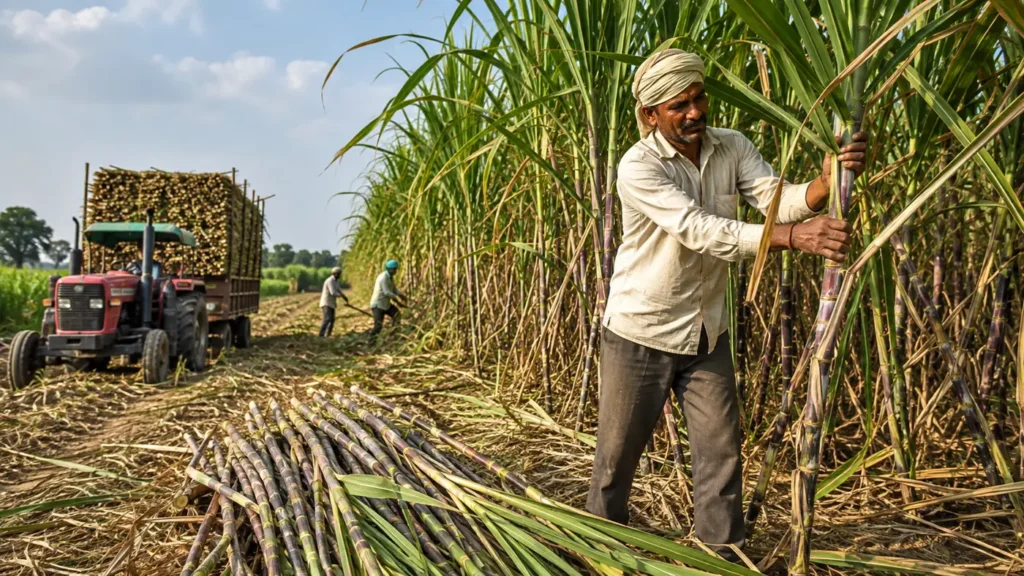
In India, organic cultivation is not a novel concept. Crop rotation, natural fertilizers, and biodiversity have historically been integral to traditional farming. However, the advent of the Green Revolution in the 1960s steered agriculture toward chemical-intensive practices, prioritizing immediate high yields at the expense of long-term soil health and public wellness. Today, reverting to organic systems is recognized as a vital necessity for ecological survival.
Several catalysts—including surging consumer consciousness, robust government policy frameworks, and expanded product availability—are driving the Organic Food Market forward. Industry projections indicate that the Indian organic sector is expanding at a remarkable compound annual growth rate (CAGR) of roughly 19% to 22%, cementing its status as a major economic force.
Government Support and Policies
The Indian government has launched several landmark programs to institutionalize organic growth. The National Programme for Organic Production (NPOP), introduced in 2000 and continuously updated to meet strict international frameworks (such as EU export standards), ensures quality control and global market access.
Furthermore, initiatives like the Paramparagat Krishi Vikas Yojana (PKVY) and the Mission Organic Value Chain Development for North Eastern Region (MOVCDNER) actively expand certified acreage. Complementary schemes like the National Food Security Mission (NFSM) and Rashtriya Krishi Vikas Yojana (RKVY) provide vital financial assistance and training, ensuring that the India organic food market continues its rapid upward trajectory.
Consumer Awareness and Demand
Growing public knowledge regarding health and environmental safety is the core engine behind consumer demand. Heightened post-pandemic focus on immunity and nutrition has pushed urban households to eliminate synthetic pesticides, toxic chemicals, and GMOs from their diets.
With lifestyle-related illnesses on the rise, consumers are increasingly willing to pay a premium for organic staples, fruits, and vegetables. This behavior shift is reshaping retail spaces across metropolitan and tier-2 cities alike.
The Role of E-Commerce and Retail Chains
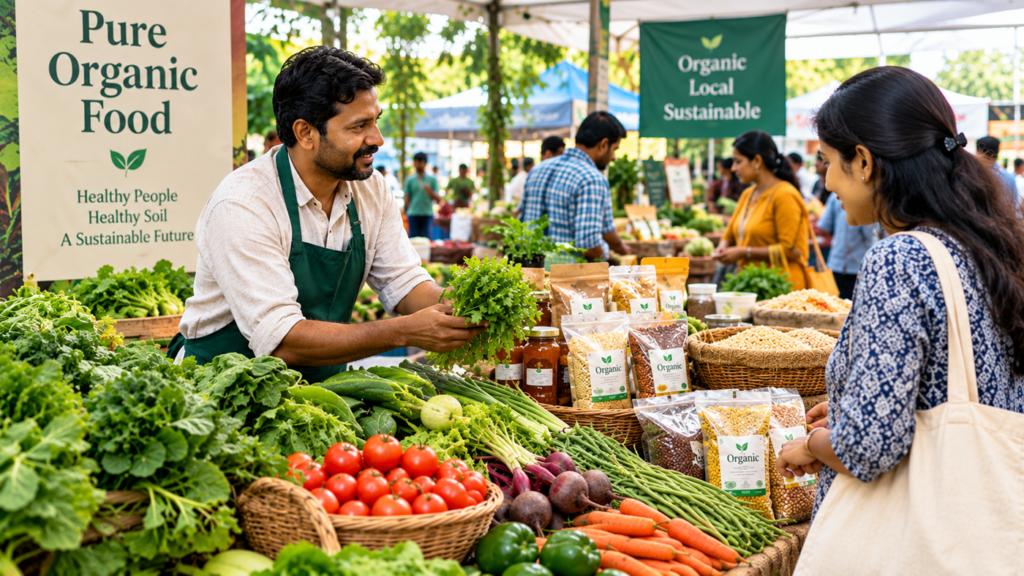
The rapid proliferation of organized retail and digital infrastructure has fundamentally unlocked the Potential of India’s Organic Food Market. Digital platforms—ranging from e-commerce giants like Amazon, Flipkart, and BigBasket to specialized platforms like 24 Mantra Organic, Conscious Food, and Organic Tattva—deliver farm-fresh goods directly to urban doorsteps.
Concurrently, major brick-and-mortar chains like Reliance Fresh, Nature’s Basket, and Foodhall have curated dedicated organic aisles.
Direct-to-consumer farm subscription models (such as Farmizen and Krishi Cress) further bridge the gap, ensuring transparency, freshness, and equitable pay for growers.
Challenges and Opportunities
Despite explosive growth, structural hurdles remain. Small and marginal farmers often struggle with acquiring affordable organic inputs, bio-fertilizers, and non-GMO seeds. Technical awareness gaps regarding transition phases and yield management can make traditional farmers hesitant to switch.
Additionally, the organic certification process can be financially demanding and complex for smallholders. However, these obstacles present massive opportunities for AgTech startups, agricultural training enterprises, and corporate supply chain innovators aiming to streamline certification and input distribution.
The Future of India Organic Food Market
The long-term outlook for the Organic Food Market is exceptionally bright. As cold storage logistics, automated processing plants, and cold-chain transport networks improve nationwide, product shelf life and export capacities will surge. Supported by ongoing corporate investments, strategic retail expansions, and steady policy backing, the India organic food market is well on its way to securing a healthy, sustainable future for generations to come.
FAQs about Indian Organic Food Market
What is driving the growth of the organic food sector in India? Growth is primarily driven by rising health consciousness, consumer demand for chemical-free food, supportive government schemes like PKVY, and the expansion of e-commerce delivery networks.