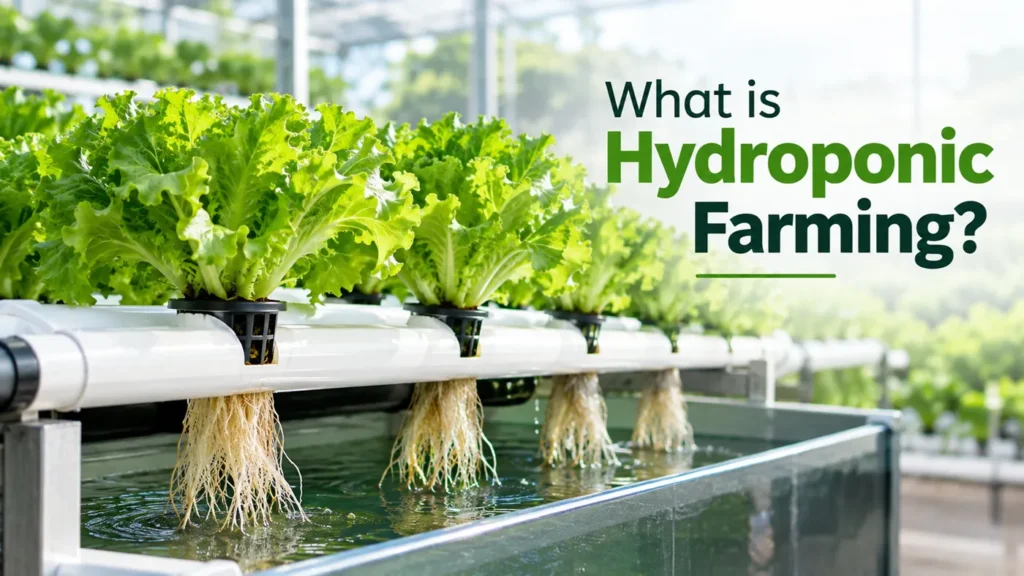
What if I tell you that you could grow fresh vegetables without soil and far less water than traditional farming? This is the approach behind hydroponic farming (hydroponics), a modern farming method of cultivation where plants grow in nutrient-rich water instead of soil. In a country like India, where farmers experience obstacles, for example, limited farmland area, water scarcity, and evolving climatic conditions, hydroponics appears as an innovative alternative to traditional farming.
From leafy greens and herbs to tomatoes and strawberries, hydroponic systems allow crops to be grown within regulated environments whilst making efficient use of available resources. As the demand for fresh, locally produced food and the rise of urban farming, hydroponic farming in India is attracting attention among farmers, entrepreneurs, and consumers. But is it actually as good and sustainable as it seems, while also proving to be profitable?
Let’s review its types, benefits, challenges, and future potential further in the article.
Alright, let’s begin this dive by understanding the science behind hydroponics that gives it such “potential” to change farming.
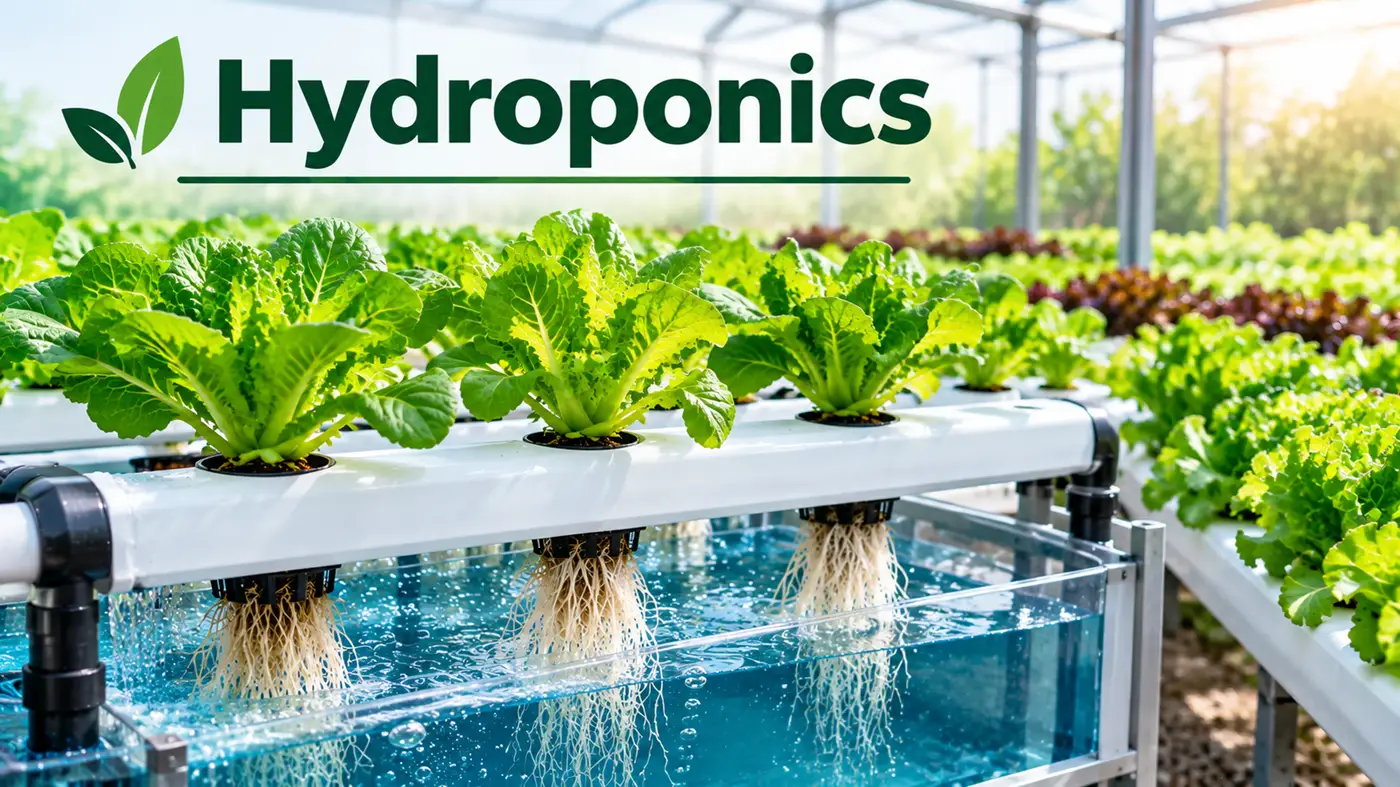
Hydroponics is a new-age method of cultivating plant roots not in soil, but suspended in a nutrient-rich liquid solution instead of soil. Additionally, to support optimal growth in hydroponics, many farmers use fertilizers such as calcium nitrate, though this is not the case with every farm.
In this system, the plants are grown in two main types: liquid and aggregate. The former grows roots directly in water, while the latter uses solid materials like clay pellets or rock wool to support the plants.
Types of Hydroponic Farming
Hydroponic farming can be carried out through different systems, depending on how water, nutrients, and oxygen are delivered to the plant roots.
The most common types of hydroponic farming include:
Nutrient Film Technique
In the NFT system, a thin, continuous stream of nutrient-rich water flows over the plant roots through slightly inclined channels. The roots receive nutrients and oxygen, while the excess water is collected and recirculated. It is commonly used for growing leafy vegetables such as lettuce and spinach.
Deep Water Culture
In this method, plant roots remain suspended in a nutrient-rich water solution, while an air pump supplies oxygen to the roots. DWC is relatively simple to set up and is suitable for crops such as lettuce, herbs, and other leafy greens.
Drip Hydroponics
Nutrient-rich water is delivered directly to the base of each plant through small tubes or drip emitters. The system allows farmers to control the amount of water and nutrients supplied to individual plants, which makes it suitable for larger crops such as tomatoes, cucumbers, and peppers.
Ebb And Flow System
The ebb and flow system is also known as the flood and drain system; it periodically floods the growing medium with the nutrient solution and then drains it back into a reservoir. This provides the roots with both nutrients and oxygen, which supports a variety of crops.
Wick System
The wick system is one of the simplest forms of hydroponics. A wick draws nutrient-rich water from a reservoir to the growing medium through capillary action. Since it does not require pumps, it can be useful for small-scale or beginner friendly level of hydroponic setups.
Benefits of Hydroponic Farming in India
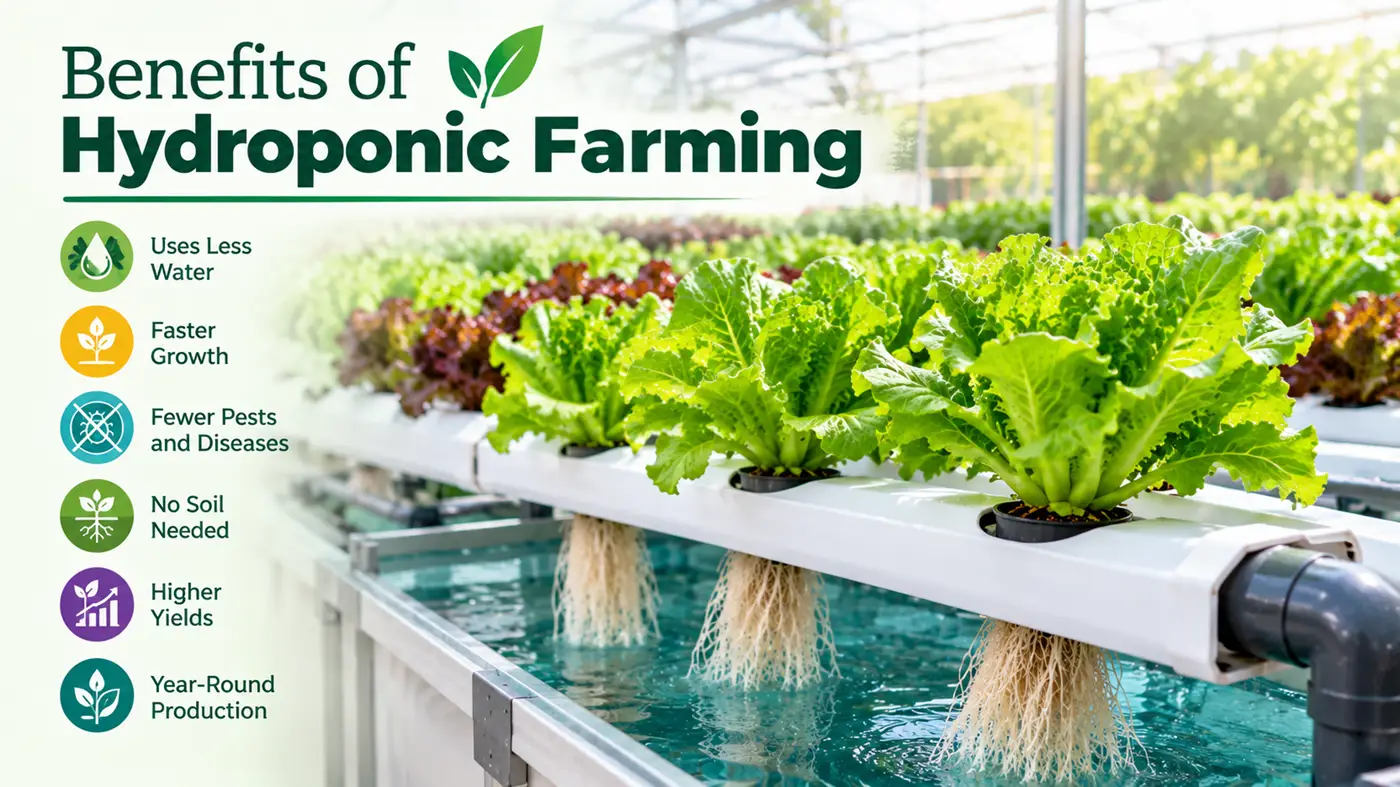
Hydroponic farming provides several benefits over conventional soil-based cultivation, specifically in locations where farmland and water are limited. Some of its main benefits include:
Saves Water
Hydroponic systems consistently circulate and reuse water, greatly reducing water wastage. This keeps them particularly useful in water-deficient regions.
Requires Less Land
Since crops can be grown vertically and in controlled space, hydroponics can produce more crops from a smaller area. This makes it suitable for urban farming and areas with limited agricultural land.
Faster Crop Growth
Plants absorb nutrients directly through water, allowing them to absorb what they need efficiently. In appropriate conditions, this can support faster and more consistent growth.
Year Round Cultivation
Hydroponic farms can operate inside greenhouses or other regulated environments , allowing farmers to grow crops beyond their normal growing seasons and reduce dependence on weather conditions.
Better Control Over Nutrients
Farmers can carefully manage the nutrients supplied to plants, helping sustain consistent crop growth and quality.
Fewer Soil-related Problems
Because hydroponics does not depend on soil, it reduces problems associated with soil-borne diseases, weeds, and poor soil fertility.
Suitable for Urban Farming
Hydroponic systems can be established on rooftops, balconies, warehouses, and other confined spaces, bringing food production closer to urban consumers.
Potential for Higher Productivity
With efficient use of space, water, and nutrients , hydroponic farming can achieve high productivity per unit of land when the system is properly managed.
Challenges in Hydroponic Farming in India
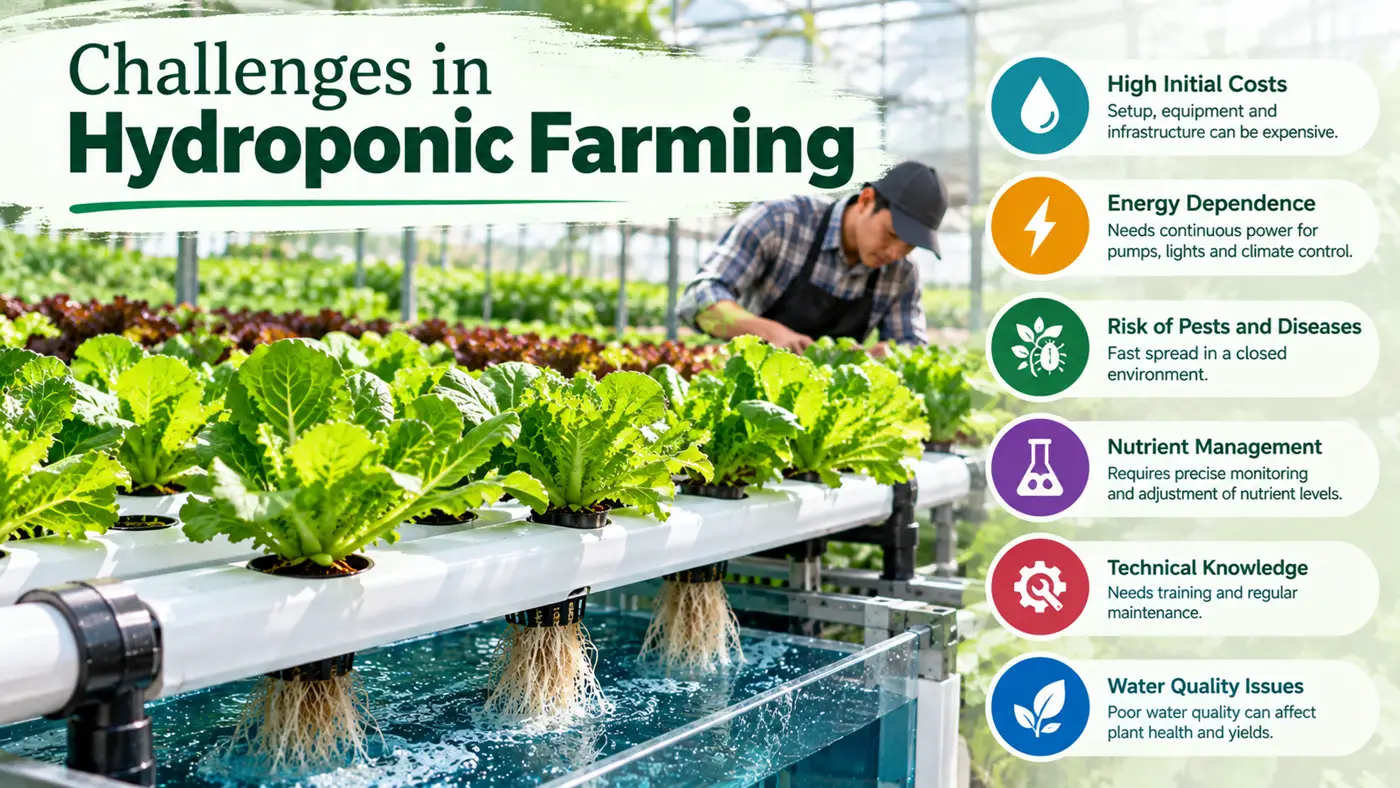
Despite the potential, hydroponic farming comes with a number of challenges that farmers and entrepreneurs need to consider before investing in the system.
High Initial Investment
Setting up a hydroponic farm requires equipments such as growing systems, pumps, nutrient solutions, lighting, and in some major cases, greenhouses. The initial cost can be considerably higher than traditional farming.
Requires Technical Knowledge
Hydroponic farming needs careful monitoring of factors such as pH, nutrient levels, water quality, and temperature. A lack of technical knowledge can affect plant growth and crop yields.
Dependence On Electricity
Many hydroponic systems count on pumps, sensors, and other electrical equipment. Power cuts is able to disrupt water and nutrient circulation, potentially damaging crops if there is no backup system.
Regular Maintenance
The system requires continuous supervision and maintenance. Blocked pipes, pump failures, algae growth, or incorrect nutrient levels can quickly affect the plants.
Limited Crop Choices
Not every crop is equally suitable for hydroponic cultivation. Leafy greens, herbs, and certain vegetables generally adapt well and thrive in hydroponic farming, while crops such as cereals and many other traditional field crops are less practical and find it hard to adapt well to this particular farming method.
Basically, hydroponics can save water and space, but it doesn’t necessarily save money, labor, or technical effort.
Expenses: Cost of Setting Up a Hydroponic Farm in India
Setup Costs
Given that adoption is happening in rural or urban farmland, the cost of an acre hydroponic farm in India can differ considerably depending on what type of system the farmer chooses. Deep water culture, rock wool culture, nutrient film, and even aeroponics are all different subsystems that need constant maintenance.
That means a farmer has to invest not only in resources for plants, but also in a high-tech, sensor-powered monitoring system, a greenhouse, or climate control systems, with ample safety measures that could cost ₹8 lakh to ₹10 lakh itself.
Of course, the price can fluctuate depending on the state in India where you are setting up the hydroponic system, as there are various levels of government support for innovative agriculture efforts, but still, you have to be ready to find and invest in a proper autonomous system for the farm yourself.
Operating Expenses and Labor Cost
When it comes to maintenance, whether daily, weekly, or monthly, while hydroponic systems use up to 90% less water than conventional farming, the cost of nutrient solutions still needs to be considered. The actual cost of this liquid solution depends on its quality, but the biggest factor for maintenance will be the location in which you are setting up the farm. According to some sources, the nutrient solution for hydroponics in India can cost up to 20k per acre annually.
Similarly, there is a monthly cost that has to be paid to both the skilled labor and the workers, as well as the monitoring team that will be responsible for the upkeep of the tech and autonomous system. Once again, hydroponic systems are fragile in nature and at risk of becoming contaminated from a single mistake. Given all this, the cost could be as low as 25k to 1 lakh per month.
Profitability in Hydroponic Farming in India
Yes, hydroponic farming can be profitable in India when it is used to grow high-value, fast-growing crops such as lettuce, spinach, basil, coriander, mint, microgreens, and some varieties of tomatoes and cucumbers. Since hydroponic systems use less land and water and allow controlled cultivation, farmers can achieve high productivity from relatively small and compact spaces.
However, profitability depends on several elements, including the initial cost of setting up the farm, electricity, nutrient solutions, equipment maintenance, labor, and packaging. Farmers also need a reliable market because hydroponic produce often targets urban consumers, restaurants, hotels, supermarkets, along with health-conscious buyers who may be willing to pay a premium.
For profitable operations, choosing the right crop, controlling operating costs, and establishing a dependable customer base are just as important as the hydroponic system in itself. That’s why hydroponics has strong commercial potential in India, but it should be approached as a technology-driven farming business rather than just a quick profit earning opportunity.
FAQs about Hydroponic Farming
Hydroponic farming is changing the way in which we think about growing food by reducing dependence on soil and making better use of limited land and water resources. In a country like India, where farmers experience problems such as water scarcity, shrinking farmland, and variable weather, this technology presents an interesting path in the direction of more controlled and resource-efficient cultivation.
High setup costs, technical requirements, dependence on electricity, and the need for a reliable market can make it difficult, especially for small farmers. Its success highly depends on choosing the right and suitable crops, controlling costs, and using the right technology for local conditions.
With growing urban demand for fresh produce and continued advances in agricultural technology, hydroponic farming has the potential to become an important part of India’s modern agriculture landscape. The future may not replace traditional farming, but find smarter ways to develop alongside it.