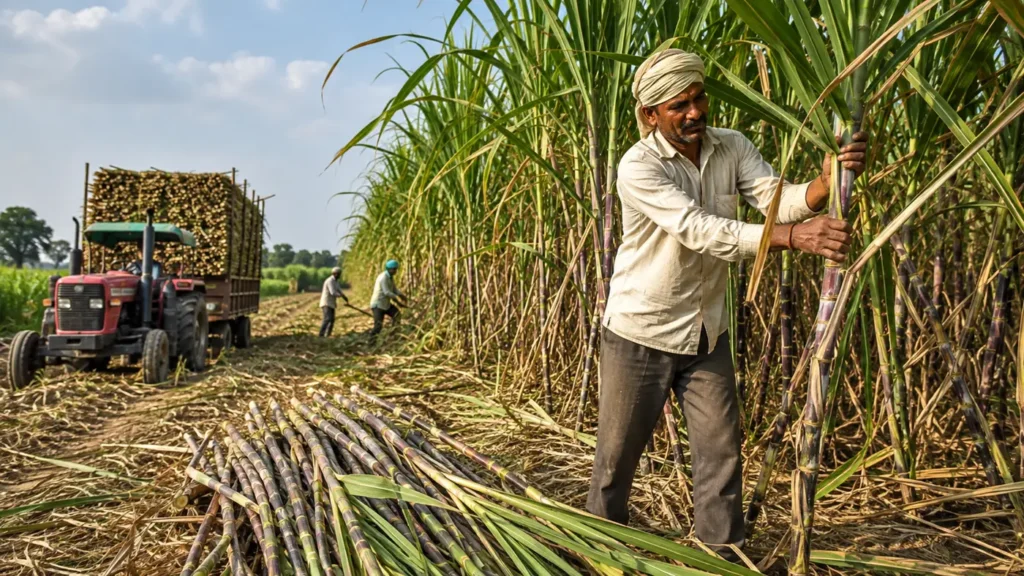
From Cane to Cash
Sugarcane Farming
From the sugar in your morning tea to the ethanol blended into fuel, sugarcane is far more than just a sweet crop. It is one of India’s most important commercial crops, supporting millions of farmers and feeding Indian families as well as major industries. But growing sugarcane might not be as simple as planting a crop and waiting for the harvest. It requires the right soil, climate, irrigation, nutrients, and careful crop management to achieve a healthy yield.
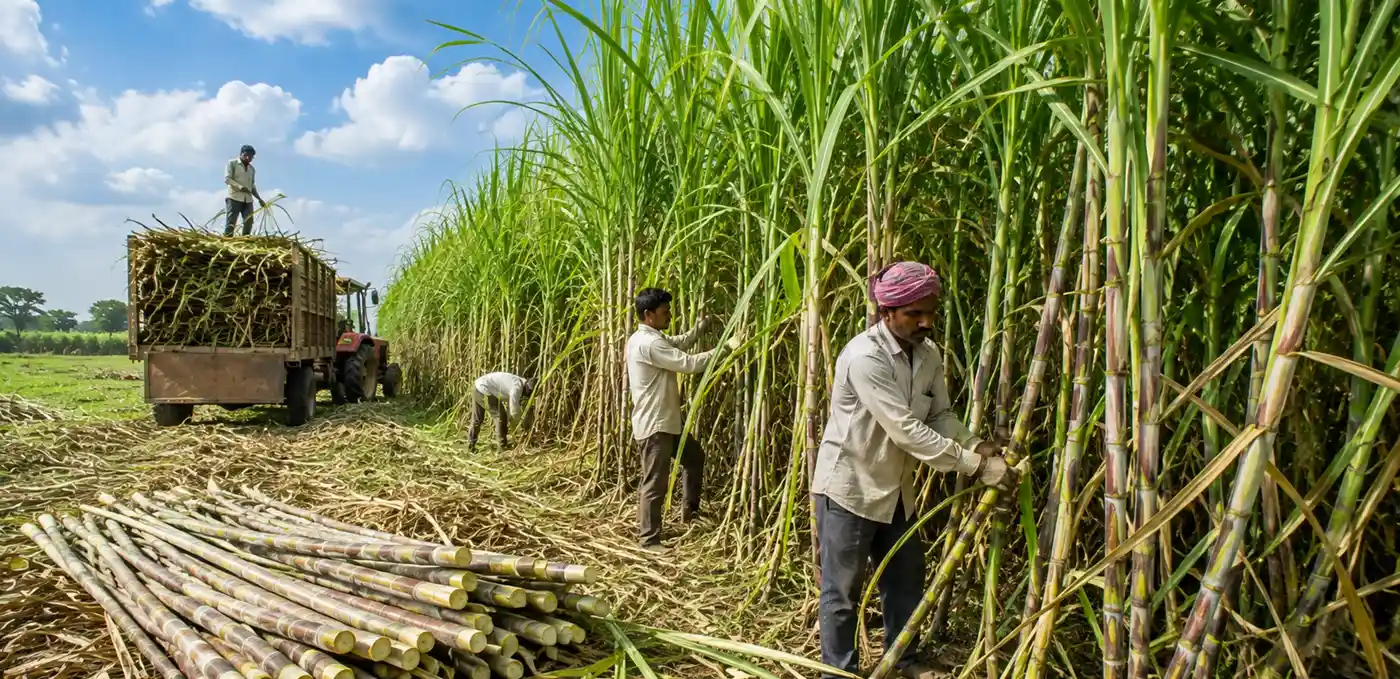
When managed efficiently, sugarcane farming can offer farmers a reliable source of income explore the essentials of sugarcane farming practices, from suitable growing conditions and planting methods to irrigation, harvesting, profitability, and the challenges that farmers face.
How Many Types of Sugarcane Varieties are There?
Sugarcane varieties differ based on their maturity period, growing conditions, and planned use. Some are cultivated mainly for sugar production while others are preferred for jaggery juice, or industrial applications.
Early Maturing Varieties
These varieties mature relatively quickly and can be harvested earlier. They are useful where farmers want a shorter crop cycle.
Mid Season Varieties
These take longer to mature than early varieties and are commonly grown where the climate and growing season support a moderate crop duration.
Late Maturing Varieties
These require a longer growing period but can produce good yields when provided with suitable soil, irrigation and management.
High Sugar Varieties
These are selected for their higher sucrose content and are notably valuable to the sugar industry.
Ratoon Varieties
Ratoon sugarcane is not a separate botanical type; it refers to the crop that regrows from the stubble left after harvesting the previous crop. It can reduce planting costs and labor requirements.
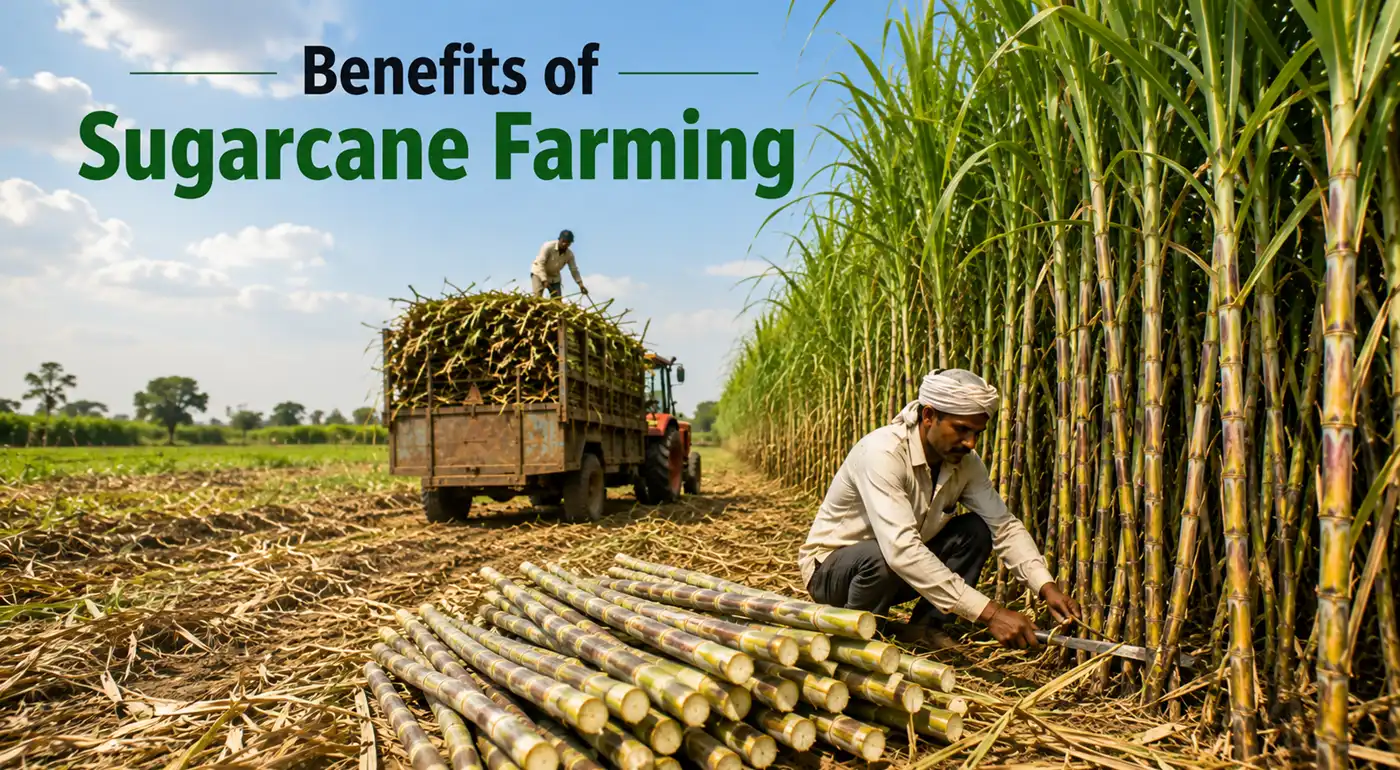
Benefits of Sugarcane Farming
Good Income Potential
Sugarcane is an important commercial crop and can provide farmers with a relatively dependable source of income when yields, prices and input costs are favorable.
Multiple Uses
Sugarcane is used to produce sugar, jaggery, molasses, ethanol and sugarcane juice. Its by-products, such as bagasse, are also used for paper, electricity generation, and other industrial purposes.
Supports Allied Industries
Sugarcane farming supplies raw material to sugar mills, distilleries, jaggery units, paper industries and bioenergy plants, creating economic activities beyond the farm.
Employment Generations
Cultivation, harvesting, transportation, and processing of sugarcane create employment opportunities in rural and agricultural communities.
Useful Crop Residue
Sugarcane leaves and other residues can be used for composting, mulching, and livestock-related purposes, helping farmers make better use of agricultural waste.
Supports the Ethanol Industry
Sugarcane is an important feedstock for ethanol production. This creates an additional market for the crop and supports biofuel development.
Suitable for Ratoon Cultivation
After the first harvest, sugarcane can regrow from the remaining stalks. This ratoon crop can reduce some planting costs and labor obligations compared with establishing a completely new crop.
Also read: What’s Driving India’s Sugar Prices?
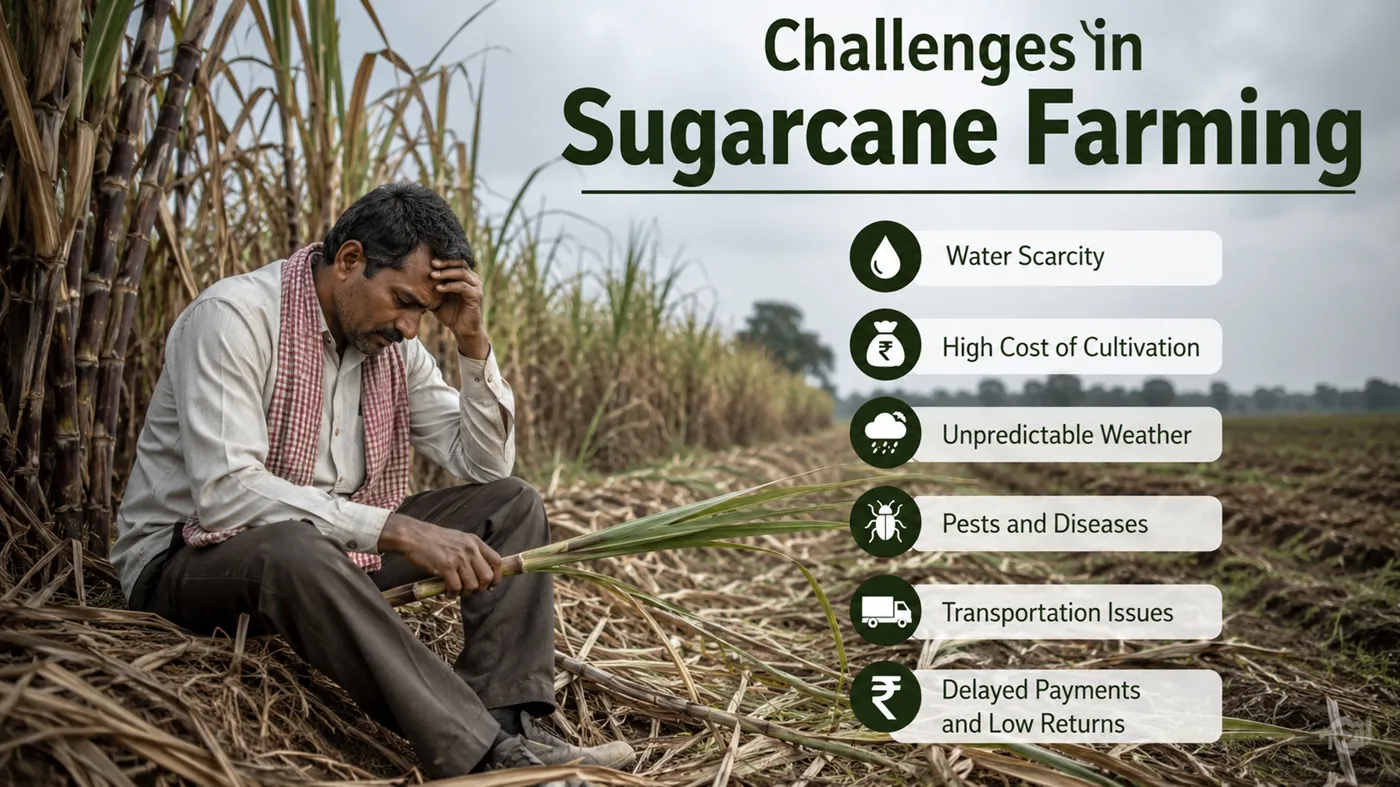
Challenges of Sugarcane Farming
High Water Requirement
Sugarcane is a water-intensive crop and requires adequate irrigation, particularly during dry periods. Poor water availability can affect both growth and yield.
Rising Input Costs
Farmers have to bear the cost of seeds or planting material, fertilizers, pesticides, labor, irrigation, and machinery. Rising input prices can reduce net profitability.
Weather Uncertainty
Extreme heat, drought, excessive rainfall, floods, and changing weather patterns are able to disrupt sugarcane growth and make yields harder to predict.
Pest and Disease Attacks
Sugarcane can be affected by pests and diseases such as early shoot borer, sugarcane borer, red rot, and smut. Heavy infestations can damage the crop and lower its quality.
Labour Intensive Harvesting
Harvesting sugarcane can require considerable manual labor, especially in areas where mechanized harvesting is limited. Labor shortages during the harvesting season can further increase costs.
Delayed Payments and Market Uncertainty
Sugarcane farmers may face financial pressure when mill payments are delayed or when changes in sugar prices and government policies affect the return.
Transportation and Storage Issues
Freshly harvested sugarcane needs to reach processing facilities relatively quickly. Poor roads, transport delays, and inadequate logistics can affect cane quality and farmer returns.
Is Sugarcane Farming Profitable?
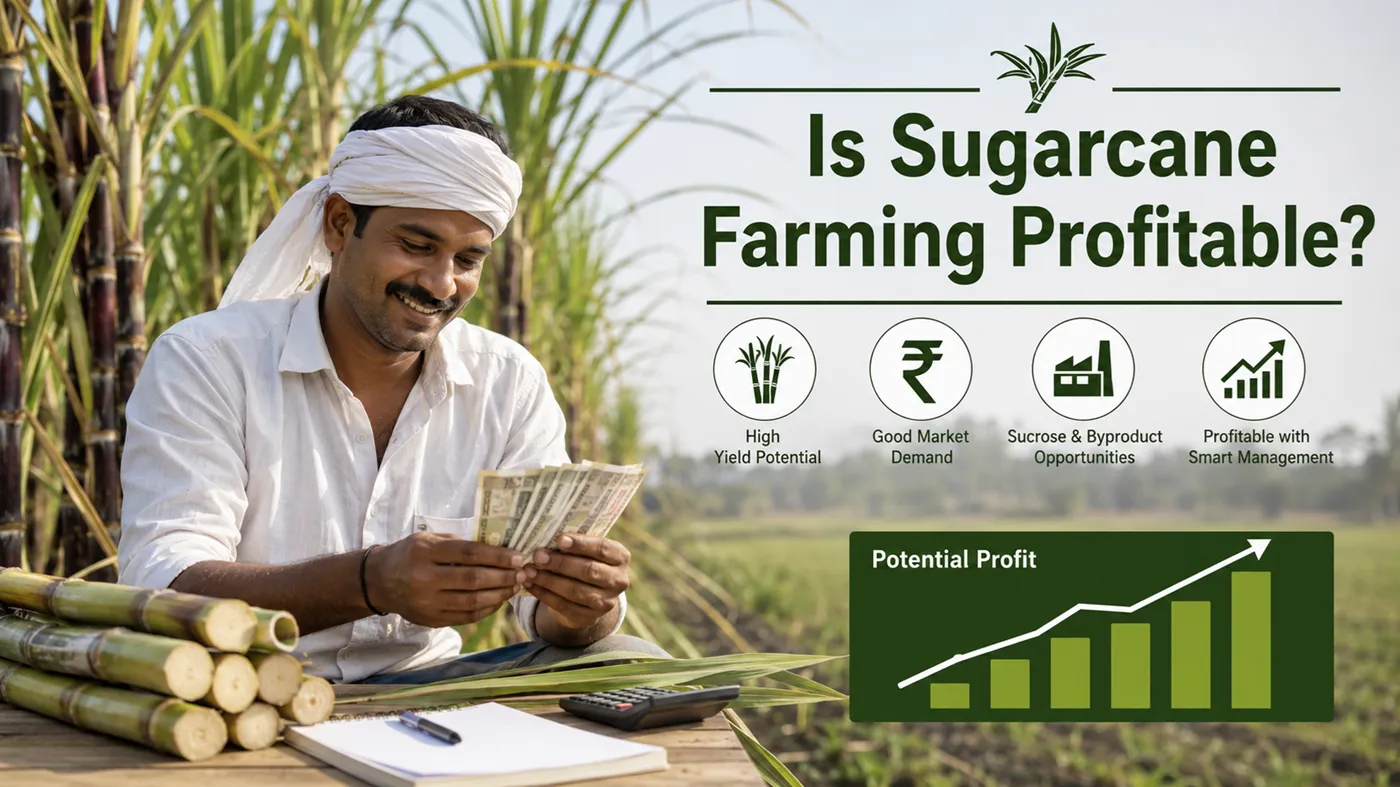
Sugarcane farming can be profitable when farmers achieve good yields and have access to reliable irrigation, efficient farming practices, and nearby processing facilities. Because sugarcane has various uses, which includes sugar, jaggery, ethanol, and other industrial products, it has strong demand across multiple sectors.
Profitability depends on cultivation costs, labor expenses, irrigation requirements, transportation charges, cane yield, and the price that farmers receive in the end. Ratoon cultivation can help reduce some costs because the crop regrows from the previous harvest without even requiring complete replanting.
Farmers can further improve profitability by adapting to suitable high-yielding varieties, using water and fertilizers efficiently, managing pests and diseases early, and reducing post-harvest transportation delays. which ultimately provides better productivity combined with controlled input costs is a key to making sugarcane farming financially sustainable.
Sugar cane farming is not always about cultivation; it is an important link between the farmers, rural livelihoods and industries spanning from sugar and jaggery to ethanol and bioenergy. While its high water requirement, rising input costs, labor needs and weather uncertainties create genuine challenges, better farming practices help farmers improve productivity and control costs.
The future of sugarcane lies in making its cultivation more efficient, sustainable, and profitable. Smarter irrigation, improved varieties, responsible nutrient management, mechanization, and better access to markets can help farmers get more value from every acre.
With the growing demands for sugar and biofuels, sugarcane will continue to hold an important place in India’s agricultural and industrial landscape.
FAQs about Sugarcane Farming