Cattle Farming
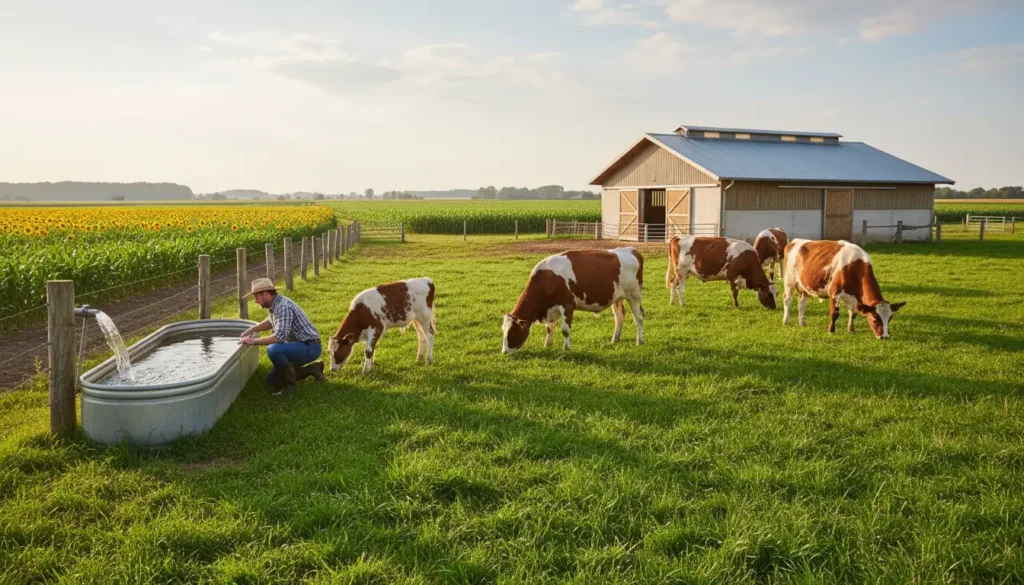
Grazing cows in the sunny field, a farmer gently milking a cow, filling a bucket with fresh milk this is the imagery that we all have in our minds when it comes to cattle farming.
Mooing cows and a farmer managing his cattle and livelihood together. But as we all know, everything looks good from afar. Do we actually know the whole process, or is the only thing that comes to mind when we think of cattle farming “moo”?
Let’s brush up our 6th-grade knowledge, but this time on a deeper level.
Cattle farming involves the raising and managing of cows for milk, meat, and labor. This practice involves feeding the animals, taking good care of them, maintaining health and sanitation, making shelter for them, milking the cows, managing breeding, taking care of newborn calves, making organic manure using cow dung, taking records of the everyday necessary tasks, while also maintaining the financial aspects of the whole process.
Let’s look at cattle farming from a farmer’s perspective first, then try to understand the farm animals better too, as there is a direct correlation between these two and then to us.
What the Cattle Needs and Eats
Understanding your cattle better is a must for the farmer; as feeding them the right nutritional food rich in minerals, based on their age, height, size, breed, and health, is a crucial step. Cows and buffaloes need plenty of water to stay healthy and produce enough milk.
What’s the Cattle’s Health and Behavior
A good farmer takes time to know their animals, notice behavioral changes, and act accordingly. Routine checkups, regular vaccinations, and hygiene maintenance are also important. If a farmer sees his animal behaving differently, if a cow suddenly stops eating or eats a really small amount of food, or an active animal suddenly starts napping a lot, you know it’s time for a well-needed checkup, as timely diagnosis helps the process be shorter and easier in duration.
How is Their Shelter?
Like any other living being, cattle also need their own personal space for rest and safety. The shelter of the cattle should be clean, dry, well ventilated, and spacious enough for the cows to sleep and move without a hassle, as creating a safe home for them is the farmer’s utmost responsibility.
Reproduction
Breeding is not just about increasing the number of cattle; it is also about managing breeding cycles in suitable animals and providing mandatory care for the pregnant cow. And later then, caring for the newborn once it is born.
Care for Calves
Newborn calves need a lot of attention, nutrition, warmth, hygiene, protection, and, lastly, love and care to grow well. Farmers need to be extra cautious when caring for newborns, as they are sensitive and prone to disease, making it essential to give them a better chance of survival & as a fresh start.
Managing Manure & Milking
Farmers know that milk production is the most important step in cattle farming which depends heavily on the food that cattle eats, their health, nutrition, and hygienic milking practices. With manure making, even the waste gets upcycled. Farmers can make a sufficient amount of money, as even the waste left by the cattle has its own unique value, which ultimately profits the farmer.
Keeping a Track Record of the Cattle & Finances
Farmers religiously keeps a track of milk production, health, breeding cycles, vaccinations, and feeding, which helps them understand their herd and make necessary decisions for both the cattle and their finances. Farmers have to manage the cost of food, checkups, and shelter maintenance to understand the total monthly cost of maintaining the cattle, know where the income is flowing, and set monthly or yearly goals based on this information to generate profit.
Care for the Cattle and Livelihood Altogether
Cattle farming is the farmer’s livelihood, so taking well-rounded care of his animals and regularly checking the productivity and total expenses of his farm is his duty. Because cattle farming and his income are linked together, the farmer can’t help but build a family-like relationship filled with love, care, and bond with each other.
A good farmer doesn’t just manage and look after his cattle, he actively tries to learn to understand them better every day.
Now, let’s try to understand the cattle better, through the eyes of the animal.
For the animal, the farmer can be a familiar and safe presence, as research on human-cattle relationships shows that the way a farmer reacts to the animal can influence the behavior cattle show toward people. A calmer approach and gentle handling build familiarity and reduce fear, while rough handling and shouting can make cattle fearful and stressed. This is why understanding the cattle is deeply helpful in building a healthy relationship with them. Also, taking good care of them and noticing their behavioral and eating patterns builds a sense of comfort between the two. From the animal’s perspective, feeling safe and cared for is everything, because to understand an animal, a farmer has to learn to listen to what the animal can’t say.
Now let’s look at some forms of cattle farming:
The Different Types of Cattle Farming
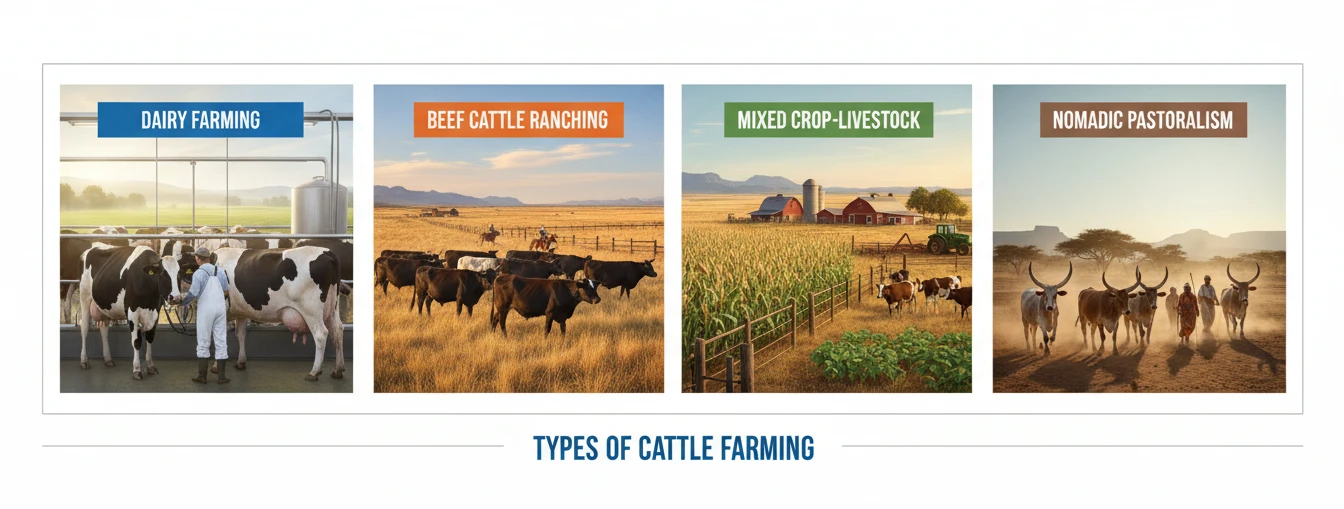
Dairy Farming
In this type of farming, cattle are kept and primarily used for milk production. Farmers choose well-bred cows to produce high-quality milk.
Beef Cattle Farming
Here, cattle are raised mainly for meat; farmers focus on healthy growth, proper feeding, breeding, and weight gain.
Dual Purpose Cattle Farming
Cattle are raised for both milk and meat purposes. Farmers choose this type of dual-purpose farming when they want more than one source of income from their herd, so they focus on good breeding, growth, and milk production for dual benefits.
Breeding Cattle Farming
This type of farming focuses on breeding, producing, and raising quality calves. Farmers carefully select animals with desirable breeding characteristics.
Depending on the farmer’s goals, available resources, and local conditions, cattle can be raised for milk, meat, breeding, or a combination of these purposes.
Benefits of Cattle Farming
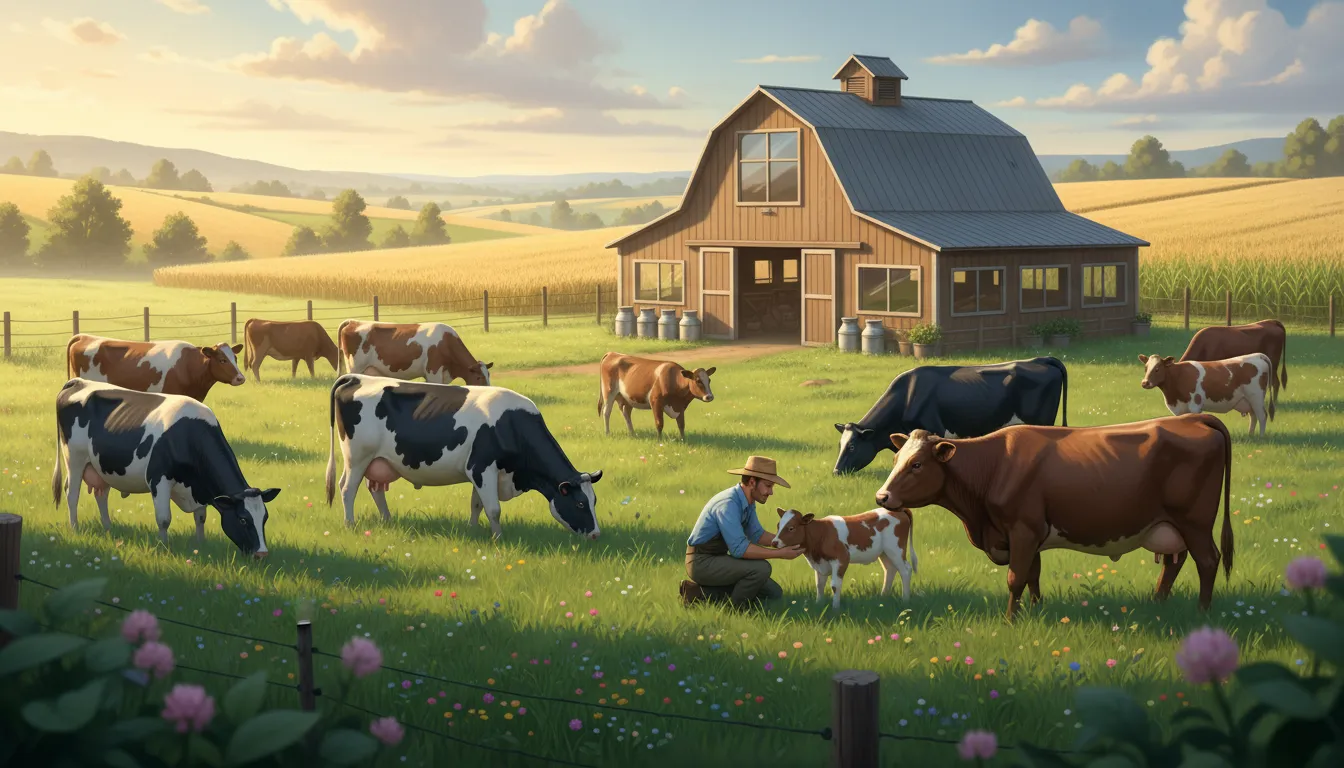
Income
Cattle provide various sources of income through the sales of milk or milk products, calves, or livestock. A well-managed cattle herd can be a great asset for the farmer’s reputation and financial stability.
Milk and Dairy Production
Cattle provide farmers with milk, which can be processed into various milk products like curd, tofu, butter, cheese, and ghee, or consumed directly.
Dairy production can create opportunities for small-scale rural farmers to build and further diversify their farming business.
Supports Rural Livelihood
Cattle farming creates job opportunities not only for farmers but also for people involved in animal healthcare, feed supply, dairy collection, and transportation, thus creating a network around agriculture.
Making Use of Agricultural By-products
Cattle can consume certain crop residues or agricultural by-products that might otherwise go to waste. Cattle dung can also be used as organic manure, which adds nutrients to the soil and reduces dependence on chemical inputs. It is also used in composting and for biogas production.
Also read: Top 10 Organic States in India & Leading Organic Farming Regions
Challenges of Cattle Farming
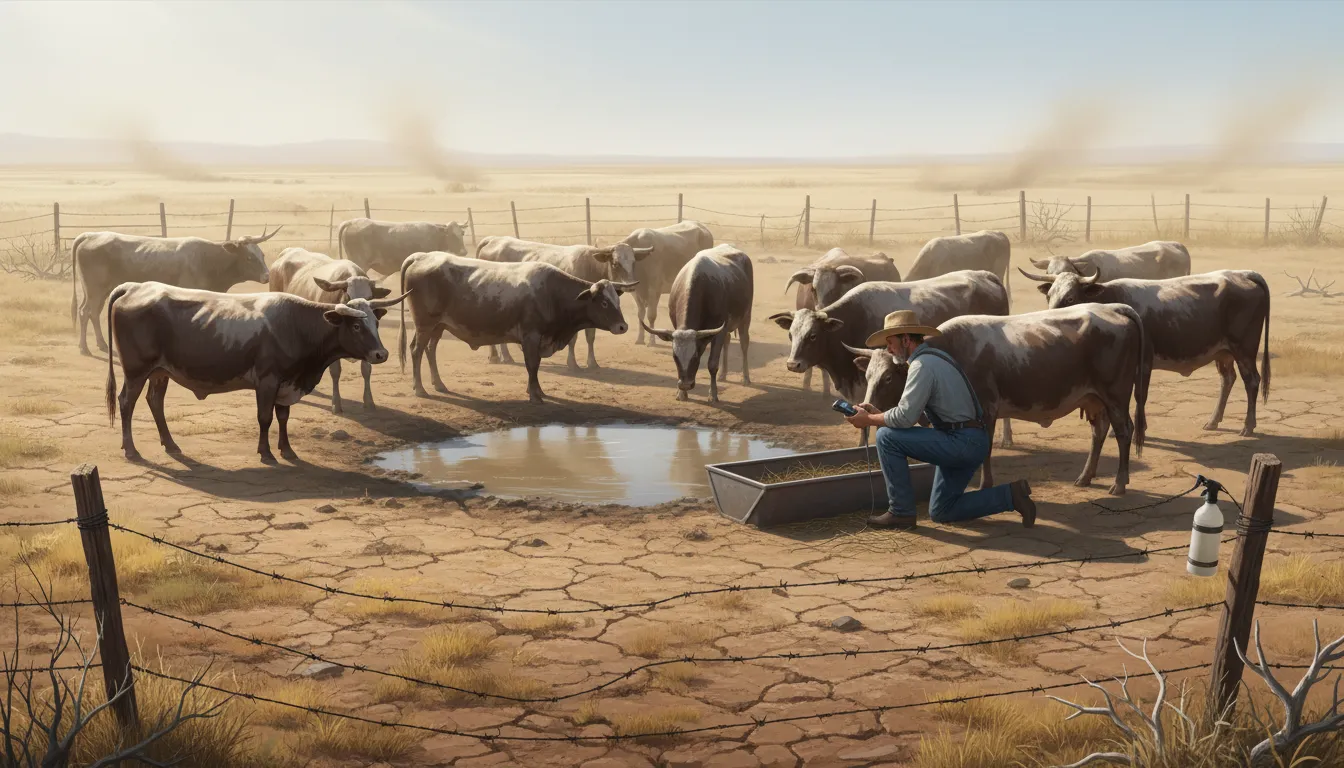
Rising Feed Costs
Feed is one of the biggest expenses that farmers bear in cattle farming. The various costs of grains, minerals, fodder, and other nutritional supplements can directly affect a farmer’s pocket.
Cattle Healthcare
Illness or disease can give no prior notice, affecting both animals and their ability to produce milk, which can ultimately reduce a farmer’s income or profit. Farmers also have to pay for regular check-ups, treatments, and vaccination costs.
Everchanging Weather and Climate
Extreme heat, heavy rainfall, droughts and changing weather can affect cattle health, fodder and water availability.
Heat waves and stress can inherently reduce feed intake and milk production.
Labour and Workload
Cattle require attention every single day, which includes feeding, cleaning, milking, monitoring and taking care of the cattle. A farmer cannot take a day off as livestock farming is highly labor-intensive.
Is Cattle Farming Profitable in India?
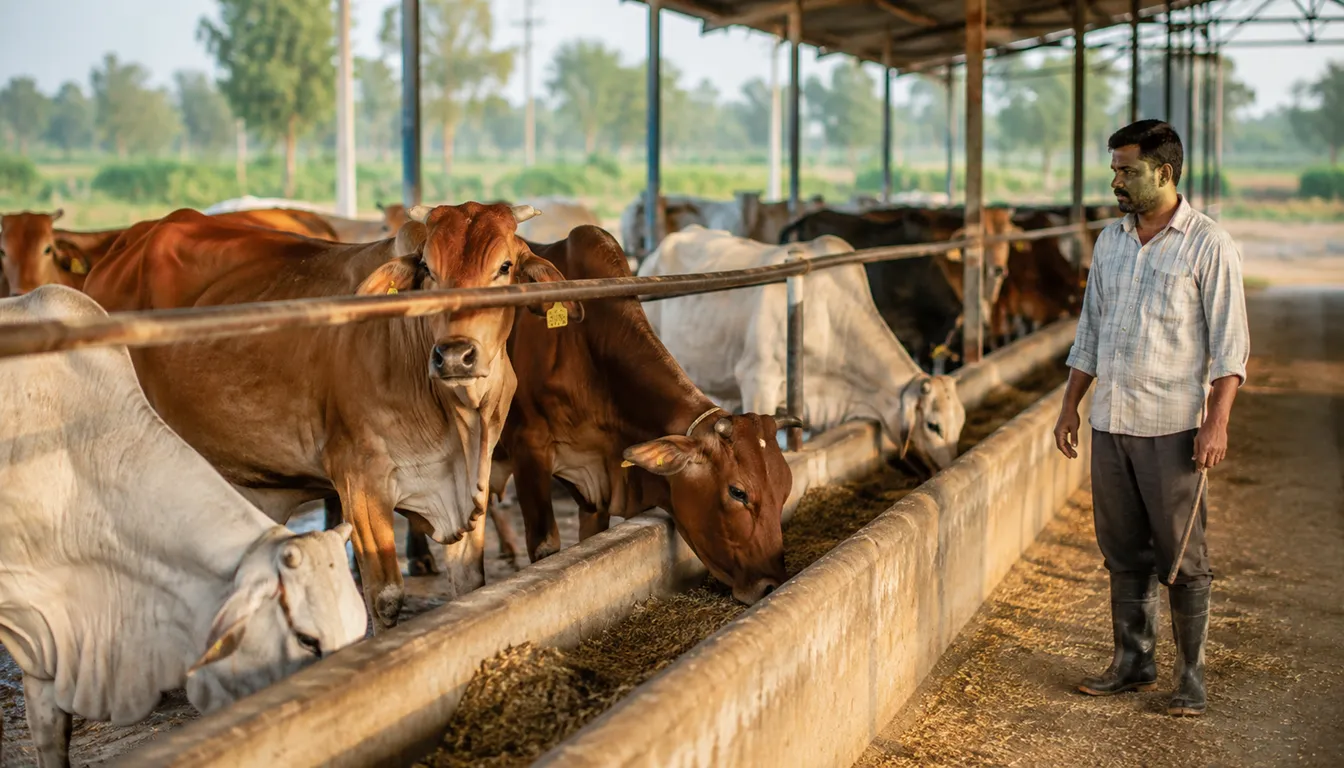
Cattle farming in India can be profitable if the farmer is managing the herd efficiently and maintains a balance of animal health, wellness, productivity, and operational costs.
Regular milk production can become a steady income for the farmer, while sales of calves, livestock and manure can create additional secondary income.
Profitability depends heavily on product quality, so milk and milk products should be processed and stored hygienically, because if freshness and taste stays intact the profit is pretty much guranteed.
Various expenditures are involved in the cattle farming sector: feed cost, cattle health, milk yield, veterinary expenses, and market price. Farmers can improve their finances by buying local fodder, maintaining animal health, reducing unnecessary costs, and adopting better livestock management practices.
FAQs About Cattle Farming
Cattle farming is more than raising animals for milk or income, it is a relationship built on care, responsibility, and understanding, as from the farmer who learns to recognize every slight change in their animal’s behavior to the cattle that recognizes and trusts him.
It is a balance between caring for animals while also making a sustainable livelihood through it. Behind every healthy herd is a farmer who understands its needs, behavior, and well-being. The farmer cares for the cattle, while the cattle nurtures him and his family. It is a mutual relationship that they both share and live on.
With the right nutrition, healthcare, and management, cattle can support both farm and family.