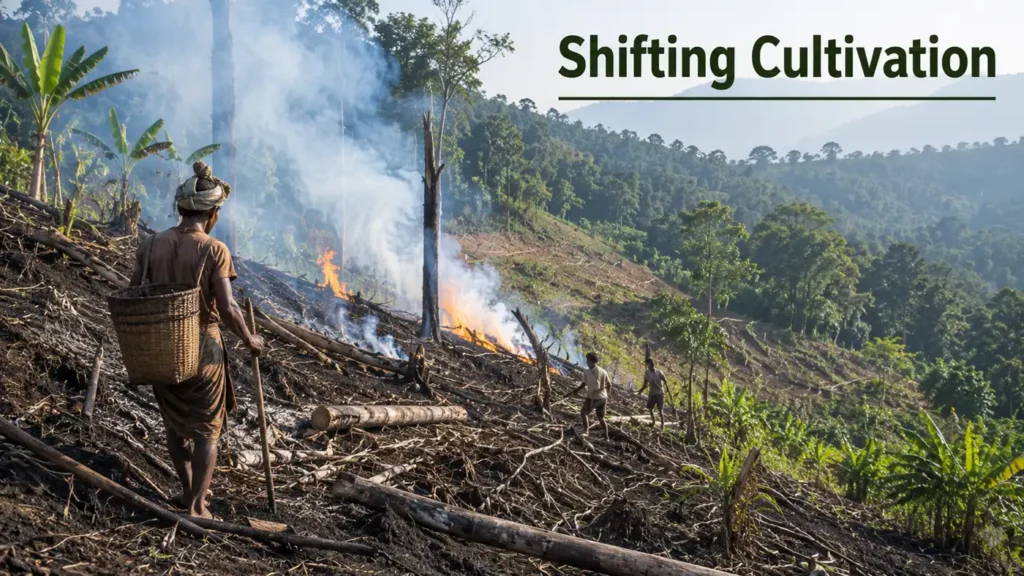
Agriculture in India is deeply tied to diverse topographies, ranging from the Indo-Gangetic plains to undulating hill tracts and plateaus. Among various traditional methods, shifting cultivation remains one of the oldest forms of subsistence farming practiced by indigenous tribal communities. Often referred to broadly as shifting agriculture, this practice plays a unique role in the cultural and economic framework of specific forested regions.
As environmental policies, modern agricultural extensions, and land-use strategies evolve, understanding what is shifting agriculture—its cycles, regional variations, and ecological impacts—remains vital for balancing tribal livelihoods with modern resource management.
What is Shifting Cultivation?
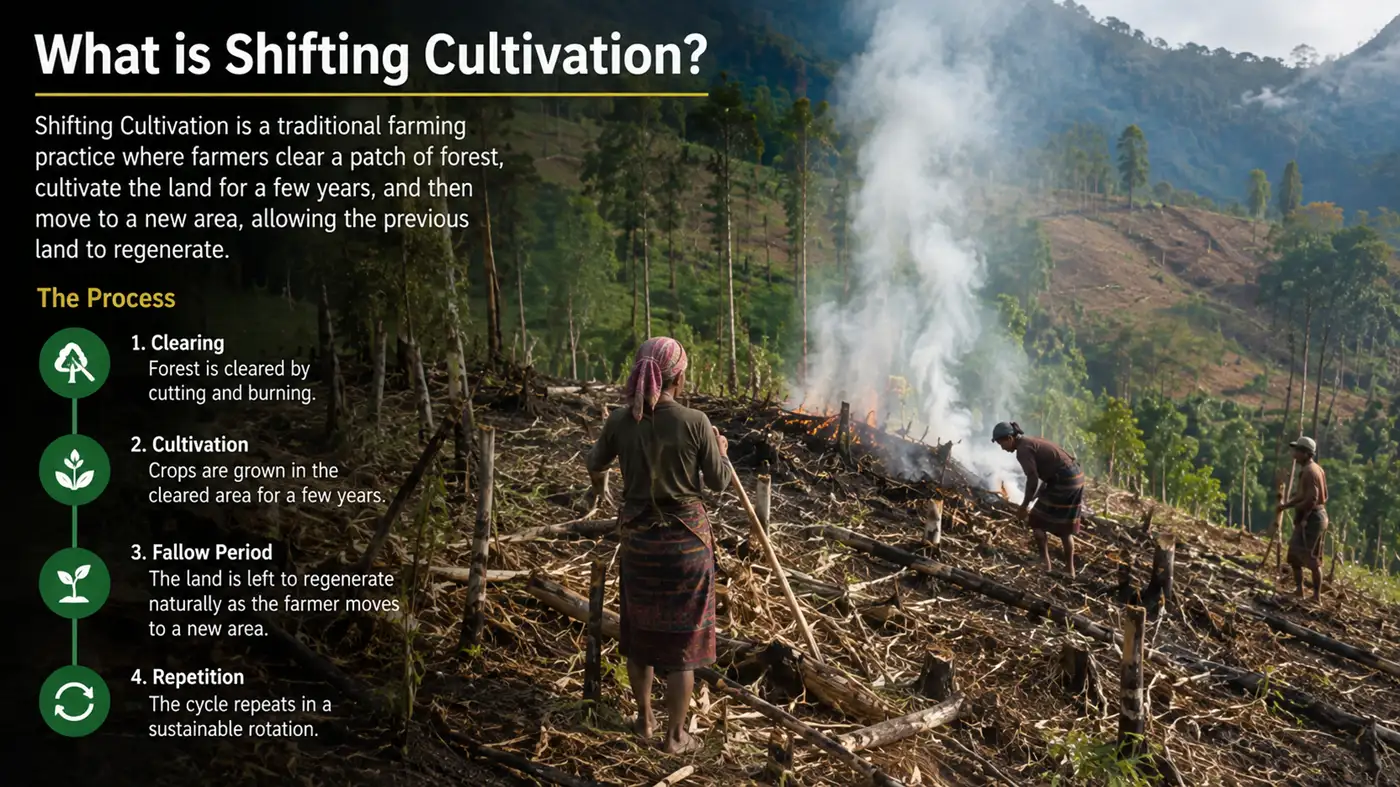
At its core, shifting cultivation (frequently called slash-and-burn agriculture) is a system where farmers clear a small patch of forest or woodland by cutting and burning the vegetation. The resulting ash acts as a natural, nutrient-rich fertilizer for the soil, allowing farmers to grow basic food crops like millets, maize, hill rice, and tubers for a few seasons.
Once the soil loses its natural fertility and weed infestation increases, the plot is abandoned. The community then moves to a fresh patch of land, leaving the original plot uncultivated so that secondary forests can regrow and restore soil nutrients over time.
How Shifting Cultivation in India Works: The Jhum Cycle
In India, this practice is predominantly concentrated in the hilly tracts of the Northeast and select eastern and southern pocket regions. The operational cycle generally follows these key stages:
- Selection and Clearing: Small plots (usually 5 to 1 hectare) on hill slopes are selected during the dry season. Trees and undergrowth are slashed and left to dry.
- Burning: The dried biomass is burned before the monsoon The ash provides immediate minerals like potash and lime to the topsoil.
- Multi-Crop Sowing: Seeds are planted manually using simple tools like hoes and dibble sticks. Farmers often practice mixed cropping, cultivating pulses, vegetables, and cereals
- Fallowing: After 2 to 3 years of cultivation, declining fertility and competing weeds prompt farmers to abandon the plot, entering a regenerative fallow cycle.
Regional Names of Shifting Agriculture in India
While widely recognized as Jhum in northeastern states, shifting agriculture in India goes by several localized names depending on the state and community:
| Local Name | Region / State |
| Jhum | North-Eastern India (Nagaland, Meghalaya, Mizoram, Arunachal Pradesh, etc.) |
| Podu | Andhra Pradesh |
| Kumari | Hilly regions of the Western Ghats (Kerala) |
| Bewar / Dahiyaar | Madhya Pradesh / Bundelkhand Region |
| Deepa | Bastar District (Chhattisgarh) |
| Batra | South-Eastern Rajasthan |
| Kaman, Vinga, or Dhavi | Odisha |
| Zara or Erka | Various southern hill tracts |
Ecological and Economic Impacts of Shifting Farming
The practice of shifting farming is a subject of ongoing debate among ecologists, economists, and policymakers:
- The Traditional Value: For indigenous populations, it is not merely a production method but a deeply cultural way of life intertwined with local folklore, community sharing, and agro-biodiversity preservation.
- Environmental Challenges: Modern population pressures have drastically shortened the traditional recovery (fallow) period from 10–15 years down to just 3–5 years. This lack of recovery time leads to permanent topsoil erosion, nutrient depletion, and loss of dense forest cover, occasionally exacerbating monsoon run-off issues in lower river basins.
Also read: What is Sugarcane Farming? Meaning, Benefits and Challenges
Modern Policy Shifts and Transition to Sustainable Alternatives
Recognizing the environmental strain of traditional cycles while respecting tribal livelihoods, state governments and bodies like the Indian Council of Agricultural Research (ICAR) have introduced integrated watershed management programs. Initiatives now focus on:
- Introducing terraced farming and horticulture alternatives on hill
- Promoting agroforestry, cash-crop plantations (such as coffee, tea, and spices), and organic farming transitions.
- Providing subsidized agricultural inputs to help settled communities secure stable, year-round income streams without heavy reliance on clearing new forest patches.
Benefits of Shifting Farming
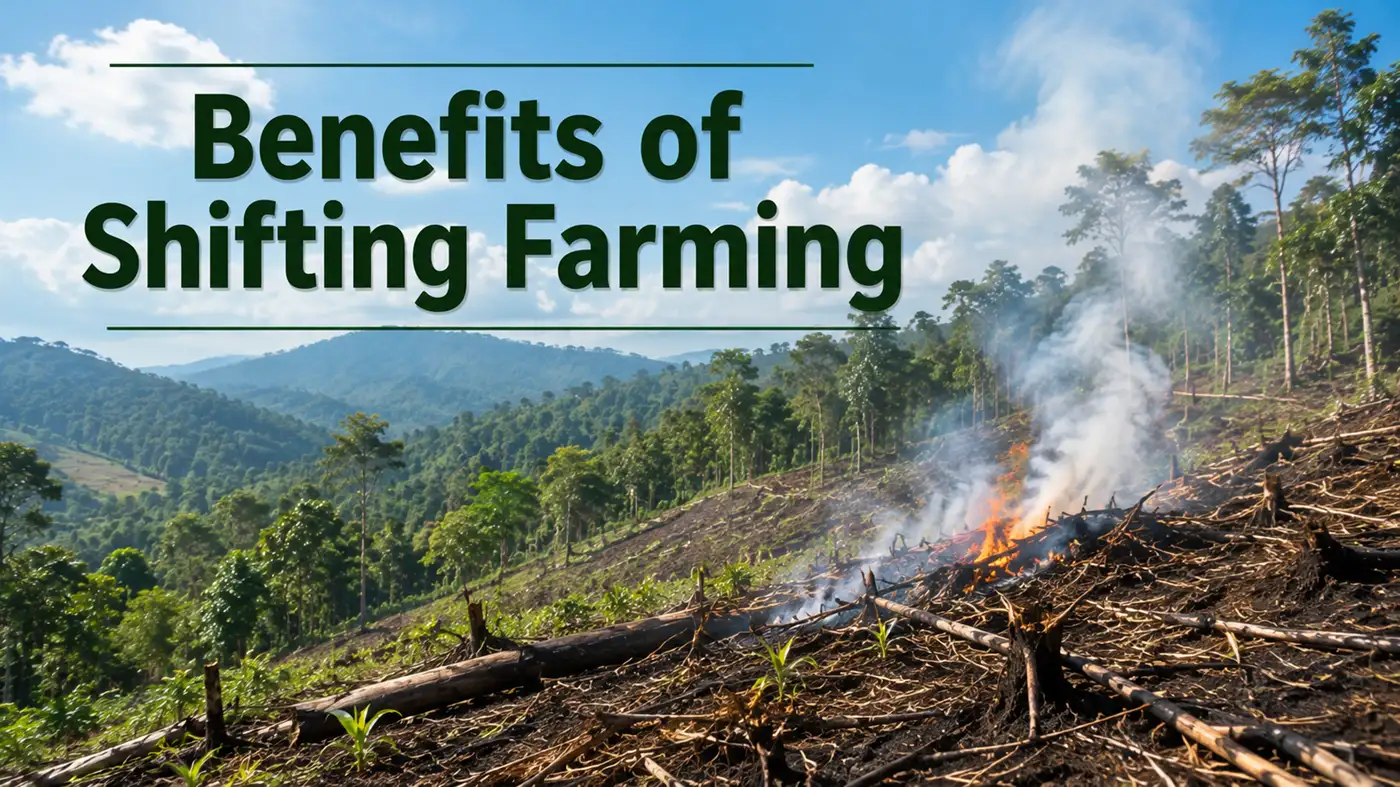
When practiced under traditional, low-density conditions with long recovery windows, shifting farming offers several notable advantages:
Natural Soil Enrichment
The controlled burning of biomass deposits essential mineral ash directly into the topsoil, offering immediate nutrients without expensive chemical fertilizers.
Agro-Biodiversity Preservation
Mixed cropping techniques (growing millets, tubers, and vegetables together) preserve indigenous seed varieties and genetic diversity.
Cultural and Traditional Continuity
For millions of indigenous households, it is an integrated cultural identity marker, preserving ancestral knowledge, community cooperation, and localized
self-reliance.
Low Initial Capital
Because it relies entirely on manual labor and basic traditional tools rather than heavy machinery, financial barriers to entry are minimal.
Challenges and Environmental Impacts
Despite its cultural roots, modern demographic and environmental pressures have intensified the drawbacks associated with the practice:
Shortened Fallow Cycles & Soil Degradation
Due to rising populations, traditional 10-to-15-year fallow cycles have plummeted to just 2 to 3 This does not give the land enough time to recover its organic nutrients, leading to rapid soil exhaustion and erosion.
Deforestation and Habitat Loss
Accelerated movement across hill slopes increases clearing rates, fragmenting local flora and fauna habitats.
Climate Vulnerability
Changes in monsoon timing and erratic rainfall patterns make rain-fed, slope-based crops highly vulnerable to sudden dry spells or localized crop failures.
Modern Policy Shifts and Transition to Sustainable Alternatives
Recognizing the environmental strain of compressed cycles while respecting tribal livelihoods, state governments and bodies like the Indian Council of Agricultural Research (ICAR) have introduced integrated watershed management programs. Initiatives now focus on:
- Introducing terraced farming and horticulture alternatives on hill
- Promoting agroforestry, cash-crop plantations (such as coffee, tea, and spices), and organic farming transitions.
- Providing subsidized agricultural inputs to help settled communities secure stable, year-round income streams without heavy reliance on clearing new forest patches.
FAQs about Shifting Cultivation