
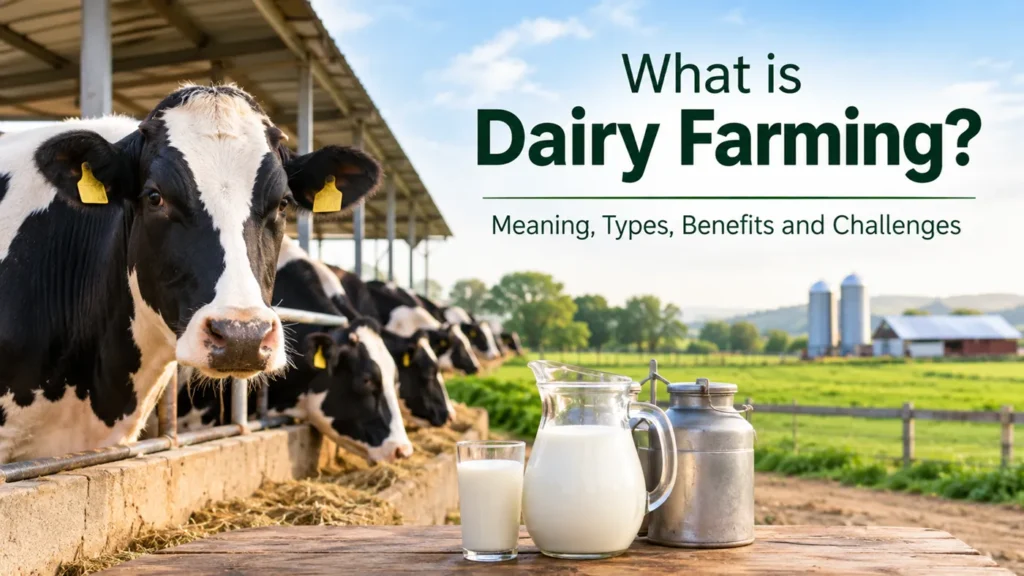
What is Dairy Farming?
Dairy farming is one of the key sectors of livestock farming and includes the breeding, feeding, housing, and management of animals which produce milk. It not only supplies milk and all other dairy products but also offers farmers and rural households a steady income.
Dairy farming is important to the agricultural economy in India since milk gives farmers a more regular income than that from seasonal crops. It also provides employment in a variety of areas, including the production of animal feed, veterinary services, transportation, the collection of milk, processing and the manufacturing of dairy products.
Modern dairy farming is now going further than traditional methods of rearing cattle. Farmers can increase productivity while still ensuring animal welfare by means of better animal nutrition, improved breeding practices, more effective veterinary care, better farm hygiene, the use of digital monitoring, and an organised milk collection system.
Types of Dairy Farming
Dairy farms can differ according to herd size, production methods and the level of technology used.
Small Scale Dairy Farming
Small-scale dairy farms generally keep a limited number of cattle or buffaloes and are often operated by individual farmers or families. Milk may be sold to local consumers, milk cooperatives or collection centers.
Commercial Dairy Farming
Commercial dairy farms keep larger herds mainly in order to produce and sell milk, and they usually need more investment in housing, feed, equipment, and veterinary care.
Semi Intensive Dairy Farming
Semi-intensive dairy farming combines stall feeding with access to grazing or outdoor areas. It can provide farmers with greater flexibility in directing feed and housing requirements.
Integrated Dairy Farming
Integrated dairy farming combines the keeping of dairy animals with other forms of agricultural work. For instance, the manure from cattle can be used as organic fertiliser and crop residues at times be included in the feeding programmes for livestock. This method can lead to better use of resources and a reduction in farm waste.
Benefits of Dairy Farming
Regular Source of Income
Unlike many crops that generate income mainly after harvest, dairy farming can provide farmers with regular income through milk sales.
Employment Generation
Dairy farming creates direct employment on farms and support jobs in veterinary care, feed production, transportation, milk collection, processing, and marketing.
Utilisation of Agricultural by-products
Certain crop residues and agricultural by-products can be used as livestock feed when they are nutritionally appropriate and safely prepared. This can improve resource application on mixed farms.
Manure for Agriculture
Animal manure can be valuable for crop production because it contributes organic matter and nutrients to soil. Proper manure management can therefore connect livestock farming with crop farming.
Supports Rural Livelihoods
Dairy farming can provide an additional or primary livelihood for rural households, helping farmers diversify their income instead of depending entirely on a single crop.
Challenges of Dairy Farming
High Feed Costs
Feed is one of the major recurring expenses in dairy farming. Prices of fodder, concentrates and other inputs can affect profitability.
Animal Diseases
Diseases can reduce milk production, increase veterinary expenses and sometimes cause animal losses. Preventive healthcare, vaccination and hygiene are therefore important.
Labour Requirements
Dairy animals need daily care, including feeding, watering, cleaning, milking and health monitoring. This makes dairy farming more labor-intensive than some crop-based activities.
Heat Stress and Climate Conditions
High temperatures and changing weather conditions can affect animal health, feed intake and milk production. Farmers may need suitable ventilation, shade, clean drinking water and other heat management measures.
Milk Price Fluctuations
The price farmers receive for milk can vary depending on quality, demand, local markets, procurement systems and input costs. Efficient marketing and access to organized milk collection can help farmers manage some of these problems.
Profitability of Dairy Farming
The profit of a dairy farm is influenced by a number of factors in addition to milk production; together these include milk yield, the health of the animals, feed efficiency, the choice of breed, milk prices, labour costs, and the general level of farm management.
Farmers can improve profitability by:
- Selecting animals that are healthy and productive and which are suitable for the local climate.
- Maintaining a feeding program that is both balanced and cost-effective.
- Vaccination, hygiene, and regular veterinary checkups can be used to prevent diseases.
- Reducing waste in feeding.
- Keeping accurate records of milk production, feed costs, breeding and healthcare.
- Selling milk via reliable buyers, cooperatives or organized collection networks.
- Exploring value-added products such as curd, paneer, ghee or other dairy products where regulations, market demand and processing facilities permit.
- Using farm manure effectively in crop production or other appropriate applications.
The key is to manage input costs against milk revenue. A farm with high milk production may still have low profits if feed, labor, healthcare and other operating costs are poorly controlled.
Also read: How Good Animal Husbandry Practices Benefit Farmers in India?
Dairy Farming and Sustainable Agriculture
Dairy farming can be part of sustainable agriculture if the livestock, the crops and the natural resources are managed in a responsible manner. By using manure, integrated farming systems can recycle nutrients, and effective feeding and water management can cut down on waste of resources.
Sustainability also calls for attention to animal welfare, careful waste management, clean water, disease prevention and appropriate stocking levels. Technologies such as digital livestock monitoring and improved farm management systems can additionally support efficient decision-making.
FAQs about Dairy Farming
Dairy farming involves more than just the production of milk; it is linked with livestock management, agriculture, food processing, rural employment and household income. If suitable animal nutrition, healthcare, breeding practices, hygiene and financial management are applied, dairy farming may become a sustainable and commercially viable form of agricultural activity.
Since India’s dairy industry is still becoming more modernised, farmers can take advantage of new opportunities through the use of better technology, the establishment of organised milk markets, increased value addition and improved farm management. Yet long-term profitability will depend on balancing productivity with animal welfare, input costs and responsible resource management.

