Soil: The key to eco-friendly agriculture.
Let’s trace our food backward from the plate to the cooking process, packaged wheat and vegetables in grocery stores, then to warehouses, and finally to the farm and its soil and soil health.
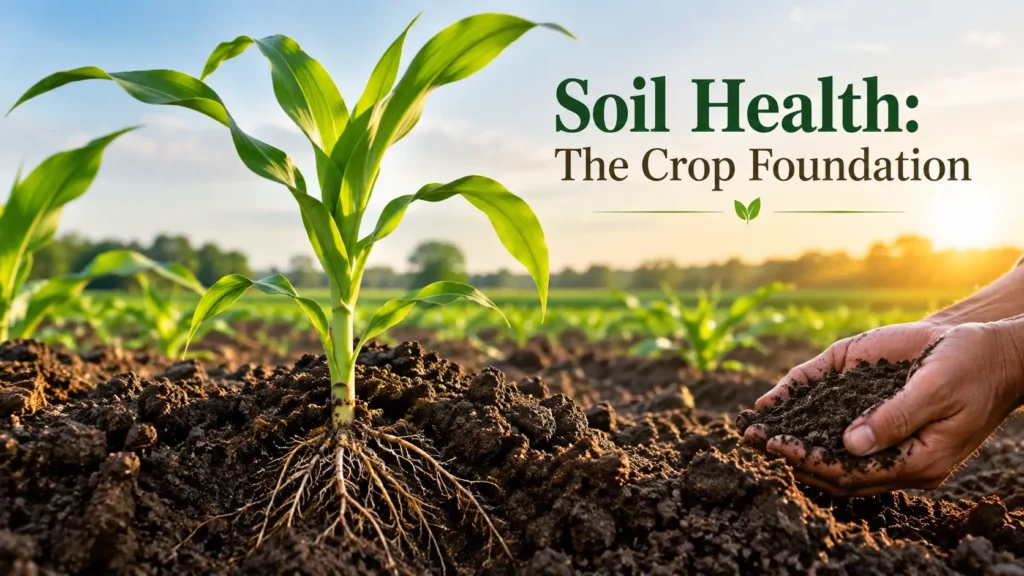
The journey of our food from the plate back to the soil is truly amazing. When we think about it, our food comes from actual soil, which may seem simple but is the most important base where our crops are planted and grown.
Soil is what makes this process of cultivation successful, as without soil there is no food.
A healthy crop starts long before the first seed is planted; it starts with healthy soil, which we often ignore beneath our feet. Soil is a living system that gives plants the nutrients, water, air, and support they need to grow. But years of heavy farming, too much chemical fertilizer, soil washing away, and changing weather are putting a lot of stress on soil quality. When soil loses its natural fertility and life, crop growth can drop, and farming may rely more on expensive outside help. Protecting soil health keeps the base for future farming strong. By learning about soil health and using eco-friendly methods, farmers can grow more, save natural resources, and create more reliable farming systems.
What is Soil Health?
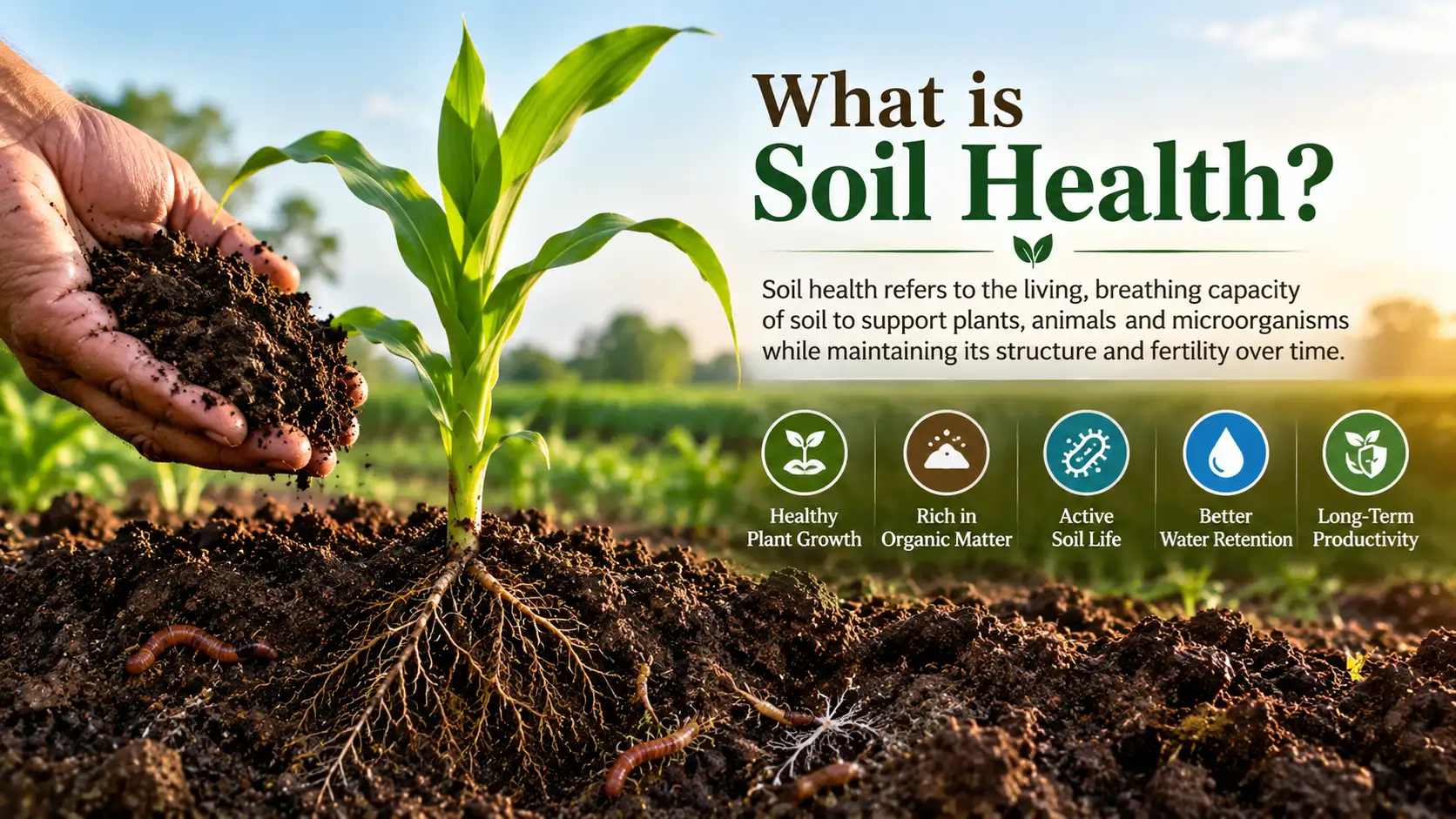
Soil health refers to the soil’s ability to function as a living ecosystem that supports plant growth, maintains environmental quality, and sustains farming yield over time. Healthy soil is more than just fertile soil; it has a good balance of physical structure, nutrients, moisture, organic matter, and beneficial microorganisms. These components work together to help crops develop strong roots and access the nutrients they need.
Soil health depends on factors like soil texture, pH level, organic carbon, nutrient amounts, water retention, and soil life. Farming methods like rotating crops, adding organic matter, reducing tillage, and using fertilizers based on soil tests can help keep the soil healthy. Good soil health creates better growing conditions, which support farming that can last.
Key Indicators of Healthy Soil
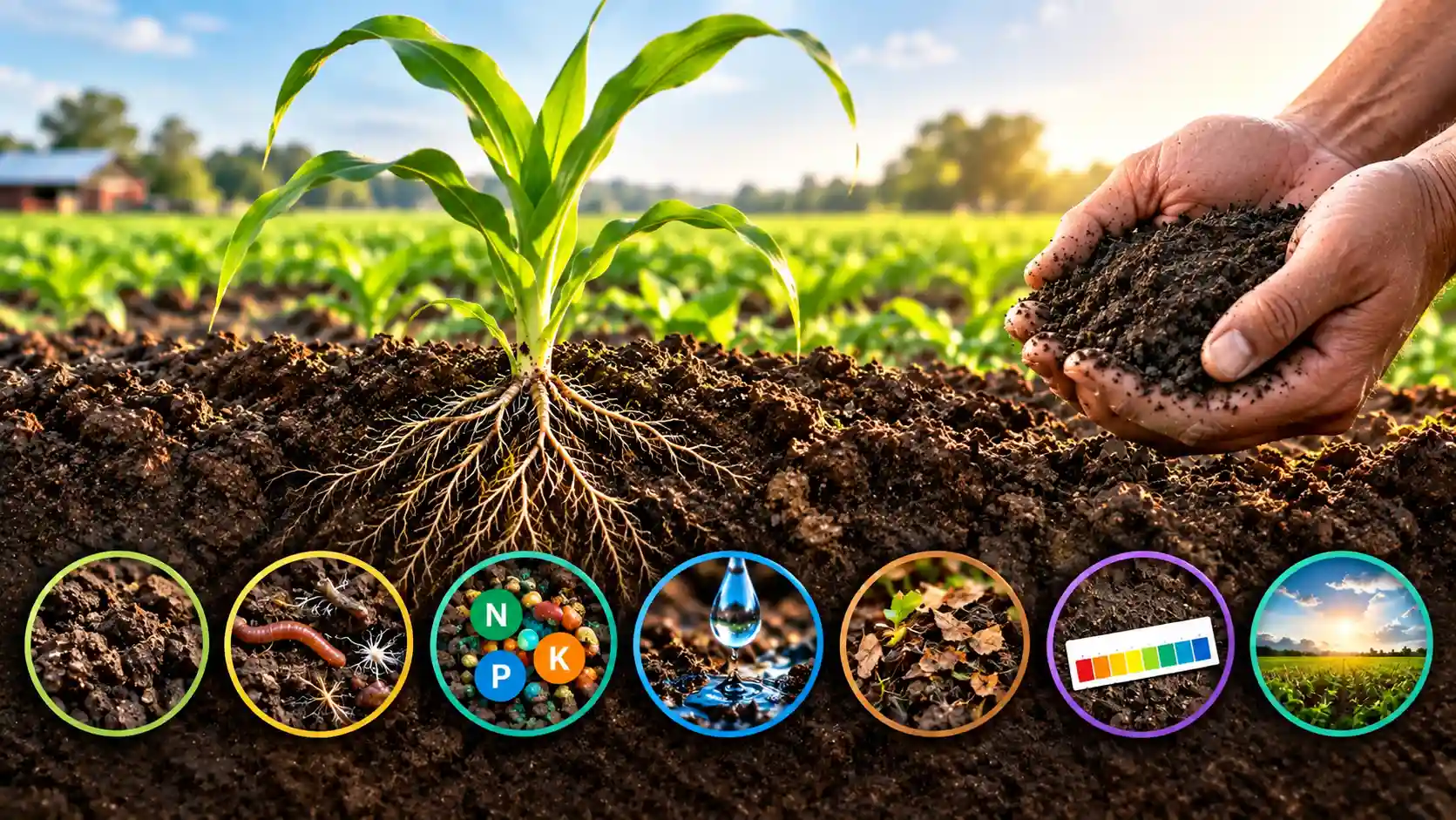
Healthy soil has a set of physical, chemical, and biological properties that allow crops to grow efficiently. Some of the key indicators include:
Good Soil Structure
Well-structured soil allows roots to grow easily while providing enough space for air and water to move through it.
Sufficient Nutrients
Key nutrients such as nitrogen, phosphorus, and potassium should be available in balanced amounts to support healthy plant growth.
Organic Matter
Organic matter strengthens soil structure, nutrient availability, and the ability of soil to retain moisture.
Balanced pH
Soil pH influences how easily plants can absorb nutrients. Maintaining a suitable pH is important for crop development.
Biological Activity
Earthworms, bacteria, fungi, and other soil organisms contribute to nutrient cycling and help preserve soil fertility.
Good Water Holding Capacity
Healthy soil can retain moisture while allowing excess water to drain, diminishing the risk of both drought stress and waterlogging.
Factors That Affect Soil Health
Soil health changes over time depending on land management and environmental conditions. Major factors affecting soil health include:
Excessive Use of Chemical Inputs
Overuse or improper application of fertilizers and pesticides can disturb soil nutrient balance and affect beneficial soil organisms.
Soil Erosion
Wind and water can remove the nutrient-rich topsoil, reducing fertility and damaging the soil’s ability to support crops.
Monocropping
Growing the same crop over and over can use up certain nutrients and raise the chance of pests and diseases.
Excessive Tillage
Digging the soil often and deeply can harm soil structure, lower organic matter, and disturb soil life.
Poor Irrigation Practices
Too much watering can cause waterlogging and nutrient loss, while too little watering can dry out soil and hurt plant growth.
Low Organic Matter
Farming the land continuously without adding organic matter can make soil less able to hold nutrients and water.
Climate Change
Higher temperatures, uneven rainfall, droughts, and extreme weather can speed up erosion, nutrient loss, and soil damage.
How to Improve and Preserve Soil Health
Keeping soil healthy needs steady and sustainable care. Farmers can improve soil quality and protect its long-term productivity by using these methods:
Practice Crop Rotation
Rotating crops helps prevent the repeated depletion of specific nutrients and can naturally break pest and diseases cycle.
Add Organic Matter
Compost, farmyard manure, and crop residues can increase organic matter, improve soil structure, and support beneficial microorganisms.
Use Cover Crops
Cover crops protect the soil from erosion, reduce moisture loss, and add organic material when incorporated into the soil.
Apply Balanced Fertilisers
Fertilizers should be applied according to crop requirements and soil test results rather than through excessive or routine use.
Reduce Excessive Tillage
Minimum or reduced tillage can help preserve soil structure, protect soil organisms and reduce the loss of organic matter.
Use Mulching
Mulching with crop residues or other suitable materials helps retain moisture, regulate soil temperature, and reduce weed growth.
Benefits of Maintaining Healthy Soil
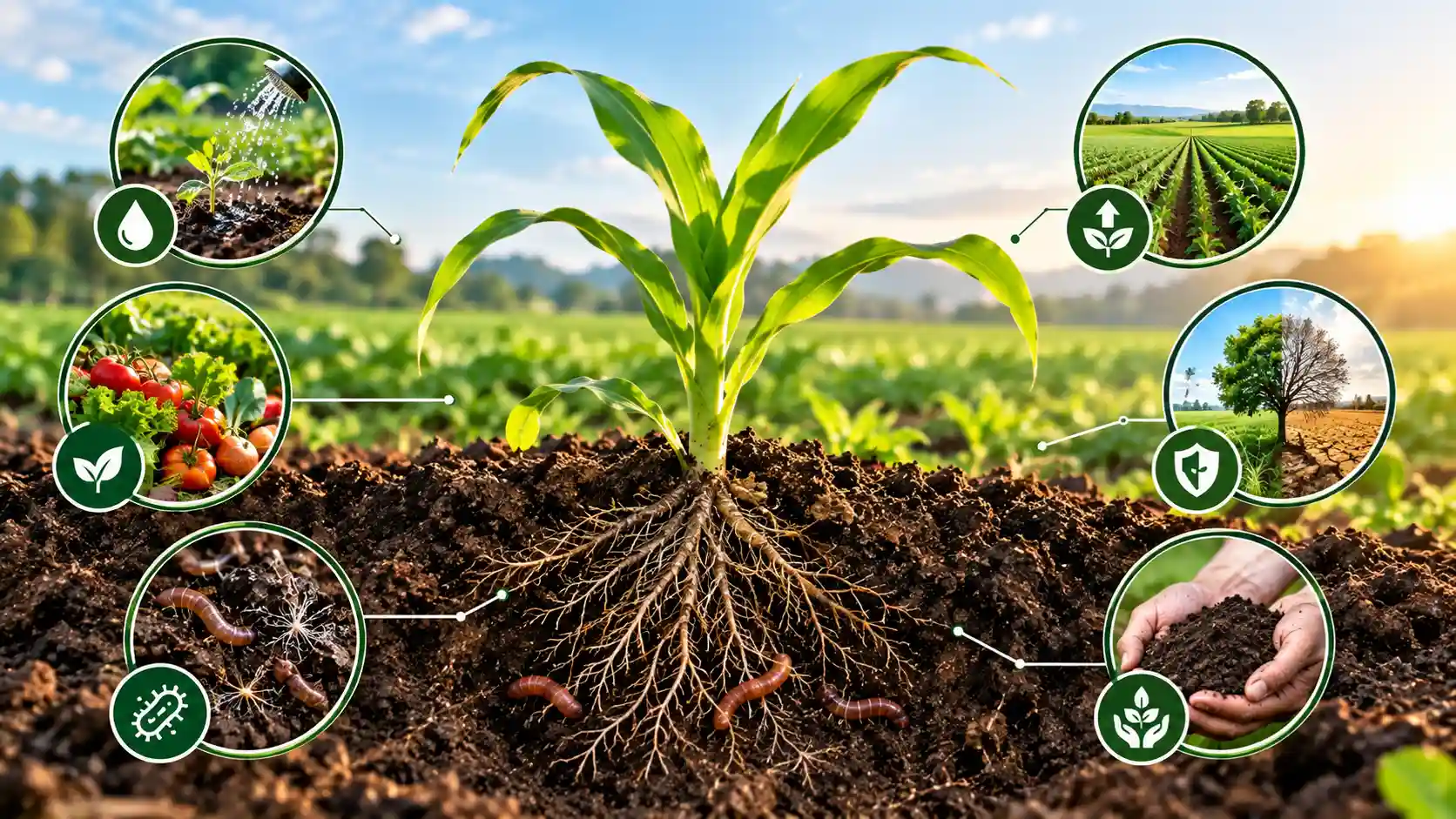
Healthy soil is one of the most valuable resources on the farm. Taking care of it can increase crop yields, reduce waste, and support more eco-friendly farming.
Improved Crop Growth and Productivity
Healthy soil gives crops the nutrients and water they need to grow strong roots and develop well.
Better Nutrient Availability
Balanced nutrients in soil help plants get important elements more easily, supporting healthy growth and lowering the chance of nutrient shortages.
Improved Water Management
Soil with good structure and organic matter holds moisture but also lets extra water drain, helping crops handle dry spells and heavy rain.
Reduced Soil Erosion
Good soil structure and enough ground cover help protect valuable topsoil from being washed or blown away.
Lower Input Costs
Better nutrient and water management can cut extra fertilizer and watering costs, helping farmers use resources more efficiently.
Soil Health and Sustainable Agriculture
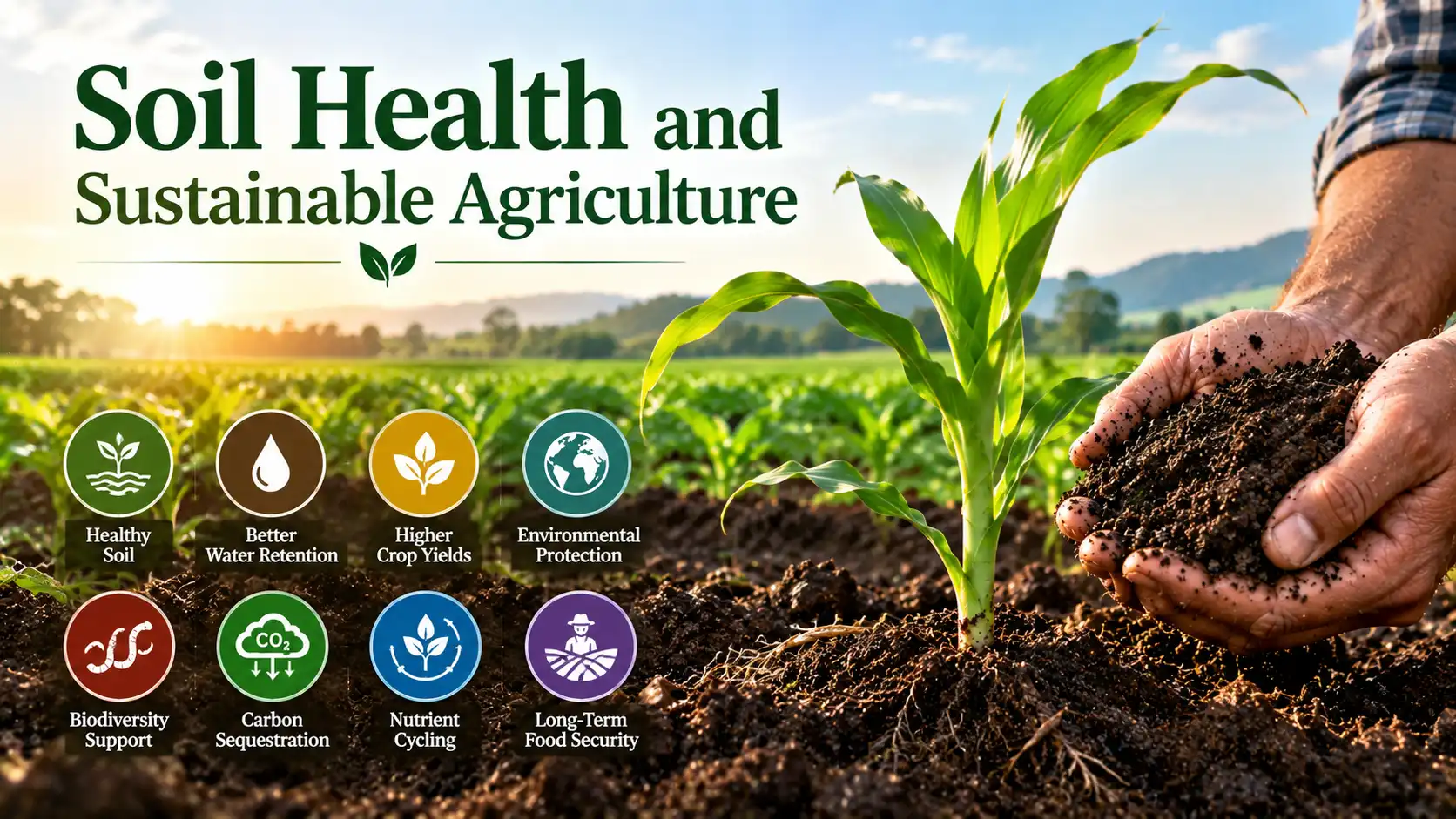
Soil health is central to sustainable farming because good farming depends on maintaining land quality over time. Healthy soil supports crops and helps farmers use important resources like water, fertilizers, and organic materials more efficiently. Methods like changing crops, composting, green manuring, mulching, and less digging help protect soil structure, add organic matter, and support helpful soil life.
protecting soil health also lowers the risk of erosion, nutrient loss, and land damage. This helps farms better handle changing weather and depend less on too many outside inputs. By combining scientific soil care with eco-friendly farming, farmers can keep producing well while saving natural resources. Investing in soil health now can lead to more productive and environmentally friendly farming in the future.
Healthy soil is the base of productive, long-term farming. It provides important nutrients, helps hold water, and supports soil life, all important for crop health and growth. But soil damage from erosion, nutrient loss, heavy farming, and wrong use of farm inputs can threaten long-term farm success. Using methods like changing crops, adding organic matter, watering efficiently, digging less, and regular soil tests can help farmers protect and restore soil health. By seeing soil as a valuable living resource, not just a place to grow plants, farmers can build stronger farms, use resources wisely, and keep farming sustainable for future generations.
FAQs about Soil Health