Organic Agriculture
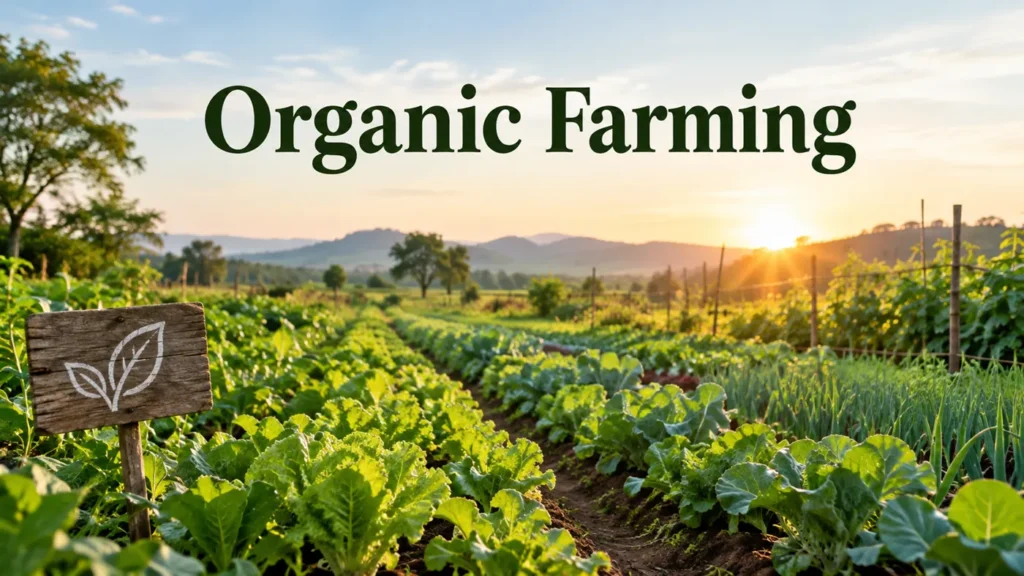
Organic farming is an approach to agriculture which involves growing crops by means of natural inputs and processes and at the same time reduces the reliance on synthetic chemical fertilisers and pesticides; its objective is to keep the soil in good condition, promote biodiversity, and provide food by means of farming methods that are in harmony with natural ecosystems.
Because worries about soil degradation, chemical residues, water pollution, and sustainable food production are increasing, organic farming is becoming more popular with both farmers and consumers. It can be carried out on small farms as well as on large agricultural operations, this depending on the local conditions, the resources available and the appropriate farming methods.
What is Organic Farming?
Organic farming is an agricultural system that relies primarily on naturally derived inputs and ecological processes. Instead of relying heavily on synthetic fertilizers and pesticides, organic farmers use materials and practices such as compost, farmyard manure, crop residues, green manure, crop rotation, and biological pest management.
The goal is not simply to avoid chemicals but to create a healthy agricultural ecosystem in which fertile soil, crops, beneficial organisms, and natural nutrient cycles support one another.
Principles of Organic Farming
Organic farming is based on several important principles:
Maintaining Soil Health
Organic farming rests on having healthy soil. In order to improve the fertility of the soil, farmers add compost, manure, plant residues, and other organic materials, which not only supply nutrients and organic matter but also help the soil organisms.
Natural Nutrient Management
Organic farms use sources such as compost, animal manure, green manure, crop residues, and certain naturally occurring mineral materials to supply nutrients to crops.
Crop Rotation
Growing a variety of crops one after another can help to keep the soil fertile and decrease the accumulation of some pests and diseases. For instance, legumes can add nitrogen to the soil as a result of their association with nitrogen-fixing bacteria.
Biological Pest Management
Organic farming encourages the use of natural methods to manage pests. Beneficial insects, biological control agents, traps, physical barriers and carefully planned cropping systems can help reduce pest populations.
Biodiversity
Organic farming usually promotes greater diversity by means of mixed cropping, crop rotations, hedgerows and by protecting beneficial organisms. Having biodiversity can help with pollination, pest control and the stability of the ecosystem.
Common Methods Used in Organic Farming
Several techniques can be combined depending on the crop, climate and farm conditions.
Composting
Organic materials such as crop residues, leaves and animal manure are decomposed to produce compost, which can be added to soil.
Green Manuring
Certain crops are grown and incorporated into the soil while still green. This adds organic matter and nutrients.
Crop Rotation
Different crops are grown in a planned sequence to support soil fertility and interrupt pest and disease cycles.
Mulching
Organic materials such as straw, leaves or crop residues can cover the soil surface, helping conserve moisture and reduce weed growth.
Natural Pest Management
Farmers may use beneficial insects, biological controls, traps, resistant varieties and other non-synthetic approaches to manage pests.
Intercropping
Growing two or more crops together can improve the use of available resources and, in some situations, help reduce pest pressure.
Benefits of Organic Farming
Improves Soil Quality
Regular use of organic matter can improve soil structure, water-holding capacity and biological activity. Healthy soil can support crops over the long term.
Supports Biodiversity
Organic farming practices can provide better conditions for earthworms, pollinators and other beneficial organisms, particularly when farms maintain diverse habitats.
Reduces Dependence on Synthetic Inputs
By using compost, manure, crop rotations and biological pest management, organic farming can reduce reliance on synthetic fertilizers and pesticides.
Helps Protect Water and the Environment
Reducing the use of certain synthetic agricultural inputs can help lower the risk of contamination from agricultural runoff. Practices such as mulching and maintaining soil cover can also reduce erosion.
Can Provide Premium Markets
Organic products that are certified might be able to enter special markets in which customers are prepared to pay more, but gaining access to these markets relies on certification, demand, quality, and the local market conditions.
Challenges of Organic Farming
One major challenge is nutrient management. Organic farmers need to carefully plan nutrient sources and application because nutrients from organic materials may become available more slowly than nutrients from some synthetic fertilizers.
Pest and disease management can also require greater planning and monitoring. Farmers may need to combine several preventive and biological approaches rather than relying on a single pesticide.
Another challenge is certification and market access. Farmers who want to sell products as certified organic generally need to follow specific production standards and certification procedures, which can involve additional costs and record-keeping.
Organic farming can also involve higher labor requirements for activities such as weed management, compost preparation, and crop monitoring.
Organic Farming in India
India has a long history of using traditional agricultural practices involving livestock manure, compost, crop residues, and biological resources. Modern organic farming combines some of these traditional approaches with scientific methods of soil management, crop planning and pest control.
The country has also created programs and certification systems in order to promote organic agriculture and to enhance the marketability of organic products, and farmers in various areas will adopt organic methods depending on the crops they grow, the climate, the soil conditions, and the resources available to them.
Crops such as spices, fruits, vegetables, pulses, tea and plantation crops can be produced using organic methods when suitable production systems and standards are followed.
Organic Farming vs Conventional Farming
Organic and conventional farming differ mainly in the types of inputs and management systems they use.
Organic farming places greater emphasis on natural nutrient cycling, organic matter, crop diversity and biological pest management. Conventional farming may use a combination of synthetic fertilizers, pesticides, improved varieties and other modern agricultural technologies.
Neither farming system is identical everywhere. Actual practices vary considerably between farms, crops and regions, making it important to assess agricultural systems based on their specific methods and environmental conditions.
The Future of Organic Farming
The growing interest in sustainable agriculture has increased attention toward organic farming and other approaches that focus on soil health, biodiversity, and responsible resource use.
Organic farming is not merely one technique but a more extensive system of agricultural management, and its success is based on the choice of suitable crops, the management of soil fertility, pest control, the knowledge of the farmers, the availability of labour, and having access to reliable markets.
Organic farming can form one element of a more extensive initiative to establish more sustainable and resilient food systems when it is adapted to local conditions.
FAQs about Organic Farming
Organic farming focuses on producing food while working with natural ecological processes. Through practices such as composting, crop rotation, green manuring, mulching, and biological pest management, it aims to maintain soil fertility, support biodiversity, and reduce dependence on synthetic agricultural inputs.
Although it comes with challenges, including nutrient management, pest control, labor requirements and certification, organic farming continues to attract interest as agriculture seeks ways to balance food production with long-term environmental sustainability.