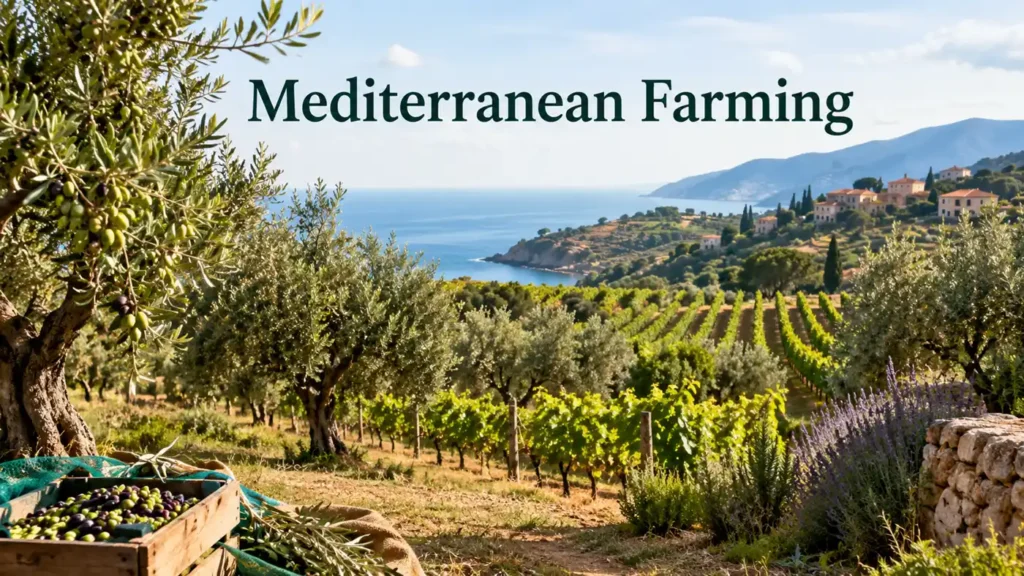
Agricultural systems in the Mediterranean region are those carried out in areas with a Mediterranean climate. Such regions typically have mild and fairly wet winters and then undergo warm to hot, dry summers. This particular climate has affected the way farming is done, including the types of crops grown, the methods of water management, and the kind of livestock systems employed by farmers.
The Mediterranean region has a long agricultural history and is associated with crops such as olives, grapes, wheat, citrus fruits, and vegetables. Farming fruits has traditionally adapted to limited rainfall during the summer and the need to conserve soil and water resources.
What is Mediterranean Farming?
Mediterranean farming is not a single farming method but a group of agricultural practices suited to Mediterranean climatic conditions. These systems can be found around the Mediterranean basin and in other parts of the world with similar climates, including parts of California, central Chile, southwest Australia, and the Western Cape of South Africa.
The length of the growing season is greatly affected by the rainfall during the seasons. During winter and spring, the conditions are usually suitable for the growth of crops, but the hot and dry summer can lead to water stress. Because of this, farmers generally choose crops and management methods that are capable of withstanding periods of limited water availability.
Major Crops Grown in Mediterranean Farming
Olives
Olive cultivation is one of the most characteristic forms of Mediterranean agriculture. Olive trees are well adapted to dry summers and are grown for table olives, as well as olive oil.
Grapes
Grapevines are another important Mediterranean crop. Grapes are cultivated for fresh consumption, raisins, juice and wine, depending on the region and local agricultural traditions.
Cereals
Wheat and other cereal crops are widely grown, particularly in areas where winter rainfall can support crop development. Cereal-based rotations can also play a role in maintaining soil productivity and improving the sustainability of rainfed farming systems.
Fruits and Vegetables
Citrus fruits, tomatoes, vegetables and other horticultural crops are important. Where sufficient water is available, irrigation can support the production of crops during periods of low rainfall.
Legumes
Legumes can be incorporated into Mediterranean cropping systems as food crops as well as part of crop rotations. Their inclusion can contribute to agricultural biodiversity and support soil management.
Common Mediterranean Farming Practices
Rainfed Agriculture
Rainfed agriculture is important in many Mediterranean areas. Instead of relying entirely on irrigation, farmers use seasonal rainfall, particularly during the cooler, wetter part of the year.
However, rainfall variability can make these systems vulnerable to drought and yield fluctuations.
Crop Rotation
Crop rotation involves growing different crops on the same land over successive seasons. Cereal-legume rotations, for example, have been used in Mediterranean rainfed farming systems and can contribute to soil fertility and more sustainable crop production.
Water Management
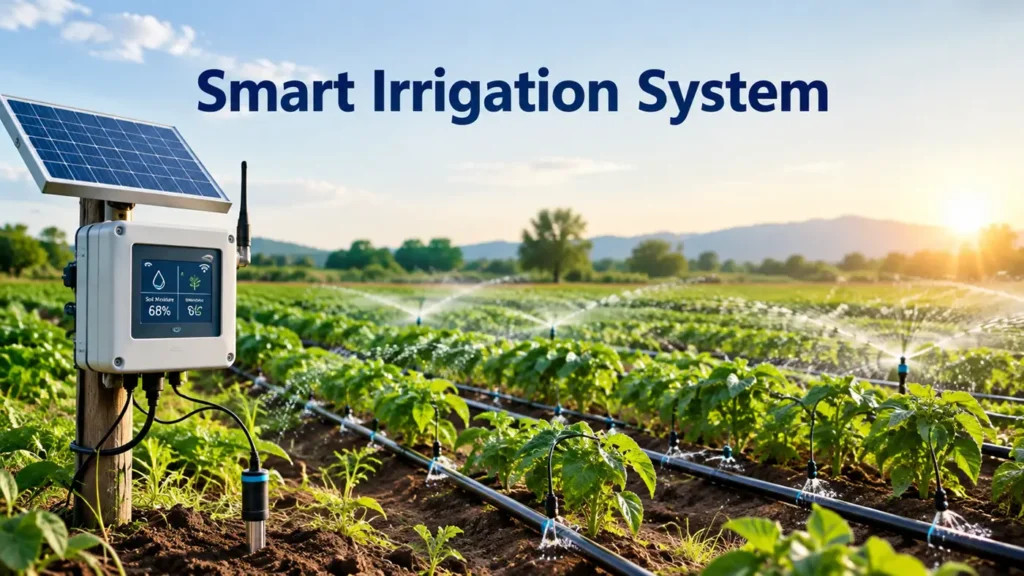
It is especially important to conserve water since the summers are usually dry. One way to reduce unnecessary losses of water is to use efficient irrigation, to carefully schedule water use, and to apply good soil management practices.
Soil Conservation
Farmers may use cover crops, organic matter management, and other soil conservation techniques to protect soil from degradation; increasing soil organic matter can also improve the resilience of farming systems to climate-related stresses.
Agroforestry
In some cases, trees, crops and livestock can be combined in the same kind of agricultural area. These systems can lead to more diverse production and, at the same time, help biodiversity, protect the soil and contribute to resource management.
Benefits of Mediterranean Farming
Mediterranean farming supports the production of a wide range of economically and nutritionally important crops. Olive oil, fruits, vegetables, cereals and grapes are important agricultural products in many Mediterranean regions.
A further benefit is that farming methods have been developed to match the seasonal availability of water. Over the generations, farmers have acquired knowledge regarding the choice of crops, the management of water, and the use of land that is in accordance with the local environmental conditions.
Diversified systems can also play a role in the distribution of agricultural risks. Agroecological methods, which promote biodiversity, increase soil organic matter and reduce dependence on external inputs, can boost agricultural resilience in the Mediterranean.
Challenges of Mediterranean Farming
Water Scarcity
A major challenge is the limited amount of water available during hot and dry times, with agriculture facing greater competition for fresh water, especially in regions where the population is growing and there is increasing environmental pressure.
Climate Change
Climate change is increasing concerns about drought, heat and water stress in Mediterranean-climate regions. Research indicates that crops, orchards and vineyards can be affected by reduced water availability and increased temperatures.
Soil Degradation
Soil erosion, declining soil quality and the loss of organic matter can reduce agricultural productivity. Maintaining healthy soils is therefore an important part of long-term farming sustainability.
Extreme Weather
Droughts, heatwaves, heavy rainfall and wildfires can create additional risks for farmers. These events may damage crops, reduce yields and increase production costs.
Limited Agricultural Land
In the Mediterranean area, the amount of arable land is fairly limited, and a large portion of the agricultural land that is available is already being used for farming. As a result, it has become an important challenge to increase productivity without compromising the existing farmland.
Sustainable Approaches to Mediterranean Farming
Sustainable agriculture in the Mediterranean region is increasingly concerned with making efficient use of natural resources without compromising agricultural productivity. Farmers may adopt a number of practices, including efficient irrigation, crop diversification, cover cropping, better soil management, and the use of drought-tolerant varieties where suitable.
Agroecology can also provide a broader approach by combining traditional agricultural knowledge with modern scientific methods. Strategies such as increasing biodiversity, improving soil organic matter and reducing dependence on fossil-fuel-based inputs have been identified as potential adaptation measures for Mediterranean farming systems.
Protected cultivation is another option for certain crops. Greenhouses can help farmers manage growing conditions, improve water-use efficiency and protect crops from unfavorable weather when appropriately designed and managed.
FAQs about Mediterranean Farming
Mediterranean farming is shaped by a unique combination of wet winters, dry summers, diverse landscapes and limited water availability. Crops such as olives, grapes, cereals, fruits and vegetables form an important part of agricultural production in these regions.
However, water scarcity, soil degradation and climate change are creating increasing pressure on farmers. Sustainable water management, crop diversification, soil conservation, agroecology and climate-adaptive farming practices can help strengthen the resilience of Mediterranean agricultural systems. The future of Mediterranean farming will depend on balancing food production with the long-term protection of soil, water and other natural resources.