Benefits of Using Compost in Organic Farming
Organic farming relies on natural cycles to maintain soil fertility and produce healthy crops. At the heart of this sustainable approach is compost — a nutrient-rich, organic soil conditioner often referred to as “black gold.”
What is Compost and Why is It Necessary?
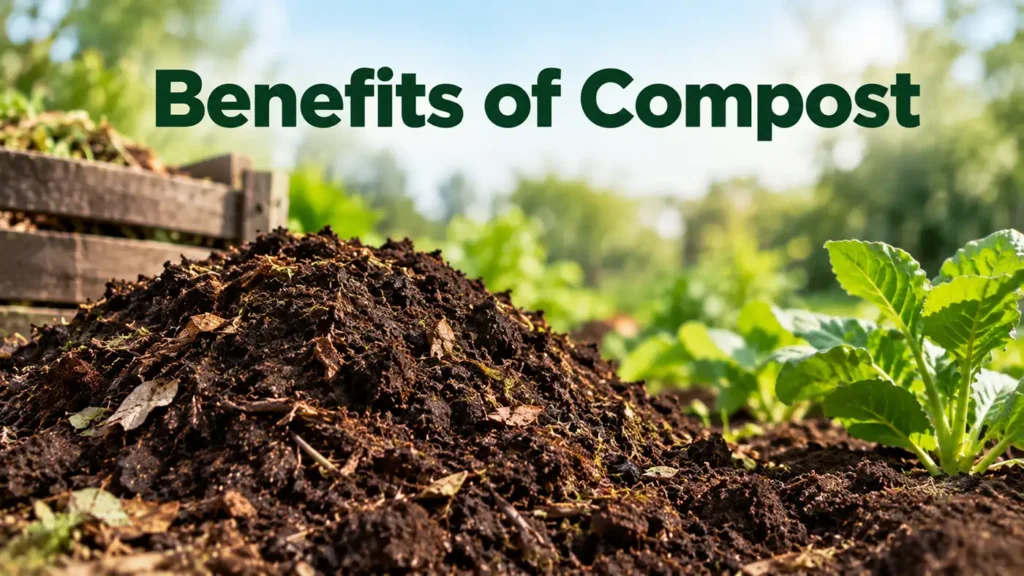
Compost is the dark, crumbly material produced when organic matter—such as crop residues, livestock manure, food scraps, and dry leaves—decomposes under controlled aerobic (oxygen-rich) conditions.
In organic farming, synthetic chemical fertilizers and pesticides are prohibited. Farmers must rely on biological processes to replenish the soil. Compost is necessary because it restores essential nutrients, revitalizes microbial life, and maintains long-term soil structure without causing the environmental degradation associated with chemical inputs.
How Compost is Made?
Composting accelerates the natural decomposition process by providing ideal conditions for micro-organisms (bacteria and fungi) to thrive.
Balancing inputs: A successful compost pile requires a balanced carbon-to-nitrogen (C: N) ratio, typically around 30:1.
- Carbon-rich “browns”: Dry leaves, straw, sawdust, and shredded cardboard.
- Nitrogen-rich “greens”: Green crop waste, grass clippings, kitchen scraps, and animal manure.
Managing moisture and air: The pile needs sufficient moisture (similar to a wrung-out sponge) and regular turning or aeration to provide oxygen for aerobic decomposition.
Curing: Heat generated by microbial activity breaks down the raw materials, killing weed seeds and potential pathogens. Over several weeks to months, the pile cools and matures into stable compost.
7 Key benefits of compost in organic farming
Enhances Soil Structure and Aeration
Compost improves aggregate stability in all soil types. It loosens heavy clay soils for
better root penetration and binds sandy soils to prevent erosion.
Increases Nutrient Availability
It delivers a balanced spectrum of primary macronutrients (N, P, K) and essential micronutrients. Unlike synthetic fertilizers, compost releases nutrients slowly as plants need them, preventing nutrient leaching.
Boosts Water Retention
Organic matter acts like a sponge within the soil matrix, significantly increasing moisture-holding capacity and helping crops withstand drought conditions.
Stimulates Beneficial Soil Microbiology
Compost introduces billions of beneficial bacteria, mycorrhizal fungi, and protozoa. This active biological network recycles nutrients and creates a suppressive environment against soil-borne pathogens.
Balances Soil pH and Cation Exchange Capacity (CEC)
It buffers extreme soil pH levels and increases the soil’s CEC, improving its capacity to hold and exchange vital nutrient ions with plant roots.
Promotes Carbon Sequestration
By locking organic carbon into the soil for extended periods, composting reduces greenhouse gas emissions from decomposing waste and contributes to climate change mitigation.
Reduces Farm Waste and Input Costs
On-farm composting recycles agricultural waste back into production, decreasing disposal costs and minimizing the need to purchase external soil amendments.
Future Scope
As global agriculture shifts toward regenerative and sustainable practices, the scope for compost in organic farming is expanding:
- Advanced bio-composting: Integrating biochar, beneficial microbial inoculants, and rock dust to create high-efficiency “enriched composts.”
- Precision application: Using compost teas and extracts for foliar feeding and drip irrigation integration.
- Large-scale municipal integration: Streamlining urban organic waste collection to supply large-scale organic agricultural operations.
FAQs about Compost
Compost is the cornerstone of sustainable organic agriculture. By improving soil structure, providing balanced nutrition, fostering biological activity, and conserving water, compost transforms farm waste into a vital resource. Investing in quality composting practices ensures resilient soils and sustainable crop yields for generations to come.