Stubble Burning in India
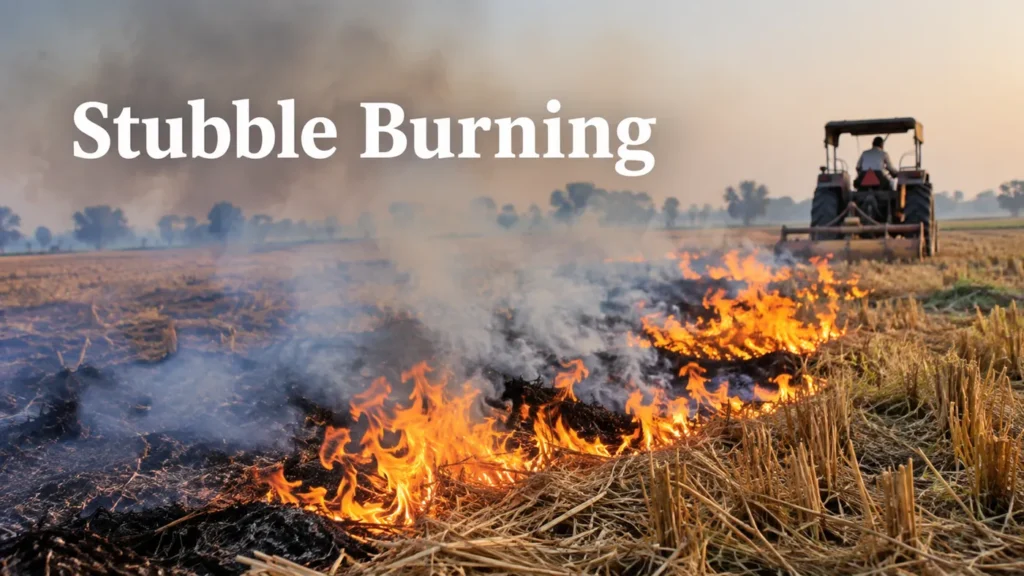
Stubble burning is one of the most discussed agricultural and environmental issues in India, particularly during the post-harvest season in northern states. Farmers often burn leftover crop residue in their fields to quickly clear the land for the next crop. While the practice is fast and inexpensive, it releases smoke and pollutants into the atmosphere and can also affect soil health.
Understanding why farmers burn crop residue and exploring practical alternatives is important for addressing the issue without overlooking the economic and operational challenges faced by farmers.
What is Stubble Burning?
Stubble burning refers to the practice of setting fire to the leftover stems, leaves, and other crop residues remaining in agricultural fields after harvesting. In India, the practice is particularly associated with paddy cultivation in states such as Punjab, Haryana, and other parts of Uttar Pradesh.
After paddy harvesting, farmers have a limited period to prepare their fields for the sowing of wheat. Burning the remaining straw provides a quick method of clearing the field and allows farmers to prepare it for the next crop.
Why Do Farmers Burn Crop Residues?
There are various reasons behind stubble burning. The short gap between paddy harvesting and wheat sowing is one of the major factors. Farmers may have only a few weeks to prepare their fields, making rapid residue removal important.
The availability and cost of machines also influence the decision. Although several machines can manage crop residue, smaller farmers may find hiring or operating such equipment expensive or difficult. In some situations, collecting, transporting, and storing large quantities of straw may also require additional labor and resources.
Therefore, stubble burning is not simply an environmental issue; it is also connected with farm economics, labor availability, machinery access, and cropping patterns.
Environmental Effects of Stubble Burning
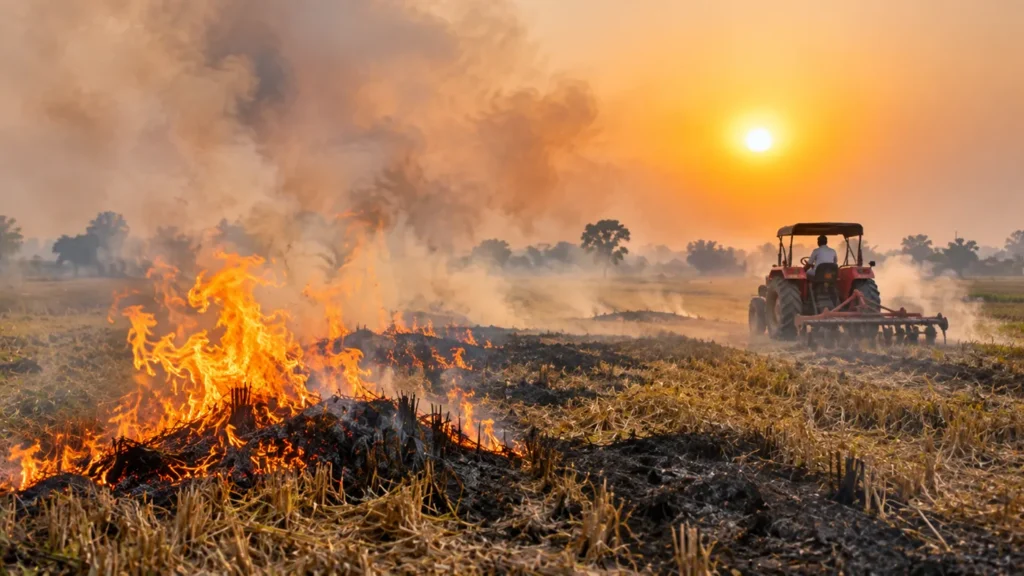
The smoke and various air pollutants produced by the burning of crop residues include particulate matter and gases such as carbon monoxide. When the wind is low and the atmospheric conditions are such as to hinder the dispersion of the smoke, the smoke from agricultural fires can lead to poor air quality.
It is especially important in northern India in the autumn and early winter when pollution from a number of different sources can happen at the same time. Contributions to the total level of pollution can also come from vehicle emissions, industrial activities, construction dust, and weather conditions. As a result, stubble burning is one of the factors that leads to seasonal air pollution and not the only source.
Impact on Soil Health
Crop residue contains organic matter and nutrients that could otherwise contribute to soil fertility when appropriately managed. Burning removes much of this material and can cause the loss of certain nutrients.
Repeated burning can also affect soil organisms and soil structure over time. Leaving suitable crop residues in the field or incorporating them into soil can instead help return nutrients and organic matter to agricultural land.
Effects on Human Health
Smoke from biomass burning contains fine particles and other pollutants that can affect air quality. Exposure to polluted air can irritate the eyes, nose and throat and may aggravate existing respiratory problems.
Because agricultural fires can occur across large areas at the same time, their smoke may affect not only farming communities but also people living in nearby towns and cities.
Sustainable Alternatives to Stubble Burning
Technology and better crop residue management can provide farmers with alternatives to burning.
Happy Seeder
The happy seeder allows farmers to sow wheat directly into fields containing rice residue. It cuts and manages the residue while placing seeds into the soil, reducing the need to burn the straw.
Super SMS and Straw Management Systems
Machines such as the super straw management systems can chop and evenly distribute paddy residue behind a combine harvester. This makes it easier to manage the residue and prepare the field for subsequent cultivation.
Mulching and Incorporation
Crop residue can be retained on the field as mulch or incorporated into the soil using suitable agricultural machinery. This can help return organic material to the soil and reduce the need for open burning.
Using Crop Residue as a Resource
Paddy straw can also be collected and used for purposes such as biomass energy, composting, animal bedding and other industrial applications where appropriate. Developing reliable markets for crop residue can give farmers an economic reason to avoid burning it.
Government Measures to Control Stubble Burning
The Indian government and state governments have introduced several measures to promote crop residue management. These include financial assistance and support for agricultural machinery designed to manage residue without burning.
The crop residue management scheme has supported the availability and use of machinery for in situ and ex situ crop residue management. Farmer groups, cooperatives and other agricultural institutions can also play an important role in improving access to machinery.
However, successful implementation depends on factors such as timely availability of machines, affordability, awareness, local infrastructure and the availability of markets for collected residue.
The Future
Reducing stubble burning requires more than simply asking farmers not to burn crop residue. Farmers need practical, affordable and timely alternatives that fit their cropping schedules.
Better access to residue management machinery, custom hiring centers, stronger markets for agricultural biomass and greater awareness can help make sustainable residue management more practical; improvements in crop planning and diversification may also reduce pressure created by very short intervals between harvesting and sowing.
A long-term solution therefore requires cooperation among farmers, governments, agricultural institutions, researchers and private enterprises.
FAQs about Stubble Burning
Stubble burning is a complex agricultural and environmental challenge. While burning crop residue provides farmers with a quick way to clear their fields, it can contribute to air pollution, nutrient loss and environmental degradation.
The most sustainable approach is to make alternatives economically and practically accessible to farmers. Turning agricultural residue from waste into a useful resource, while improving access to appropriate machinery and support systems, can help reduce dependence on field burning and promote more sustainable agriculture in India.