Moringa Tree (Miracle Tree)
The tree called moringa, whose scientific name is Moringa oleifera, is a quick-growing tree of the Moringaceae family and is native to the Indian subcontinent; it has since been grown in many tropical and subtropical areas all over the world. It is generally known as the drumstick tree or horseradish tree and is appreciated for its leaves, pods, seeds and flowers.
Often described as a multipurpose tree, moringa has applications in food, nutrition, traditional practices, cosmetics, and agriculture. Its ability to grow in warm climates and provide several useful plant products has also contributed to growing interest in moringa cultivation.
What is a Moringa Tree?
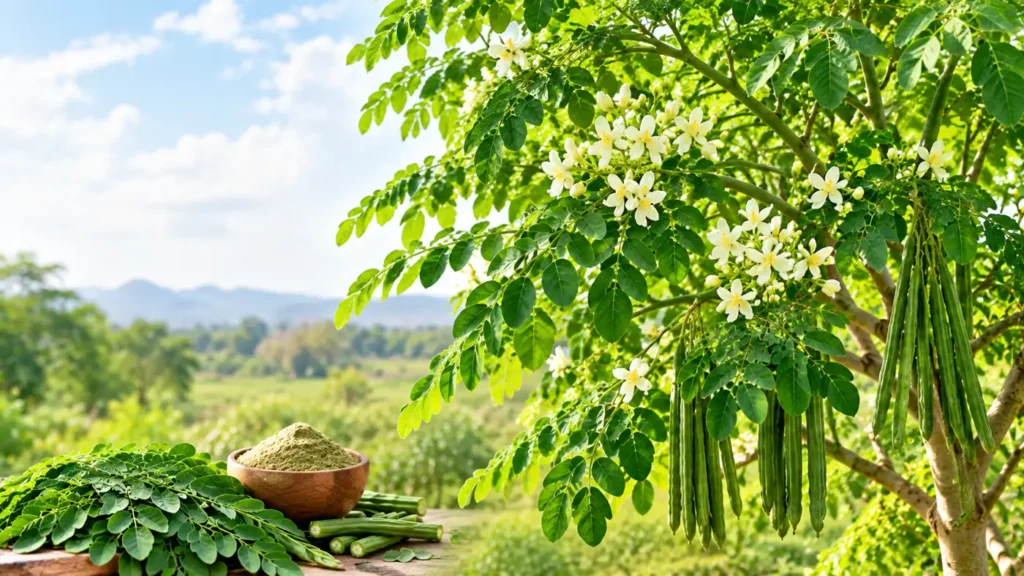
Moringa is a small to medium-sized, deciduous tree that can grow relatively quickly under suitable conditions. It has a slender trunk, delicate branches, and small, rounded leaflets arranged in clusters. Its long, slender seed pods are commonly known as drumsticks and are widely used as a vegetable in South Asian cuisine.
The tree produces fragrant, usually white flowers and elongated pods containing seeds. Different parts of the plant can be harvested for different purposes, making moringa useful both as a food crop and as a commercially important plant.
Types of Moringa
Several moringa varieties and cultivars are grown in different regions. Their characteristics can vary in terms of growth rate, pod length, branching pattern, and yield.
Some commonly cultivated types include PKM-1 and PKM-2, which were developed in India and are associated with commercial cultivation. Local or traditional varieties are also grown in different regions and may be selected according to local climate, soil, and market requirements.
The choice of variety is an important consideration for farmers because characteristics such as pod production, harvesting period and adaptability can influence farm returns.
Nutritional Value of Moringa
Moringa leaves and pods are eaten and contain a number of nutrients; the leaves have protein, dietary fibre, and a variety of vitamins and minerals, and the pods are usually eaten as a vegetable.
Dried leaf powder is also made from moringa leaves and is used as an ingredient in certain foods and nutritional products. But the nutritional content can differ depending on the part of the plant, the variety, the growing conditions, and the methods of processing.
Uses of the Moringa Tree
1. Food
Moringa leaves, flowers and young pods can be incorporated into various dishes. The pods are particularly popular in Indian cuisine and are used in curries, soups and other preparations.
The leaves can be used as a vegetable or be dried and turned into a powder, and the flowers of the moringa are edible and can be employed in certain traditional preparations.
2. Moringa Seeds and Oil
The oil found in moringa seeds can be extracted and put to use in cosmetics and other areas. This oil from moringa seeds, which is sometimes known as ben oil, has a composition that is relatively stable and as a result it is used in personal-care formulations.
The seeds can also be worked for a variety of purposes, though their use will vary according to local customs and commercial requirements.
3. Cosmetics and Personal Care
Moringa oil is used in some soaps, creams, hair-care products, and other cosmetic formulations. Its conditioning properties make it an attractive plant-derived ingredient for the personal-care industry.
4. Water Treatment Research
Moringa seeds have also attracted scientific and agricultural interest because proteins present in the seeds can help with the coagulation and clarification of water. Research has explored their potential as a natural water-treatment material.
However, this does not mean that untreated moringa seeds should automatically be considered a safe replacement for established drinking-water treatment methods.
Importance of Moringa in Agriculture
Moringa can provide farmers with multiple potential products from a single crop, including fresh leaves, pods, seeds, and oil. This diversification can create opportunities for both local markets and value-added processing.
The tree is also fairly adaptable and is able to grow in warm areas provided that suitable management is carried out. Yet, successful cultivation still relies on various factors including soil conditions, the availability of water, the choice of variety, pest control, and the local climate.
Also read: What is Moringa Farming? Meaning, Types, Benefits and Challenges
Moringa and Sustainable Agriculture
Moringa is increasingly linked to sustainable agriculture because of its versatility and the range of products it provides. Farmers can pick the leaves at regular intervals, and the pods and seeds can also add extra value.
Perennial or long-lived trees can likewise play a role in diversified farming systems if they are cultivated in the right way. However, the sustainability of any crop is determined by the local growing conditions, the methods of irrigation, the use of inputs, land management practices, and how the crop is handled after harvesting.
FAQs about Moringa Tree
The moringa tree is a versatile plant with nutritional, agricultural and commercial importance. From its leaves and pods to its seeds and oil, different parts of the tree can be used for a range of purposes.
With increasing interest in nutritious foods, plant-based ingredients and diversified agricultural production, moringa continues to attract attention from farmers, food businesses and consumers. Its potential, however, depends on suitable cultivation practices, responsible processing and access to reliable markets.