Aquaponics
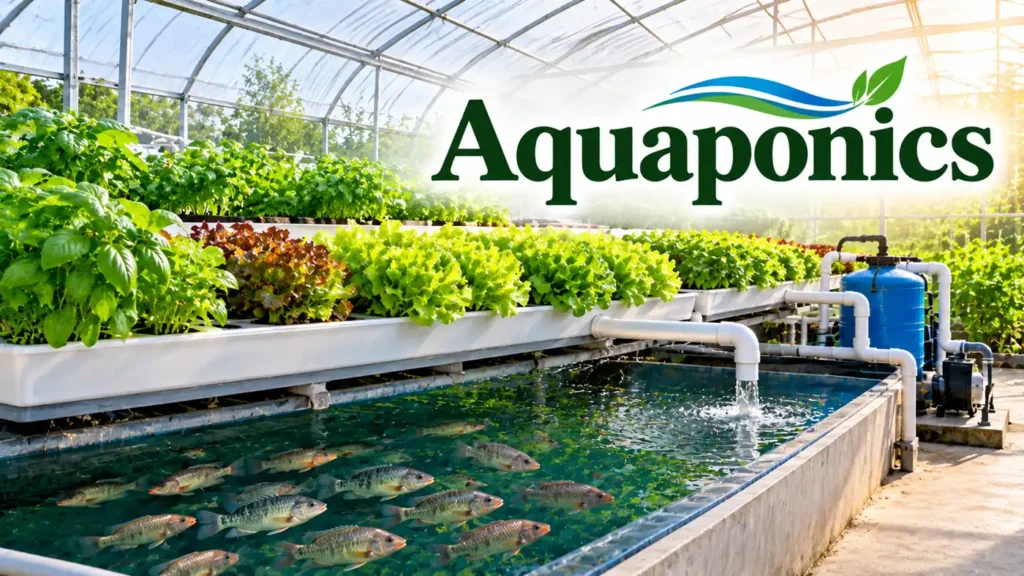
Aquaponics is an inventive form of farming which involves combining aquaculture, which is the rearing of fish and other aquatic organisms, with hydroponics, which is the method of growing plants without the use of soil. In this combined system, fish and plants are able to grow together in an environment that is beneficial to both of them. Worries regarding water scarcity, the decreasing fertility of the soil, and questions about food security are becoming greater, and as a solution, aquaponics is now emerging as a sustainable form of agriculture.
Aquaponics uses water more efficiently than traditional farming methods since it circulates the water between the fish tanks and the areas where the plants grow. The fish supply the plants with the nutrients they need, and the plants in turn help to filter the water before it is returned to the fish. This natural relationship results in less waste and sets up an efficient way of producing both fresh vegetables and fish.
How Does Aquaponics Work?
Aquaponics operates through a continuous cycle involving fish, beneficial bacteria, plants, and water.
First, fish are raised in tanks and produce waste containing ammonia. Although fish waste provides nutrients, excessive ammonia can be harmful to aquatic life. Beneficial bacteria convert ammonia into nitrites and then into nitrates, which plants can absorb as nutrients.
The water, which is rich in nutrients, is then pumped through a system used for growing plants. The plants take in the nutrients they need in order to grow healthily and thus help to clean the water. The water, having been filtered, is then returned to the fish tanks, thus finishing the cycle.
This interconnected process allows farmers to produce two types of food within a single farming system while reducing the need for synthetic fertilizers and frequent water replacement.
Types of Aquaponics Systems
Several aquaponics systems are used depending on available space, crop requirements, and production goals.
Media-Based Aquaponics
In this system, plants grow in containers filled with materials such as expanded clay pellets or gravel. These materials support plant roots and provide surfaces for beneficial bacteria. Media-based systems are suitable for small farms and home gardens.
Deep Water Culture (DWC)
This method, which is referred to as raft-based aquaponics, consists of growing plants on floating rafts with the roots of the plants suspended in water that is rich in nutrients. It is usually applied to leafy vegetables such as lettuce and spinach.
Nutrient Film Technique (NFT)
In this system, a thin stream of nutrient-rich water flows through narrow channels containing plant roots. NFT is particularly suitable for lightweight crops with relatively small root systems.
Vertical Aquaponics
This method uses vertically arranged growing structures to maximize production in limited spaces. It can be useful in urban areas where land is expensive or unavailable.
Benefits of Aquaponics
Aquaponics offers several environmental and agricultural advantages.
Efficient Water Use
Water keeps circulating in the system, which means that it is not necessary to replace it frequently. Because of this, aquaponics is especially appealing in areas that are facing water scarcity.
Reduced Dependence on Soil
Since plants grow without traditional agricultural soil, aquaponics can be practiced in areas with poor soil quality or limited cultivable land.
Dual Food Production
Farmers can produce vegetables and fish within the same system, creating opportunities to diversify food production and income.
Nutrient Recycling
Fish waste becomes a source of plant nutrients rather than being discarded. This supports resource efficiency and reduces waste generation.
Space Efficiency
Aquaponics systems can be established in greenhouses, urban farms, and other locations where conventional farming may be difficult.
Reduced Use of Chemical Fertilisers
Plant nutrients mainly come as a result of fish waste and various biological processes, thus decreasing the need for synthetic fertilizers. Yet there may be cases where extra nutrients are still required in order to keep plants growing healthily.
Challenges of Aquaponics
There are a number of difficulties that farmers have to take into account with regard to aquaponics.
High Initial Investment
The setup of fish tanks, water pumps, filtration units, growing beds, and monitoring equipment can involve a considerable amount of money.
Technical Knowledge
For aquaponics to be successful it is necessary to have a good understanding of fish health, plant nutrition, water quality, and the beneficial bacteria.
Electricity Requirements
Pumps and aeration systems usually run continuously, and power outages may interfere with the circulation of water and the supply of oxygen, which could be harmful to fish and plants.
Water Quality Management
Factors such as temperature, pH, dissolved oxygen, and nutrient concentrations must be monitored regularly to maintain a balanced environment.
Disease Management
Fish diseases, plant pests, and system imbalances can affect production. Managing these problems can be challenging because treatments suitable for one part of the system may harm another.
Market and Profitability Concerns
The price of the equipment, electricity, feed, and maintenance can have an effect on profitability, and before committing to commercial aquaponics, farmers need to assess local demand and production costs.
Aquaponics in India
Aquaponics has potential in India, especially in the fields of urban and peri-urban agriculture, since the availability of land and water might prevent conventional farming. It is able to produce leafy vegetables, herbs, and certain kinds of fish in controlled conditions.
People in states and regions that are experiencing water shortages or have small amounts of agricultural land might consider using aquaponics as a way of diversifying their food production; furthermore, educational institutions, agricultural entrepreneurs, and small-scale farmers can make use of these systems for the purposes of research, training, and producing food locally.
The appropriateness of aquaponics varies according to the local climate, the cost of electricity, the availability of technical expertise, the type of fish involved, and market demand. In India, since a great many farmers rely on cheap traditional forms of farming, the starting investment may prove to be a major obstacle. For this reason, training, proper system design, and financial planning are important if the method is to be more widely adopted.
The Future of Aquaponics
What the future holds for aquaponics will be determined by technological advances, the availability of inexpensive equipment, and improved farming methods. Farmers can use automated monitoring systems to keep an eye on the quality of the water, the temperature, and the oxygen levels, enabling them to pick up on any possible problems at an early stage.
Aquaponics could be improved to improve resource use by being combined with renewable energy, rainwater harvesting, and efficient greenhouse designs. It is also possible to make aquaponics more practical through research into appropriate fish species, crop varieties, and systems adapted to the local area.
Even though it cannot take the place of all forms of traditional agriculture, aquaponics can supplement current farming methods and help achieve diversified food production. If properly planned and managed, it provides an interesting way of producing food while making more efficient use of the resources available.
FAQs about Aquaponics
Aquaponics is an integrated system in which fish farming is combined with the cultivation of plants without soil, with the system recycling both water and nutrients. The possible advantages are more efficient use of water, less reliance on soil, and the ability to produce both vegetables and fish at the same time. Yet high initial costs, the technical demands involved, and the necessity of constant monitoring are still major challenges.
Because of the changing environmental conditions and the increasing demand for food, aquaponics could become an ever more valuable choice for urban growers, agricultural entrepreneurs, and farmers who are looking for alternative methods of production.