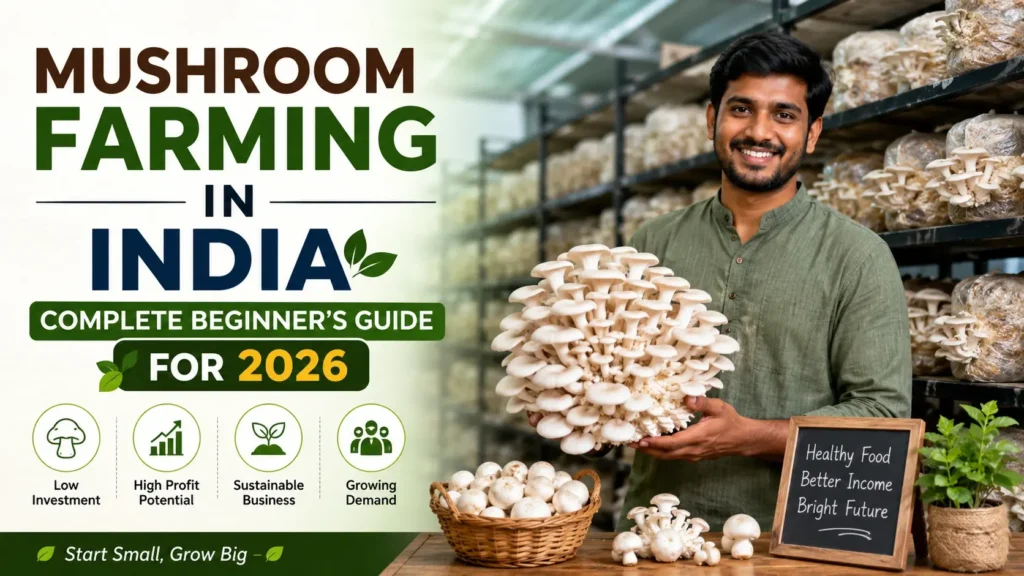
Mushroom Farming
Mushroom farming is about growing mushrooms for your kitchen or even for your business. People are starting to grow mushrooms at home. First, it started as a trend, but now it is becoming an integral part of our lives. As easy as it sounds, mushroom growing requires a lot of time and attention, as they develop in carefully monitored environments. Unlike most plants that sprout from soil, mushrooms thrive on organic materials like straw, sawdust, compost, or leftover farm waste. This distinct branch of agriculture relies on accurate control of temperature, humidity, airflow, and cleanliness, which makes it possible to grow mushrooms without needing huge fields.
Today, mushroom farming is gaining its followers quickly as it needs little land, offers quick harvests, and holds real promise for profit. Across the globe, people are turning to mushrooms as a smart solution for healthy, protein-rich food that keeps up with our growing appetites.
In this guide, you’ll discover what mushroom farming is all about, the distinct quirks of growing mushrooms, the rewards this business can bring, the different types you can grow, and the steps to start your own mushroom farm.
What is Mushroom Farming?

Mushroom farming refers to the cultivation of mushrooms, whereby the optimum conditions are created for the development of fungi. While other crop-growing practices use seeds, mushroom cultivation uses spawn. The spawn contains the living tissue of the fungus known as mycelium, which grows in the substrate before mushrooms can be harvested.
Mushrooms do not perform photosynthesis, as they absorb nutrients from the breakdown of organic matter, which is why wheat straw, paddy straw, wood chips, coffee grounds, and compost are considered among the most common substrates used for their cultivation.
Here are different types of mushroom farming you need to explore:
- Home gardening
- Small-scale commercial production
- Large-scale commercial mushroom farms
- Organic and sustainable agriculture
Mushrooms grow in a vertical position indoors, allowing the farmer to produce large amounts in small spaces.
How Does Mushroom Farming Work?
Although different mushrooms require varied growing techniques, the basic steps are the same.
Preparation of the Substrate
This serves as the source of nutrition for the mushroom. Depending on the mushroom type, the substrates that can be used include:
- Paddy straw
- Wheat straw
- Sawdust
- Compost
- Sugarcane bagasse
- Agricultural wastes
Pasteurization or sterilization of the substrate may be required to get rid of unwanted bacteria and fungi.
- Inoculation: Inoculation involves the mixing of mushroom spawn into the prepared substrate. The spawn acts as the initial starter for the development of mushrooms.
- Incubation: After inoculating the substrate, it is incubated in a dark and warm place while the mycelium grows through the substrate. It takes several weeks depending on the mushroom.
- Fruiting: Once colonization is done, changes are made in terms of moisture content, new air supply, and light for the mushroom fruit body to form.
- Harvesting: Harvesting involves removal of mature mushrooms by hand.
Common Types of Mushrooms Grown on Farms
Various types of mushrooms are flexible with various climatic zones and cultivation procedures.
Oyster Mushrooms
Oyster mushrooms are a beginner’s best friend. They grow well on straw, farm leftovers, or even sawdust, making them one of the simplest and most forgiving varieties to start with.
Button Mushrooms
Button mushrooms are the most commonly eaten mushrooms around the world. Button mushrooms have compost-based substrates and are required to maintain particular environmental conditions.
Shiitake Mushrooms
Shiitake mushrooms are noticeable by their rich flavor and health benefits, as they’re typically grown on logs or sawdust blocks, which brings a small essence of the forest to your own farm.
Milky Mushrooms
Milky mushrooms love the heat, making them a perfect choice for farmers in tropical regions.
Lion’s Mane Mushrooms
Lion’s mane mushrooms are gaining fan-following fast, which is all thanks to their eye-catching looks, delicious flavor, and appeal to health-conscious eaters.
Benefits of Mushroom Farming
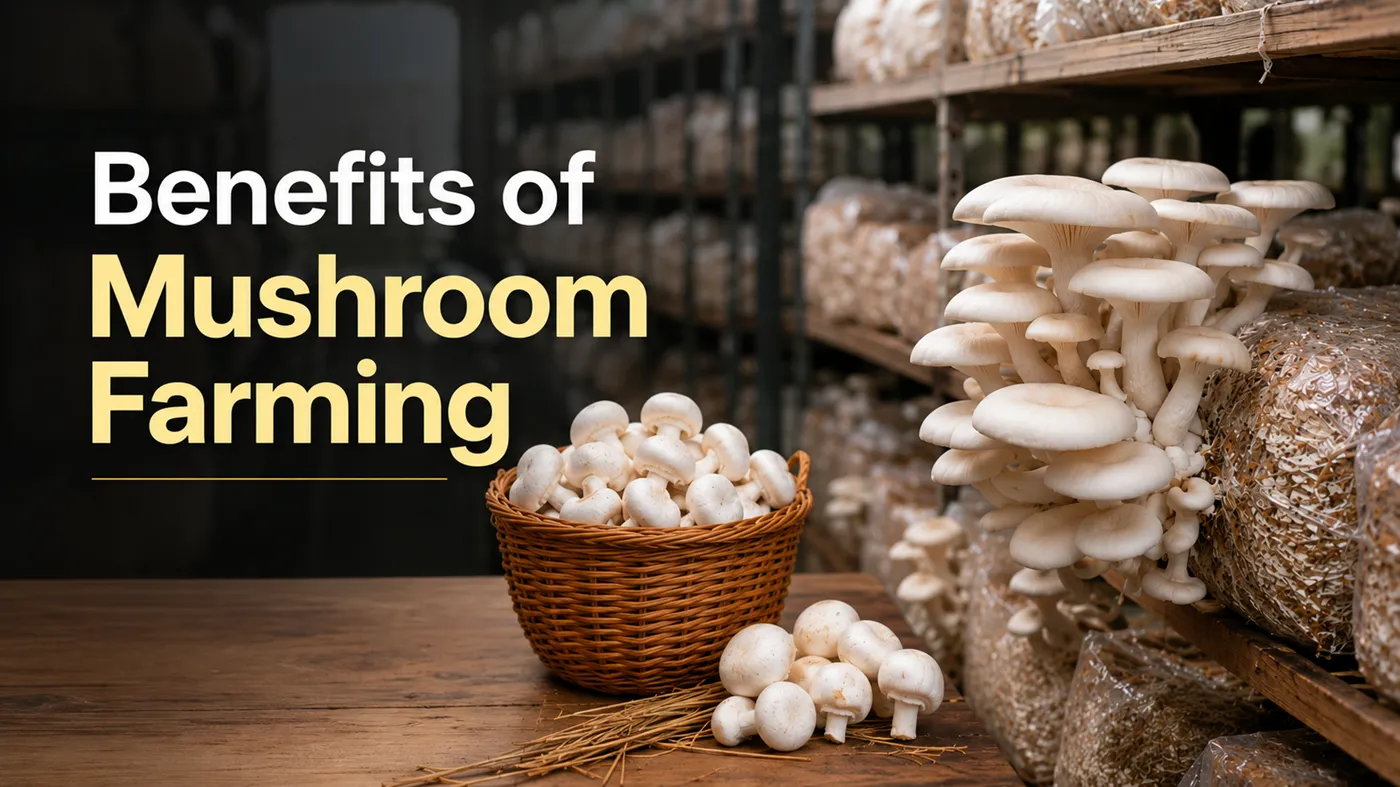
Whether you’re a backyard grower or a commercial-scale farmer, mushroom cultivation offers a host of advantages.
Spatial Effectiveness
Mushrooms can be cultivated in an indoor environment utilizing shelves and racks where more than one level of cultivation is possible.
Fast Harvesting Period
Many mushroom varieties are ready to pick in just weeks so that you can enjoy several harvests throughout the year.
Uses Agricultural By-Products
Mushrooms turn straw, sawdust, and farm leftovers into valuable crops, making use of materials that could otherwise go to waste.
Revenue Prospects
Fresh mushrooms usually have good prices in the market. There can also be other sources of additional income from mushrooms that include drying and powdering the mushrooms or selling spawn or processed mushrooms.
Environmentally Friendly
Growing mushrooms ensures eco-friendly agricultural activities because mushrooms use organic by-products of agriculture and create less harm to the environment.
Conditions Required for Successful Mushroom Farming
The success of mushroom cultivation is based on the maintenance of an appropriate growth environment.
Some of the most essential elements are:
- Temperature
- High humidity
- Proper air circulation
- A clean environment
- Substrate
- Healthy mushroom spawn
- Proper lighting for fruiting in certain types of mushrooms
Even small changes in these conditions can hurt your harvest, so keeping a close eye on the environment is key to successful mushroom farming.
Challenges in Mushroom Farming

While mushroom farming has many perks, it’s important to know about the challenges that can crop up along the way.
Some of the problems mentioned below:
- Contamination with bacteria or fungi
- Humidity control
- Temperature fluctuation
- Pest control
- Post-harvest storage
- Variations in market price
With careful hygiene and the right know-how, you can keep most of these problems in check.
Is Mushroom Farming Profitable?
A common question is whether mushroom farming can really be profitable.
Well, it all depends on these things:
- Size of production
- Type of mushrooms
- Market demand for the product
- Costs of production
- Quality of the produce
- Marketing techniques
Small-scale producers usually start off with growing oyster mushrooms due to lower investment costs. As they gain more experience, they can venture into cultivating special mushrooms or large-scale production.
You can also boost your profits by creating value-added products such as dried mushrooms, mushroom powder, soup mixes, or convenient ready-to-cook packs.
Tips for Beginners
If you’re just starting out, keep these effective tips in mind to set yourself up for success:
- Begin with beginner-friendly mushroom varieties.
- Use quality mushroom spawn from reliable suppliers.
- Learn proper sanitation techniques.
- Monitor humidity and temperature daily.
- Keep detailed production records.
- Start with a small initial setup before expanding.
- Learn from each growing cycle and continuously improve your process.
Remember, patience and steady effort matter more than fancy equipment when it comes to growing great mushrooms.
FAQs about Mushroom Farming
Understanding mushroom farming acts as your gateway into one of agriculture’s fastest-growing fields. By growing mushrooms on organic materials instead of soil, you can produce healthy food in small spaces while making good use of agricultural waste.
Whether you want to grow mushrooms at home, earn extra income, or start a full-fledged mushroom business, success comes from keeping things clean choosing the right varieties, and carefully managing temperature, humidity, and airflow.