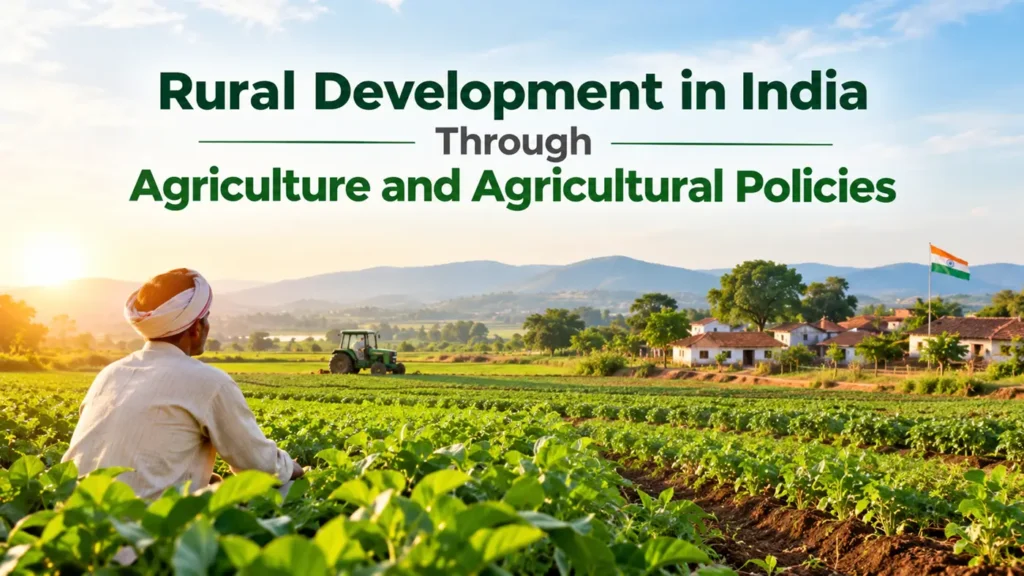
Rural development is an important part of India’s overall economic and social progress. A large section of India’s population continues to live in rural areas, where agriculture remains one of the primary sources of employment and income. As a result, the development of agriculture can play a major role in improving rural livelihoods, reducing poverty and creating better economic opportunities.
Agriculture supports rural industries, creates employment and contributes to the development of markets and infrastructure. Agricultural policies introduced by the government also influence farmers’ incomes, access to resources, technology, credit and markets. Together, agricultural development and effective policies can contribute significantly to rural development in India.
Role of Agriculture in Rural Development
Agriculture is closely connected with the economic well-being of rural communities. Farmers, agricultural labourers, traders, transporters and many small businesses depend directly or indirectly on agricultural activities.
1. Employment Generation
Agriculture provides employment to millions of people in rural areas. Apart from farming itself, activities such as livestock rearing, dairy farming, fisheries, food processing and agricultural transportation create additional employment opportunities.
2. Increasing Rural Incomes
Improved agricultural productivity can help farmers increase their income. Better access to irrigation, quality seeds, modern farming techniques, storage facilities and markets can reduce losses and improve the value of agricultural produce.
3. Development of Rural Industries
Agriculture provides raw materials for several rural and small-scale industries. Food processing, textiles, dairy products, oil extraction and other agro-based businesses can create additional sources of income for rural communities.
4. Improving Food Security
A productive agricultural sector is essential for maintaining food security. Increased production of cereals, pulses, vegetables, fruits and other agricultural products helps meet the food requirements of India’s growing population.
5. Supporting Rural Infrastructure
Agricultural growth can encourage the development of roads, transportation, warehouses, cold-storage facilities, irrigation systems and markets. Better infrastructure makes it easier for farmers to transport and sell their produce.
Role of Agricultural Policies in Rural Development
Government policies can influence almost every stage of agricultural production and marketing. Effective agricultural policies aim to improve productivity, protect farmers from economic risks and provide better access to resources and markets.
1. Financial and Credit Support
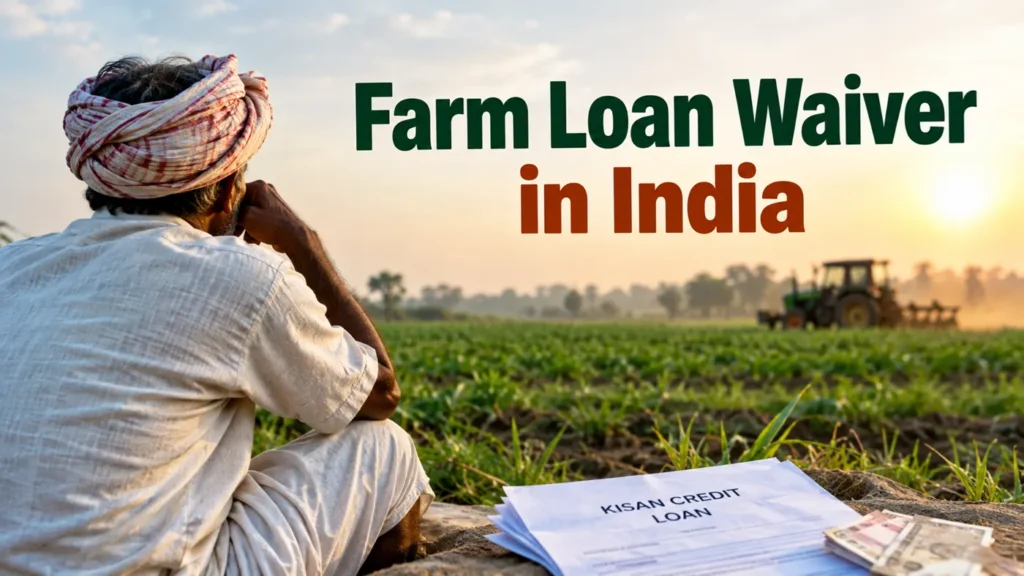
Access to affordable credit is important for farmers who need funds to purchase seeds, fertilisers, machinery and other agricultural inputs. Institutional credit and government-supported schemes can help reduce dependence on informal sources of borrowing.
2. Minimum Support and Price Protection
Price-related policies can give farmers greater income security with regard to certain agricultural products, and measures such as the Minimum Support Price (MSP) are meant to protect farmers when market prices become extremely low under certain conditions.
3. Irrigation and Water Management
Agricultural policies are now placing greater emphasis on improving irrigation facilities and promoting efficient use of water. When irrigation is reliable it decreases the need for rainfall and enables farmers to grow their crops more steadily.
4. Agricultural Technology
Government programmes can encourage the adoption of modern agricultural technologies, including improved seeds, farm machinery, digital tools, precision farming and better methods of crop management.
5. Crop Insurance and Risk Management
Agriculture is vulnerable to droughts, floods, pests, diseases and other risks. Crop insurance and other risk-management measures can help farmers deal with financial losses caused by such events.
6. Market Access
Better access to agricultural markets can help farmers obtain fairer prices for their produce. Digital marketplaces, farmer producer organisations, storage facilities and improved transportation can strengthen farmers’ bargaining power and reduce unnecessary intermediaries.
Some Major Agricultural Policies and Schemes
Pradhan Mantri Kisan Samman Nidhi (PM-KISAN)
Gives landholding farmer families direct income support of ₹6,000 each year through Direct Benefit Transfer (DBT).
Pradhan Mantri Fasal Bima Yojana (PMFBY)
Provides affordable crop insurance to help farmers recover from natural disasters and crop losses.
The Kisan Credit Card Scheme (KCC)
Offers farmers easy access to short-term and long-term loans at lower interest rates for farming and maintaining their equipment.
The National Agriculture Market (e-NAM)
Links wholesale markets online, helping farmers get better prices and more buyers for their produce.
PM Krishi Sinchai Yojana
Works to expand irrigation so that farms have enough water, following the idea of ‘Per Drop More Crop.’
The Soil Health Card Scheme
Checks soil nutrients and suggests the right fertilisers to help farmers save money and improve soil quality.
The National Mission on Sustainable Agriculture (NMSA)
Encourages farmers to use eco-friendly and climate-resilient methods, including organic farming.
The Agriculture Infrastructure Fund (AIF)
Gives loans for building storage, cold chains, and processing facilities to help farmers after harvest.
Challenges to Rural Development Through Agriculture
Despite the importance of agriculture, several challenges continue to affect rural development in India. Small and fragmented landholdings, dependence on monsoon rainfall, rising input costs, limited storage facilities and fluctuations in agricultural prices can affect farmers’ incomes.
Many rural areas also face gaps in infrastructure, healthcare, education, digital connectivity and access to financial services. These issues show that agricultural development alone cannot achieve complete rural development. It needs to be supported by improvements in education, healthcare, infrastructure, employment and social services.
Making Agriculture a Stronger Driver of Rural Development
A sustainable approach to rural development requires greater investment in irrigation, agricultural research, storage and food processing. Encouraging crop diversification, sustainable farming practices and allied activities such as dairy, fisheries and livestock can provide farmers with additional sources of income.
Stronger farmer organisations and better access to markets can likewise assist small farmers in securing better prices. On the other hand, rural entrepreneurship and agro-based industries can provide employment opportunities in addition to traditional farming.
FAQs about Rural development in India
Agriculture remains one of the strongest foundations of rural development in India. It provides employment, supports rural industries, contributes to food security and creates demand for infrastructure and services. However, the potential of agriculture can be fully realised only when farmers have access to finance, technology, irrigation, markets and adequate risk protection.
Well-designed agricultural policies, combined with investments in rural infrastructure and human development, can help create stronger and more resilient rural communities. By making agriculture more productive, sustainable and profitable, India can use its agricultural sector as an important pathway towards inclusive rural development.