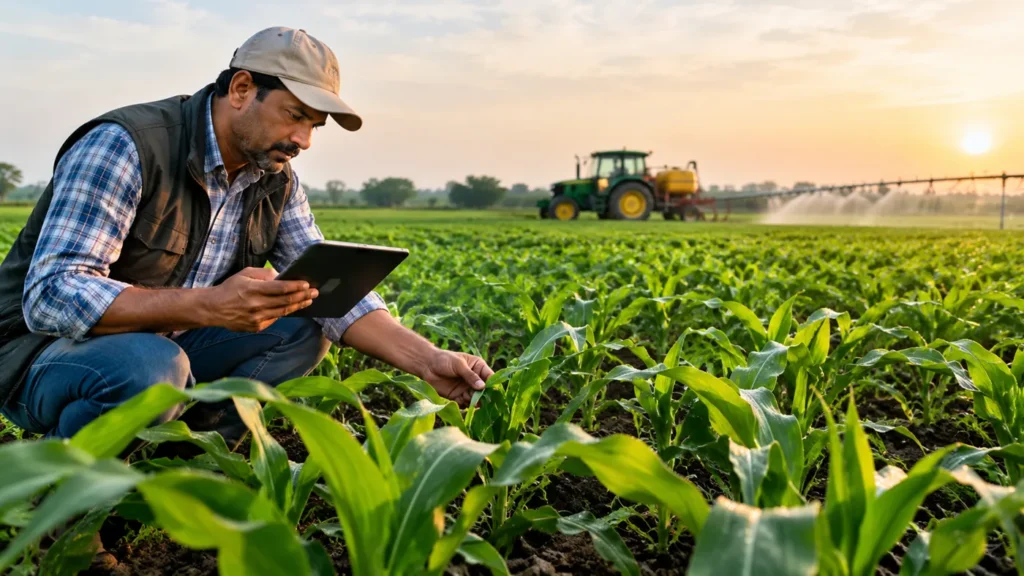
Crop management is the practice of growing and caring for crops, where farmers work hard to maximize yield, quality, and soil health. It includes preparing the land for planting and using handpicked seeds, managing water and irrigation, providing nutrients, and removing weeds and pests. All of this happens while monitoring every stage of cultivation to ensure that the crop’s health and productivity remain intact.
Crop management involves a step-by-step sequence of agricultural methods used from planting to harvesting. The farmer cares for the soil and crops like his own, providing them with everything they need. In return, the land blesses the farmer with a healthy, prosperous crop for using the land productively without further exploiting it.
Types of Crop Management
Crop management involves a number of practical techniques, and the most suitable method will vary according to the crop, the soil, the climate, and the available resources. The following are some of the principal types:
1. Soil and Nutrient Management
It entails maintaining fertile soil and providing the crops with the nutrients necessary for good growth. Soil testing, the addition of organic matter, and the use of the correct quantity of fertilizer all contribute to keeping the crops productive and to promoting healthy soil over time.
2. Water Management
Water management consists of providing crops with the amount of water they need when required. Techniques such as drip or sprinkler irrigation, the use of mulch, and gathering rainwater aid in the sensible use of water and help to avoid waste.
3. Weed Management
Weeds remove from crops water, nutrients, sunlight, and space. In order to get rid of weeds, farmers pull them out, use mulch, use machines, rotate their crops, or select the appropriate herbicides.
4. Pest and Disease Management
That involves protecting crops from insects and diseases. Integrated Pest Management (IPM) combines regular pest checks, the use of natural enemies, a change of farming practices, and the application of chemicals only when necessary in order to minimize damage.
5. Crop Rotation and Diversification
Sowing different crops in succession or growing them together helps to prevent pests and diseases, improves the soil, and reduces a farm’s dependence on a single crop.
6. Precision Crop Management
Now technology enables farmers to keep a close eye on their crops and use resources more carefully. For example, sensors, satellite pictures, drones, and data systems help to detect problems early on and allow for the most efficient use of water, fertilizer, and all other inputs.
Benefits of Crop Management
Good crop management helps farmers grow healthier crops and get better harvests. It creates the right conditions for plants, helps use resources efficiently, and reduces losses. Here are some of the main benefits:
Improved Crop Yield
Taking care of soil, water, nutrients, and plant health gives crops everything they need in order to grow well. This can lead to bigger and more reliable harvests.
Better Use of Resources
Using water, fertilizers, seeds, and other supplies carefully helps farmers avoid waste of resources. Good irrigation, balanced fertilizing, and careful farming make resources go further.
Reduced Pest and Disease Losses
Checking crops often and dealing with pests or diseases quickly and early on can stop problems from spreading around the farm and thus protect the harvest.
Improved Soil Health
Rotating crops, adding compost or other organic material, and using the right amount of nutrients help keep soil healthy and productive for years to come.
Reduced Production Expenses
When farmers use supplies wisely, they avoid losing crops which helps them to save money and make their farms more profitable.
Greater Resilience to Climate Change
Healthy crops and good soil management help farms handle tough weather, like drought, heat, or uneven rainfall.
Backs Sustainable Farming
Crop management helps farmers use natural resources responsibly in order to keep their farms productive, which is a key part of sustainable farming.
Challenges in Crop Management
Although effective crop management can improve productivity and farm efficiency, implementing the right practices is not always easy. Farmers often have to balance environmental, economic, and technical challenges while making decisions throughout the growing season.
1. Unpredictable Weather
Irregular rainfall, droughts, heatwaves, floods, and sudden changes in temperature can disrupt crop growth and make it difficult to plan irrigation and other farming activities.
2. Pest and Disease Outbreaks
Pests and diseases can spread quickly and cause significant crop losses. Identifying problems early and choosing appropriate control measures can be challenging.
3. Water Scarcity
Limited water availability can affect crop growth, particularly in regions dependent on rainfall. Efficient irrigation becomes essential, but installing and maintaining modern systems can be costly.
4. Declining Soil Quality
Soil erosion, nutrient depletion, excessive chemical use, and loss of organic matter can reduce soil productivity and make it harder to maintain healthy crops.
5. Rising Input Costs
The increasing cost of seeds, fertilizers, pesticides, machinery, fuel, and other inputs can put financial pressure on farmers and limit their ability to adopt improved management practices.
6. Limited Access to Technology and Knowledge
Precision farming tools and modern agricultural technologies can improve decision-making, but their adoption may be restricted by high costs, limited technical knowledge, or inadequate access to training and support.
7. Balancing Productivity with Sustainability
Farmers need to produce sufficient crops while protecting soil, water, and other natural resources. Finding a balance between short-term productivity and long-term farm sustainability remains an important challenge.
Profitability of Crop Management
Crop management plays an important role when it comes to improving profitability of farming by helping farmers increase production and also while controlling unnecessary expenses. When soil nutrients, water, seeds, fertilizers, and crop protection measures are controlled efficiently, farmers can reduce input wastage and avoid preventable crop losses.
Keeping a close watch on crops and managing pests and weeds on time can help protect the quality and amount of the harvest. Using methods like precision irrigation and fertilizer use can also make resources go further and lower costs in the long run.
Farm profitability depends on which crops are grown, market prices, weather, input costs, farm size, and access to technology. Good crop management alone cannot guarantee higher profits, but it further helps farmers to make better choices, use resources wisely, and improve their chances for steady income.
FAQs about Crop Management
Crop management is the cause and reason behind productive farming. Maintaining soil health, managing water to protect crops from pests, and adopting modern technologies- every decision made during the growing season can influence the final harvest. While farmers continue to face challenges such as unpredictable weather, rising input costs, water scarcity, and changing market conditions, effective crop management can help reduce risks and improve resource efficiency.
As agriculture continues to evolve, combining traditional farming knowledge with modern technology can help farmers in producing healthier crops while also protecting the resources they highly depend on. Ultimately, better crop management is about achieving higher yields- building more resilient, efficient, and sustainable farms for the future.