
Specialized Farming
Agriculture has now gone beyond the growing of traditional food crops over large areas of land; with consumer preferences, climate conditions, and market demands continuing to change, farmers are becoming more and more likely to try out specialized farming, which is a method aimed at producing certain crops, livestock, or agricultural products that are appropriate for specific markets and conditions.
Specialized farming can help farmers move beyond conventional agriculture by focusing their resources, knowledge, and technology on products with higher demand or greater economic value.
What is Specialized Farming?
Specialized farming is an agricultural system in which a farmer or farming enterprise concentrates primarily on the production of one particular crop, livestock species, or agricultural product, or on a specific type of agricultural activity.
For example, a farmer can specialize in growing grapes for wine, cultivating medicinal plants, growing flowers, or raising dairy cattle. The choice of which type of specialization to follow is usually defined by factors such as the climate, the soil, available resources, market demand, and the farmer’s own expertise.
Unlike diversified farming, where several crops or agricultural activities are carried out simultaneously, specialized farming places greater emphasis on a particular agricultural product or activity.
Types of Specialized Farming
Specialized farming can take several forms depending on the product and production system.
Horticultural Farming
Horticultural farms specialize in the production of fruits, vegetables, flowers, ornamental plants, and other high-value crops; examples are apple orchards, the cultivation of grapes, floriculture, and the growing of vegetables for urban markets.
Plantation Farming
Plantation farming consists of the large-scale growing of particular commercial crops, for example tea, coffee, rubber, cocoa, and various spices. Such farms generally need a great deal of investment, labor, and processing facilities.
Medicinal and Aromatic Plant Farming
Growing medicinal and aromatic plants such as ashwagandha, aloe vera, lemongrass, and tulsi is another form of specialized farming. Demand from pharmaceutical, cosmetic, wellness, and herbal industries has created opportunities for farmers in this sector.
Floriculture
Floriculture focuses on the commercial cultivation of flowers and ornamental plants. Roses, marigolds, chrysanthemums, and gerberas are among the crops grown for markets such as decoration, events, religious purposes, and the floral industry.
Livestock Specialization
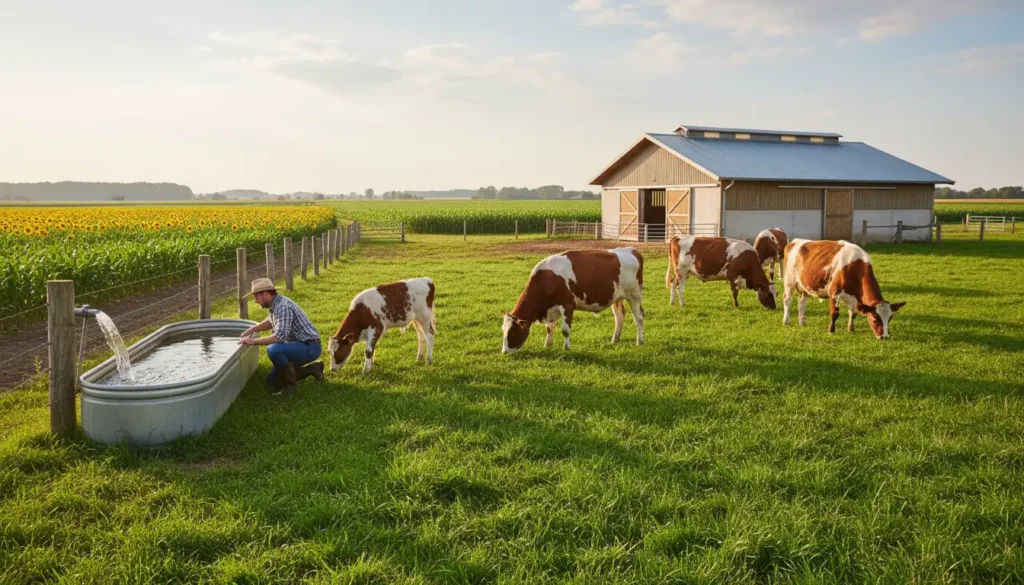
Specialized farming can also focus on livestock. Dairy farms, poultry farms, sheep farms, and fish farms may concentrate on producing specific animal products such as milk, eggs, meat, or fish.
Why is Specialized Farming Important?
One of the major advantages of specialized farming is the ability to develop expertise in a particular agricultural activity. By concentrating on one product, farmers can gain greater knowledge about its cultivation, disease management, harvesting, and marketing requirements.
Specialization also makes it easier to take up modern agricultural technologies since farmers can invest in machinery, irrigation systems, greenhouse structures, precision farming tools, and other technologies that are suitable for the crop or activity they have chosen.
A further important advantage is that it is possible to enter high-value and specialist markets. Items like medicinal plants, exotic fruits, flowers, and special vegetables may sometimes yield higher returns than ordinary crops when there is adequate market demand.
Role of Technology in Specialized Farming
Specialized agriculture technology is becoming more and more important; techniques such as precision farming, drip irrigation, greenhouse growing, soil testing, remote sensing, and automated monitoring systems can all help farmers to run their operations more efficiently.
Digital platforms can also connect specialized farmers with buyers, retailers, and consumers. This can improve market access and provide farmers with better information about prices and demand.
For example, controlled-environment agriculture can allow farmers to grow particular crops under carefully managed temperature, humidity, light, and nutrient conditions, making specialized production possible even where natural conditions are less suitable.
Specialized Farming in India
India’s diverse climate and geography provide opportunities for several forms of specialized farming. Different regions are suited to different agricultural products, from apples in the Himalayan region to tea in Assam and Darjeeling, spices in Kerala and floriculture in several parts of the country.
There is also growing interest in organic produce, medicinal plants, exotic vegetables, aquaculture and high-value horticultural crops. These sectors can provide additional opportunities for farmers willing to develop specialized skills and connect with appropriate markets.
Specialization has to be carefully planned; before making the change from conventional farming to a specialized system, farmers should assess the local climate, the soil conditions, the quantity of water available, the production costs, and the level of market demand.
Challenges of Specialized Farming
Specialized farming also entails certain risks; if farmers rely greatly on one crop or product, then they may become more susceptible to crop diseases, pests, severe weather, and changes in market prices.
Specialized farming can also require considerable initial investment, particularly when it involves greenhouses, specialized machinery, storage facilities, or processing equipment.
Another challenge is market dependency. A specialized product may have limited demand in a particular region, making transportation, storage, and access to reliable buyers important factors for profitability.
The Future of Specialized Farming
As agriculture becomes increasingly influenced by technology, changing consumer preferences, and specialized markets, specialized farming is likely to remain an important part of modern agriculture.
The future could see an increased degree of integration between precision agriculture, protected cultivation, biotechnology, artificial intelligence, and digital marketplaces; specialized farming, when coupled with proper planning and sustainable resource management, can enable farmers to produce higher-value agricultural products and to meet changing market demands.
FAQs about Specialized Farming
Specialized farming is a change from just increasing agricultural production to producing particular products to meet specific needs and for specific markets. When farmers concentrate on crops that are appropriate, on livestock, or on certain agricultural activities, they can acquire expertise, introduce suitable technologies, and may therefore be able to reach higher-value markets.
Success in specializing, however, depends on a careful analysis of the environmental conditions, the amount of investment needed, market demand, and the production risks. Specialized farming can, with proper planning, lead to an agricultural sector that is more efficient, innovative, and oriented to the market.

Fantastic breakdown! Your blog on specialized farming covers it all – from the nitty-gritty details to the big picture. It’s like a one-stop-shop for anyone curious about this agri-adventure. Now, I feel like a specialized farming pro! Looking forward to more insightful dives into the world of agriculture. Keep the wisdom flowing!
Thanks a bunch for the awesome feedback! Thrilled to hear you enjoyed the specialized farming journey. It’s all about demystifying the agri-world, and I’m stoked you feel like a pro now! Your enthusiasm keeps the agri-conversations rolling. Stay tuned for more agri-adventures and insights. Cheers to cultivating knowledge together!
Finally, a comprehensive guide on specialized farming! This post covers all the nitty-gritty details, from techniques to benefits. Super informative – I feel like a specialized farming expert now!
This post on specialized farming was a great read! It’s fascinating to learn about the different approaches farmers take to optimize their crops.
I’m glad you enjoyed the post on specialized farming! It’s truly fascinating to delve into the various approaches farmers use to optimize their crops and enhance agricultural productivity. Specialized farming techniques showcase the ingenuity and adaptability of farmers, as they tailor their methods to suit different crops and environmental conditions. If you have any further questions or if there are other aspects of farming you’d like to explore, feel free to let me know. Thank you for taking the time to engage with the content, and I’m thrilled that you found it interesting!
Wow, what an interesting read! I never realized there were so many facets to specialized farming. From hydroponics to vertical farming, it’s amazing how technology is revolutionizing the way we grow our food. Thanks for breaking it down in such an easy-to-understand way! Can’t wait to learn more and maybe even try my hand at it someday.
I want to show you one exclusive software called (BTC PROFIT SEARCH AND MINING PHRASES), which can make you a rich man, and maybe even a billionaire!
This program searches for Bitcoin wallets with a balance, and tries to find a secret phrase for them to get full access to the lost wallet!
Run the program and wait, and in order to increase your chances, install the program on all computers available to you, at work, with your friends, with your relatives, you can also ask your classmates to use the program, so your chances will increase tenfold!
Remember the more computers you use, the higher your chances of getting the treasure!
Thank me by donating if you have the opportunity.
Free Download:
https://t.me/btc_profit_search