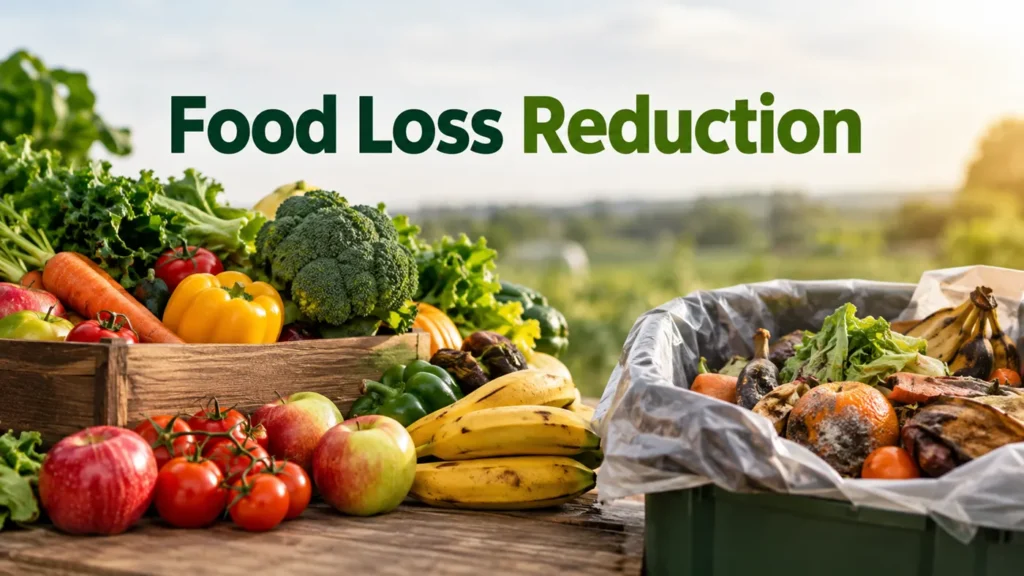
Food is one of the most basic resources needed for human survival, but a large quantity of it is lost before it gets to the consumers. This loss takes place at the time of harvesting, during handling, storage, processing, packaging, and transportation. It presents a serious problem for farmers, food producers, and members of the supply chain, especially in developing countries since poor infrastructure and limited access to modern technologies can have an impact on food quality and availability.
Food loss reduction involves the adoption of various strategies and practices that aim to prevent food from becoming damaged, going bad, or being wasted as it moves through the supply chain, especially before it gets to the retail and consumption stages. It is possible to improve food security by reducing food loss, as well as to increase farmers’ incomes, conserve natural resources, and assist in achieving sustainable agricultural development.
What is Food Loss Reduction?
Reducing food loss means decreasing the amount of food that becomes unavailable for human consumption at each stage of production, harvesting, post-harvest handling, storage, processing, and distribution. The aim is to prevent losses that are avoidable and to make sure that a greater proportion of the food produced gets to markets and consumers in an appropriate condition.
Although food loss and food waste are different, both of them result in an inefficient use of food resources. Food loss usually takes place in the earlier stages of the food supply chain, while food waste is typically linked to retailers, restaurants, and consumers throwing away edible food.
Reducing food loss effectively needs the co-operation of farmers, agricultural organizations, the food processing industry, transport providers, governments, and consumers.
Causes of Food Loss
Several factors contribute to food loss at different stages of the agricultural supply chain.
1. Improper Harvesting Practices
The quality and market value of crops can be reduced if they are harvested too early or too late, and physical damage to fruits, vegetables, grains, and other agricultural products may result from insufficient harvesting equipment and incorrect handling.
2. Inadequate Storage Facilities
Bad storage conditions are a principal reason for losses after harvesting. Agricultural products can be damaged by exposure to moisture, excessive temperatures, insects, rodents, and microorganisms. Moreover, a lack of adequate cold storage facilities can speed up the deterioration of perishable foods.
3. Poor Transportation Infrastructure
Because of the great distances involved in transportation, the poor condition of the roads, inadequate packaging, and delays in delivery, food can become spoilt. Since they are very susceptible to physical damage and changes in temperature, fruits and vegetables are especially at risk during transportation.
4. Limited Processing Facilities
In areas where there is not enough food processing infrastructure, farmers will find it difficult to preserve their surplus crops. If suitable facilities are not available, perishable crops will spoil before they get to the consumers or to the processing industries.
5. Market and Supply Chain Challenges
Because of unpredictable demand, price fluctuations, the poor coordination existing between farmers and buyers, and their limited access to markets, some of the harvested food may remain unsold. If the produce is not sold or processed in time, it could become unfit for consumption.
Importance of Food Loss Reduction
Reducing food loss provides economic, environmental, and social benefits.
1. Improving Food Security
Reducing food loss means that more food becomes available for human consumption without the need for agricultural production to increase by the same amount. It can thus help improve food availability in communities that are experiencing shortages of supply and contribute to making existing food systems more efficient.
2. Increasing Farmers’ Income
If a smaller amount of the crop is damaged or goes bad after harvesting, the farmers will be able to sell a greater part of their harvest. Improved methods of storage, transport, and access to markets can help to reduce financial losses and increase the profitability of agriculture.
3. Conserving Natural Resources
To carry out agricultural production, one needs land, water, energy, fertilizers, and labor. If food is lost, then the resources which have been used in producing it are also wasted. Cutting down on food loss will help to improve resource efficiency and aid sustainable farming practices.
4. Reducing Environmental Impact
The production and distribution of food leads to greenhouse gas emissions. By preventing food from being lost, the environmental impact linked to producing, transporting, and getting rid of food that is never eaten can be reduced. It is also possible to cut down on methane emissions resulting from food decomposing in landfills.
5. Supporting Sustainable Development
Reducing food loss helps to achieve the United Nations Sustainable Development Goals, especially goal 12: Responsible Consumption and Production. Specifically, target 12.3 seeks to halve global food waste per capita at the retail and consumer levels and to reduce food losses throughout production and supply chains, including those that occur after harvesting, by the year 2030.
Strategies for Food Loss Reduction
Food loss can be greatly reduced through a combination of better agricultural methods, modern infrastructure, and efficient supply chain management.
1. Improving Harvesting Techniques
Farmers may lessen the amount of damage to their crops by using appropriate harvesting machinery, adhering to proper harvesting schedules, and giving agricultural workers training in careful handling methods. Also, harvesting the crops when they are at the right stage of maturity contributes to maintaining quality and prolonging their shelf life.
2. Developing Better Storage Facilities
Building modern warehouses, using airtight grain storage systems, refrigerated stores, and moisture-control technologies will help in preserving agricultural products. It is also important to carry out proper cleaning, implement pest management, provide adequate ventilation, and control the temperature in order to prevent spoilage.
3. Strengthening Cold Chain Infrastructure
A cold chain is a system that keeps goods at a certain temperature to store and transport perishable goods, and refrigerated vehicles, cold rooms, and temperature-monitoring equipment are all used to help ensure the quality of products like dairy, meat, fish, fruits, and vegetables.
By expanding the number of affordable cold chain facilities, especially in rural areas, farmers will be able to transport their crops over greater distances at the same time as reducing spoilage.
4. Promoting Food Processing and Preservation
Techniques of food processing such as drying, freezing, canning, pasteurization, and fermentation can be used to increase the shelf life of certain products. Furthermore, turning surplus fruits, vegetables, and other agricultural products into value-added products can provide farmers and rural enterprises with additional sources of income.
5. Strengthening Farmer Awareness and Training
Training programs can teach farmers about post-harvest management, food handling, pest control, grading, packaging, and storage. Agricultural extension services and farmer co-operatives can assist in making this knowledge available to small and marginal farmers.
Food Loss Reduction in India
It is especially important to reduce food loss in India since agriculture provides a means of livelihood for millions of people and is responsible for supplying food to a large population. Yet, losses in some agricultural products may result from poor post-harvest infrastructure, the fragmentation of supply chains, difficulties in transportation, and limited access to appropriate storage facilities.
There are a number of measures that can be taken to deal with these problems.
Modern Storage Infrastructure
Building up scientific stores, cold storage facilities, and appropriate grain storage systems can help in preserving agricultural products.
Food Processing Development
Placing processing units close to production centers allows farmers to work on perishable crops before they go bad.
Farmer Training
Agricultural extension schemes are able to encourage better methods of harvesting, handling, grading, and storing.
Digital Market Access
The farmers can be linked with buyers by means of online agricultural marketplaces, which in turn helps the movement of produce within supply chains.
Government Support
Financial aid, the development of infrastructure, and various measures aimed at supporting food processing and agricultural marketing can all contribute to improving post-harvest management.
A coordinated approach must be taken, one that includes farmers, government agencies, private enterprises, and research institutions, if the efficiency of the food supply chain is to be improved.
Challenges in Food Loss Reduction
High Initial Investment
It is necessary to make a substantial investment in modern warehouses, refrigerated transport, and processing plants, something that may be hard for small farmers and businesses in rural areas to afford.
Limited Technical Knowledge
Farmers might not have access to training and information concerning effective post-harvest management techniques.
Inadequate Infrastructure
The condition of the roads, the unreliability of the electricity, and the lack of sufficient cold storage can all have an effect on the preservation and transportation of food.
Fragmented Supply Chains
Small-scale producers may find it difficult to coordinate with buyers, distributors, and processing companies.
Climate-Related Risks
Extreme temperatures, floods, droughts, and other weather-related events can damage crops and disrupt storage and transportation systems.
Addressing these challenges requires affordable technologies, financial support, stronger rural infrastructure, and cooperation among stakeholders.
Future
Food loss reduction should be treated as an essential part of sustainable agriculture and food security. Governments, agricultural institutions, businesses, and farmers need to invest in practical solutions that protect food from the moment it is harvested until it reaches consumers.
The priorities are to improve storage facilities in rural areas, extend the cold chain, promote local food processing, enhance farmer training, and use digital technologies to link producers with markets. Furthermore, research institutions can create preservation methods that are affordable and appropriate for the kinds of crops and climate conditions found locally.
It is just as important to measure food losses at various stages of the supply chain; reliable data will enable policymakers to determine where losses are highest and allow them to focus their investments on the most effective interventions.
FAQs about Food Loss Reduction
Reducing food loss is an important measure for developing a more efficient, resilient and sustainable food system; it is possible to improve food availability, safeguard farmers’ incomes, conserve natural resources and reduce environmental damage by preventing losses that are avoidable during harvesting, storage, processing and transportation.
In India, it is possible to help farmers keep a greater share of the value of their harvests by improving post-harvest infrastructure and providing them with appropriate technologies. Coordinated action together with continued investment can enable a significant contribution of food loss reduction to agricultural development, to responsible resource management and to long-term food security.