Sugar Price – A Bitter Rise in Sweetness
With year-end and major festivals approaching, we start planning ahead of time to ensure that everything goes well, as it’s the time for grand Indian festivals, from cleaning and decorating our houses to the preparation of feasts and sweets. Indian sweets are undoubtedly the highlight of festivals, as festivals are rarely complete without them. From laddus and barfi exchange in Diwali to modaks during Ganesh Chaturthi, sweets served and given are a tradition for us. But there is one humble ingredient behind all of our favorite sweets.
So what’s behind every mithai? It’s sugar.
As the festive season brings a major rise in the demand for sweets, beverages, and other sugar-based products. The price of sugar becomes so much more than a statistic.
It affects household budgets, sweet manufacturers, retailers, and the farmers who grow sugarcane. With sugar prices witnessing an upward movement, the question arises: what is driving the price hike, and how much of it can be linked to India’s growing demand for sugar and ethanol?
What’s Behind The Recent Sugar Price Hike
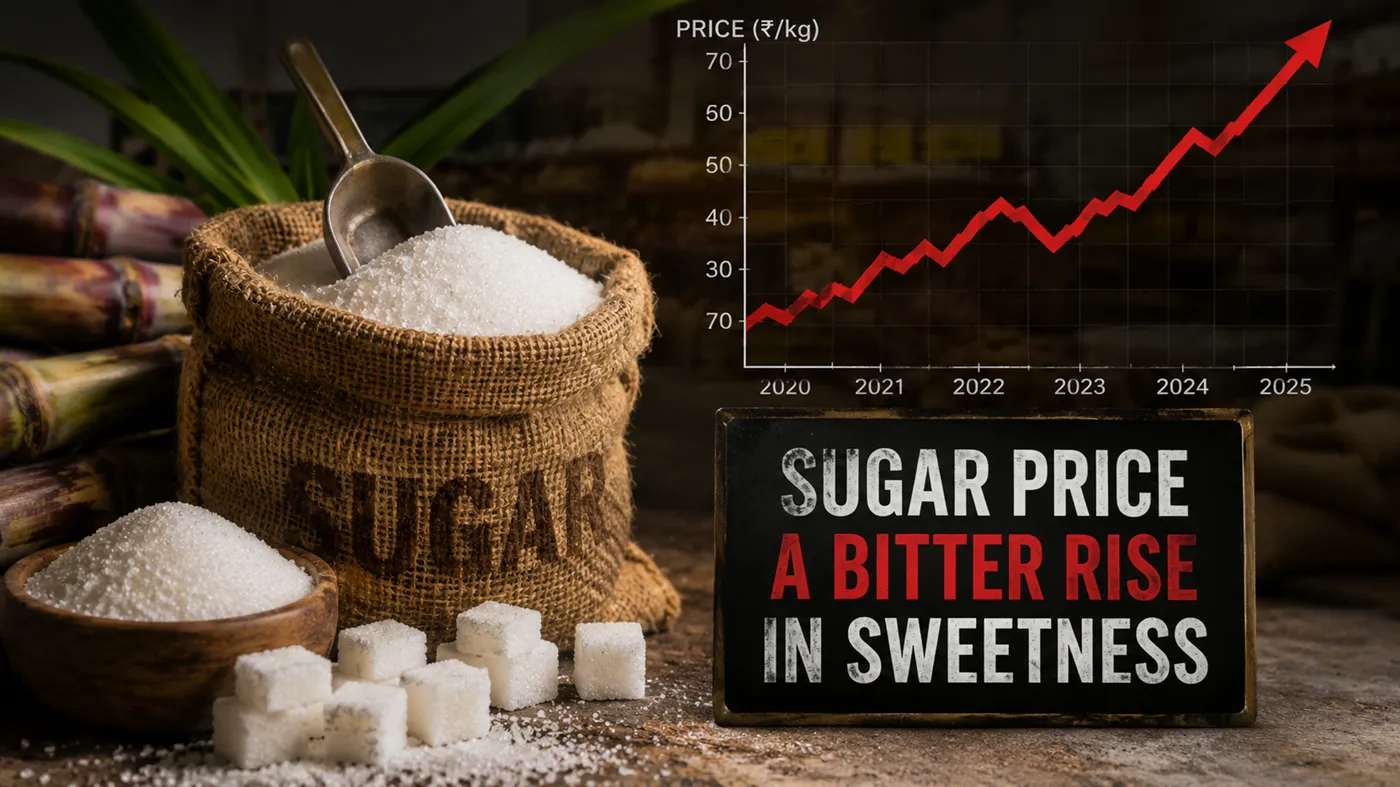
The recent rise in sugar prices is a combination of tighter-than-expected supplies, lower sugar production, rising festive demand, crop damage due to weather, and market predictions that have pushed prices upward.
According to the Government of India, the average sugar price on 20 July, 2026 rose from 48.18 per kg to 55.70 per kg by August 20, 2026,[1] which is a huge difference in just a month.
Lower than expected sugar production
One of the biggest factors behind the recent price movement is due to the decline in sugar output. Sugar production for the 2025-26 season has fallen around 306 lakh tonnes, according to the recent government statements.
Weather had also had an impact as excess rainfall in major sugar-producing states such as Maharashtra, Karnataka and Gujarat affected sugarcane growth during the previous crop cycle, which put pressure on overall production.
High festive demand
Timing matters as India is entering a period where the demand for sugar traditionally rises sharply. Festivals mean more mithai, sweets, biscuits, bakery products, beverages and household purchases, which creates an additional demand just when the market is already dealing with tighter supplies.
The government has also linked the recent price increase partly to higher demand ahead of the festive season.
Global sugar market
India does not operate in isolation from the global sugar market. Tighter international supplies and firmer global sugar prices can influence domestic market attitude and trade decisions. The government has identified tightening global supplies and rising international prices as one of the elements contributing to the recent increase.
Hoarding may amplify the rise.
The government has said that speculation and hoarding by some sections of the industry have contributed to the sharp increase. A price rise automatically means that the country has run out of sugar; market expectations, stockpiling, and the speed at which sugar moves through the supply chain can also push prices higher.
What about ethanol?
This is where the debate starts, as India has deliberately expanded its ethanol blending program; some sugarcane-derived material is diverted into ethanol production, which naturally raises the question: if the sugar is being used for fuel, what about our kitchens?
Why Are Sugar Prices Rising
India’s sugar prices are rising because a number of factors are tightening the market at the same time. Lower-than-expected domestic sugar production has reduced the supply cushion, while weather-related crop damage has added to production concerns. At the same time, demand is picking up ahead of the festive season, when households, sweet shops and food businesses typically purchase more sugar.
As concerns over limited supplies rise, they encourage stockpiling and speculation, which can push the prices way higher even when there is no absolute sugar shortage. The government has therefore tightened stock limits for dealers to discourage hoarding and improve availability during the festive period.
Tighter supplies, stronger seasonal demand and market rumors have created the perfect recipe for higher sugar prices.
Is Ethanol Really Responsible For The Sugar Price Hike
With ethanol blending becoming a major part of India’s fuel strategy, it is natural to wonder whether diverting sugar towards ethanol has left less sugar for consumers. However, the latest government data suggests that ethanol is not the main reason behind the current price surge.
The share of sugar diverted towards ethanol actually declined from around 12% in 2022-23 to about 9% in 2025-26. which nearly three-fourths of India’s ethanol production now comes from grains, particularly maize, rather than sugar-based feedstocks.
That does not mean ethanol has no impact on the sugar industry. Diverting sugarcane and its by-products towards ethanol does influence the balance between sugar and fuel. But the recent price has been driven more immediately by lower-than-expected sugar production, rising seasonal demand, international market situations and concerns over stocks and hoarding.
So, ethanol is part of the equation, but not the whole story behind today’s sugar prices.
What Can Be Done To Stabilise Sugar Prices
Stabilizing sugar prices needs a balance between adequate supply and fair returns for farmers and protection for consumers. In the short term, the government can increase domestic availability through measures such as duty-free sugar imports, tighter stock limits and strict monitoring of hoarding and speculative trading. These steps are already being used to ease the recent price pressure.
In the longer run, improving sugarcane productivity, reducing crop losses and strengthening storage and supply chain systems can make the market more resilient. Timely crushing by sugar mills can also bring fresh sugar into the market when seasonal demand is high. The government has advised mills to begin crushing from October 15, 2026, which is expected to increase October production significantly.
The goal is not about cheaper sugar but a stable sugar market that protects both consumers and farmers.
When Will Sugar Prices Return To Normal
There is no fixed date for sugar prices to return to their earlier prices, but the recent solutions offered some relief. Ex-mill sugar prices have already fallen by around 20%, and retail prices have also begun to move downward as lower prices pass through the supply chain.
Major relief could come up with the new sugarcane crushing season beginning from October 15, 2026. The government expects more than 10 lakh tonnes of sugar to be produced during October, which will add fresh supply to the domestic market.
The government has also opened a duty free import quota of one million tonnes, with the remaining quota being allocated this month to meet festival season demand.
Therefore, prices are likely to stabilize gradually rather than fall overnight, provided supply improves and hoarding remains under control.
FAQs about the Sugar Price Hike
Sugar may seem like a small ingredient to us, but its journey from the sugarcane to our kitchen illustrates a bigger story of farmers, markets, industries and government policies. The recent price rise is not the result of one factor alone, as lower-than-expected production, seasonal demand, global market conditions, and market practices have all played a role.
As the festive season approaches in India, keeping sugar affordable while guaranteeing fair returns for sugarcane farmers also while maintaining a fragile balancing act, which is a major task. With imports, stock controls, and the upcoming crushing season expected to improve availability, the present pressure may gradually ease. Ultimately, a stable sugar market is one where the farmer earns fairly, the industry remains sustainable, and the consumer does not have to worry or pay an unreasonable price for sweetness.