Drip Irrigation System
Water is one of the most important resources in agriculture, and its efficient use is absolutely fundamental to sustainable crop production. Conventional irrigation methods can result in substantial water losses through evaporation, runoff, and deep percolation. A drip irrigation system is a more targeted method of application, delivering water slowly and directly to the soil around the plant roots.
Drip irrigation is used extensively in vegetable growing, fruit orchards, greenhouses, and all sorts of other agricultural situations where you need to apply water in a very controlled manner. It’s a way of helping the farmer to manage their water more efficiently and at the same time to grow a healthy crop.
What is a Drip Irrigation System?
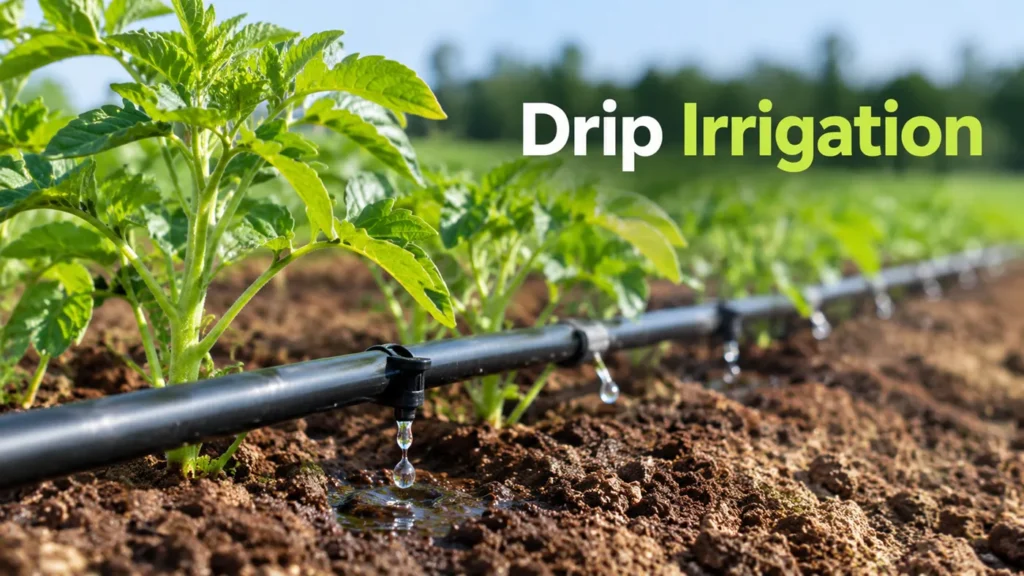
A drip irrigation system is a micro-irrigation method in which water is delivered slowly to the root zone of plants through a network of pipes, tubes, and small outlets called emitters or drippers. It is also known as trickle irrigation.
Flood irrigation spreads water over a much larger area of soil, whereas drip irrigation is targeted at the areas where the plants actually need the water. It therefore reduces the amount of soil that is unnecessarily wetted and can lead to improved water use efficiency if the system is properly designed and maintained.
Components of a Drip Irrigation System
A typical drip irrigation system consists of the following components:
- Water Source: Water may come from a well, borewell, reservoir, farm pond, or another suitable source.
- Pumping Unit: A pump may be required to supply water at the pressure needed by the system. Some small systems can operate using gravity.
- Filtration Unit: Filters remove suspended particles and other impurities that could clog the emitters.
- Mainline and Sub-Main Pipes: These carry the water from the source and distribute it to the various sections of the field.
- Laterals: These are the smaller pipes/tubes laid along the crop rows to deliver water right to the individual plants.
- Emitters or Drippers: These discharge water at a controlled rate right into the root zone.
- Valves and Pressure Regulators: These are used to control the flow of water and to maintain the correct operating pressure.
- Fertilizer Injection Unit: Where required, a fertigation unit allows compatible, water-soluble fertilizers to be applied through the irrigation system.
How Does Drip Irrigation Work?
The working principle of drip irrigation is simple. Water is drawn from a suitable source and passed through a filtration unit to remove particles that could block the outlets. It then travels through the main and sub-main pipes into the lateral tubes placed along the crop rows.
Small emitters release water slowly near the plants. The water infiltrates the soil and moistens the root zone, allowing plant roots to absorb the moisture they need.
The frequency and duration of irrigation depend on the crop, soil type, weather conditions, plant growth stage, and available water. Proper scheduling is important because both insufficient and excessive irrigation can affect crop health.
Types of Drip Irrigation Systems
- Surface Drip Irrigation: The drip tubes are on or near the soil surface. This is the most common type of application for vegetables, fruit crops, and row crops.
- Subsurface Drip Irrigation: The drip lines are installed below the soil surface. This will reduce surface evaporation and is of use for certain crops, but again requires careful design and maintenance.
- Online Drip Irrigation: Individual emitters are attached to lateral pipes at selected points, making this arrangement suitable for crops such as fruit trees and widely spaced plants.
- Inline Drip Irrigation: Emitters are built into the tubing at predetermined intervals. This is commonly used for crops planted in regular rows.
Benefits of Drip Irrigation
Efficient Water Use
Drip irrigation delivers water right to the plant roots, which in turn reduces losses through surface runoff and evaporation as compared to some of the other conventional irrigation methods. The actual amount of savings will, of course, vary depending on the existing method of irrigation, the soil, the climate, and the way the system is managed.
Improved Crop Growth
Maintaining suitable soil moisture near the roots can support healthy plant development. When irrigation is properly managed, the system can also improve crop uniformity and productivity.
Reduced Weed Growth
Since water is applied mainly near the crop root zone, the soil between rows may remain relatively dry. This can reduce the growth of some weeds.
Better Fertilizer Management
Drip systems can be used for fertigation, in which compatible water-soluble fertilizers are supplied through irrigation water. This helps place nutrients near the root zone and can improve fertilizer-use efficiency.
Lower Labour Requirements
Once installed, a drip irrigation system can reduce the need for manual watering. Automation can further simplify irrigation scheduling and operation.
Suitable for Different Crops
Drip irrigation can be used with vegetables, fruit trees, orchards, vineyards, flowers, and a number of other crops. Whether it’s suitable or not will depend on crop spacing, soil type, water quality, and the system design.
Useful in Water-Scarce Areas
Drip irrigation can be used to help farmers manage their water supplies when these are limited. It’s a very useful technique in situations where water conservation is important.
Disadvantages of Drip Irrigation
Drip irrigation also has some limitations.
- High Initial Cost: Installing pipes, filters, emitters, and other equipment can require a considerable investment.
- Clogging of Emitters: Sediment, algae, and mineral deposits can all lead to blockage of the outlets if water quality and filtration aren’t properly managed.
- Regular Maintenance: Filters, pipes, and emitters all need to be inspected and cleaned to ensure performance.
- Technical requirements: Wrong pressure, bad layout, or inappropriate irrigation scheduling will all result in uneven water distribution.
- Dependence on Equipment: Leaks, damaged tubes, and pump failure can all lead to irrigation being disrupted and the crop being stressed if not dealt with quickly.
- Plastic Waste: Damaged or end-of-life plastic tubing must be managed and disposed of responsibly.
Crops Suitable for Drip Irrigation
Drip irrigation is commonly used for crops where water can be delivered effectively to individual plants or crop rows. Examples include:
- Vegetables such as tomatoes, capsicum, cucumber, and brinjal.
- Fruit crops such as mango, banana, papaya, and citrus.
- Grapes and other vine crops.
- Sugarcane and cotton, where the system is appropriately designed.
- Flowers and selected nursery crops.
- Crops grown in polyhouses and greenhouses.
The most suitable system depends on the crop’s water requirements, planting pattern, soil characteristics, and local farming conditions.
Drip Irrigation and Sustainable Agriculture
Drip irrigation can contribute to sustainable agriculture by improving the management of water and nutrients. It can help reduce unnecessary water application and, when combined with appropriate fertigation, limit nutrient losses.
It’s important to stress that simply installing a drip system won’t result in water savings or increased yields. You still have to choose the right equipment, irrigate according to crop needs, maintain your filters, monitor your soil moisture, and, of course, you have to manage your plastics responsibly.
FAQs about Drip Irrigation System
A drip irrigation system is a very efficient method of getting water to the root zone of the crop. The potential benefits are numerous: better water management, less weed growth, more precise application of fertilizer, and less labor. The up-front cost of installation and the ongoing need for maintenance are of course high, but a well-designed system can be a very worthwhile tool for modern and sustainable farming.
By selecting the right equipment and following appropriate irrigation practices, farmers can use drip irrigation to support crop production while making better use of available water resources.